
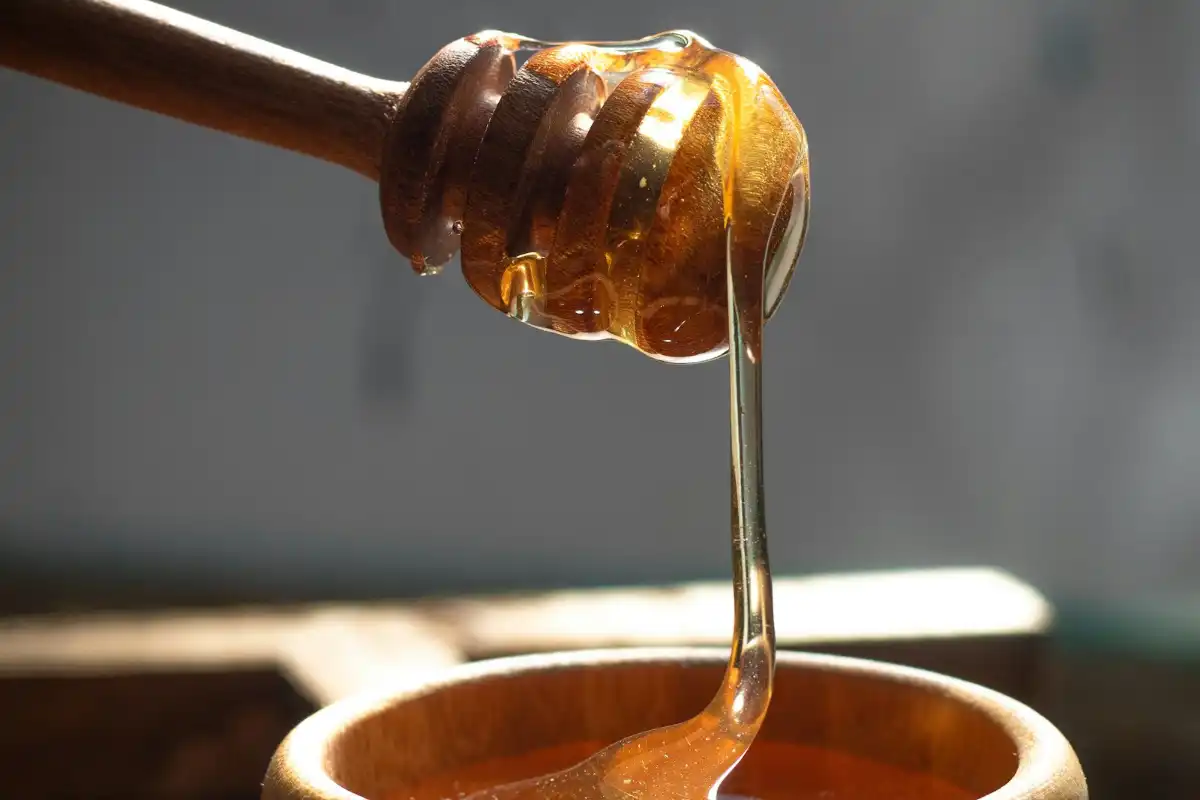
Alongside the honey in the rock Bible verse itself, these eighteen King James passages show how Scripture links sweetness, water and strength to the God who is called a rock. Each honey in the rock Bible verse here is paired with a note.
He should have fed them also with the finest of the wheat: and with honey out of the rock should I have satisfied thee.
Psalms 81:16 (KJV)
This is the verse behind the phrase. God speaks with a sigh, wishing his people had listened, because he longed to feed them with the best grain and with sweetness from stone. The offer was generous, and the sorrow comes from how much they missed. This is the honey in the rock Bible verse that readers search for.
He made him ride on the high places of the earth, that he might eat the increase of the fields; and he made him to suck honey out of the rock, and oil out of the flinty rock;
Deuteronomy 32:13 (KJV)
In Moses’ song, honey from the rock describes God’s care across the wilderness years. Even flinty ground, the least likely source of food, became a pantry. It teaches that God’s supply does not depend on how promising the place looks. An earlier honey in the rock Bible verse appears in Moses’ song.
How sweet are thy words unto my taste! yea, sweeter than honey to my mouth!
Psalms 119:103 (KJV)
The psalmist moves from the image to its meaning: God’s words are the true honey. Anyone who has felt a verse settle a troubled heart knows this taste. It is not sugar for a moment but nourishment that keeps on feeding the soul. The honey in the rock Bible verse tradition moves from image to meaning.
More to be desired are they than gold, yea, than much fine gold: sweeter also than honey and the honeycomb.
Psalms 19:10 (KJV)
David compares God’s judgments to the two things people prize most, wealth and sweetness, and says Scripture beats both. The comparison invites us to ask what we actually crave, and to let the Bible become the desire that outlasts every other appetite. Another honey in the rock Bible verse compares God’s words to honey.
O taste and see that the LORD is good: blessed is the man that trusteth in him.
Psalms 34:8 (KJV)
Taste language runs through the honey theme. David does not ask for a debate but for an experience: try God and see. Faith here is tested the way food is, by receiving it, and the blessing belongs to the person who leans on him. Taste language runs through each honey in the rock Bible verse.
Behold, I will stand before thee there upon the rock in Horeb; and thou shalt smite the rock, and there shall come water out of it, that the people may drink.
Exodus 17:6 (KJV)
Before honey was promised, water came from the rock. God stood on the very stone Moses was told to strike, showing that the provision was his own presence at work. The thirsty crowd drank because he was already there. Water comes before the honey in the rock Bible verse.
And did all drink the same spiritual drink: for they drank of that spiritual rock that followed them: and that rock was Christ.
1 Corinthians 10:4 (KJV)
Paul reads the wilderness story through Christ. The rock that gave water was a picture of the One who sustains his people across every mile. For Christians this turns the honey in the rock into a picture of Jesus himself. Christ is the rock in every honey in the rock Bible verse.
The LORD is my rock, and my fortress, and my deliverer; my God, my strength, in whom I will trust; my buckler, and the horn of my salvation, and my high tower.
Psalms 18:2 (KJV)
David piles up images of safety, and the rock stands first. A rock is where a hunted man hides, and here it is also where he is fed. Refuge and nourishment belong together in the character of God. The rock is first in this honey in the rock Bible verse of safety.
My son, eat thou honey, because it is good; and the honeycomb, which is sweet to thy taste:
Proverbs 24:13 (KJV)
Wisdom literature treats honey as a good gift to enjoy with thanks. The verse is a gentle reminder that God is not stingy with delight. The next lines apply it to wisdom, which is sweet to the soul in the same way. Wisdom literature supports the honey in the rock Bible verse.
Pleasant words are as an honeycomb, sweet to the soul, and health to the bones.
Proverbs 16:24 (KJV)
Honey is not only for God’s words; ours can carry it too. Kind, truthful speech nourishes people the way sweetness nourishes the body. This verse challenges us to become small sources of honey for tired friends and family. A honey in the rock Bible verse can shape our own speech.
And I am come down to deliver them out of the hand of the Egyptians, and to bring them up out of that land unto a good land and a large, unto a land flowing with milk and honey;
Exodus 3:8 (KJV)
Honey first appears in the promise of a good land. God speaks to Moses at the burning bush with a future full of sweetness, so the later honey from the rock reads as a taste of the promise while the people were still on the road. The first honey in the rock Bible verse idea is a promised land.
And he said unto me, Son of man, cause thy belly to eat, and fill thy bowels with this roll that I give thee. Then did I eat it; and it was in my mouth as honey for sweetness.
Ezekiel 3:3 (KJV)
Ezekiel is told to eat the scroll, and it tastes like honey even though its message is hard. God’s word can be sweet to receive and weighty to deliver. Obedience often tastes both at once. Even a bitter message can be a honey in the rock Bible verse.
He brought streams also out of the rock, and caused waters to run down like rivers.
Psalms 78:16 (KJV)
Asaph recalls the wilderness with wonder: not a trickle but rivers. When God provides from a rock he does it with abundance. The verse gives courage to bring needs to him that seem as dry and hard as stone. Rivers fill this honey in the rock Bible verse from Asaph.
And Moses lifted up his hand, and with his rod he smote the rock twice: and the water came out abundantly, and the congregation drank, and their beasts also.
Numbers 20:11 (KJV)
The water came, and enough for people and animals alike. The scene is also a caution, since Moses struck when he had been told to speak. Even so, God’s mercy supplied the need, a mix of grace and gentle correction. The water scene belongs beside the honey in the rock Bible verse.
Therefore whosoever heareth these sayings of mine, and doeth them, I will liken him unto a wise man, which built his house upon a rock:
Matthew 7:24 (KJV)
Jesus uses the rock as a foundation. Honey and rock together mean that the same firm ground that holds a life up can also feed it. Hearing and doing his words is what turns a house into a lasting home. Jesus gives the honey in the rock Bible verse a foundation.
He brought me up also out of an horrible pit, out of the miry clay, and set my feet upon a rock, and established my goings.
Psalms 40:2 (KJV)
Here the rock is rescue. The speaker is lifted out of mud and given solid footing. Many readers find that the place where God sets them down after a hard season becomes the place where sweetness unexpectedly appears. This rescue extends the honey in the rock Bible verse.
Hast thou found honey? eat so much as is sufficient for thee, lest thou be filled therewith, and vomit it.
Proverbs 25:16 (KJV)
A good gift needs wise handling. Even honey becomes a burden when taken without limit. This verse balances the theme by reminding us to enjoy God’s blessings with self-control and gratitude instead of greed. A good gift like the honey in the rock Bible verse needs wise handling.
Trust ye in the LORD for ever: for in the LORD JEHOVAH is everlasting strength:
Isaiah 26:4 (KJV)
The margin of many Bibles renders everlasting strength as the rock of ages. Whatever the word, the invitation is the same: put your weight on him permanently, because the supply behind the sweetness never runs out. The margin note strengthens the honey in the rock Bible verse.
The honey in the rock Bible verse is Psalm 81:16, and it is spoken by God himself. In the King James wording he says he would have fed his people with the finest of the wheat and satisfied them with honey out of the rock. The sentence carries a kind of ache, because it begins with a condition: if they had only listened. The sweetness was ready, and the people had not yet received it.
Notice how the line is built. Wheat is the staple of daily bread, and honey is the luxury that makes a meal a feast. God promises both, the necessary and the delightful. He is not content to merely keep his people alive; he wants them satisfied. That is a different picture of God from the stern distant figure some people carry around, and it is worth sitting with before moving on.
It also helps to remember who is speaking and to whom. These are not the words of a distant judge reading a verdict. They are the words of a father who watched his children wander and who still says what he would have done for them. Reading the verse in that tone, with warmth and longing instead of anger, changes how its promise lands in the heart. Bookmark the honey in the rock Bible verse for slow reading.
Psalm 81 is a festival song. It was likely sung at a gathering where Israel remembered being brought out of Egypt, and it moves from joyful singing to a serious warning. The psalmist recalls how God removed a burden from their shoulders, answered them in trouble, and then tested them. Verse sixteen closes the psalm with the offer that was still open, the honey in the rock Bible verse people remember best.
A second source stands behind it, Deuteronomy 32:13, where Moses sings that God made his people suck honey out of the rock and oil out of the flinty rock. The two passages echo one another. One speaks of what God did, the other of what he wished to keep doing. Read together they give a full picture of a God who provides in places that look barren.
Both passages are poems, and that matters. Hebrew poetry speaks in pictures and balanced lines instead of plain reports, so we should read the honey and the rock the way we read any vivid image: attentively, with an ear for what it reveals about the heart of the speaker, and without trying to flatten it into a technical statement. A honey in the rock Bible verse came from a festival song.
Rock and honey seem to belong to different worlds. A rock is hard, cold, dry and silent, while honey is soft, warm, golden and sweet. The power of the image comes from putting them side by side. Nobody expects sweetness from stone, so the picture surprises us the way the best teaching does, and it lodges in memory long after plainer statements fade.
There is also a practical background. In the dry hill country of the Near East, wild bees often nested in cracks and crevices of rock, and honey could be found dripping from the stone. The phrase may therefore describe something real that the people had seen. God uses an ordinary sight, a honey-filled cleft, to say something extraordinary about how he cares for those who follow him. The honey in the rock Bible verse joins two opposites.
Most of us would rather be given a soft place to rest than a rock to climb. Yet the honey in the rock Bible verse suggests that God often shows his kindness inside the difficulty instead of outside it. The hard setting does not cancel his goodness. It becomes the very place where his care is discovered, so that the rock stops being only an obstacle.
This changes how we read our own wilderness seasons. A layoff, a diagnosis or a long wait can feel like a wall of stone. The verse invites us to look closely at the crevices. There may be small, surprising sweetnesses there, a friend who calls at the right moment, a verse that finally makes sense, a peace with no obvious cause. God has a habit of hiding honey in stone. The honey in the rock Bible verse still asks for trust.
Throughout the Bible, the rock is a way of speaking about God’s steadiness. Moses calls him the Rock whose work is perfect, and David sings that the LORD is his rock, fortress and deliverer. A rock does not shift with the weather or the years. When the writers call God by this name, they are saying that he can be leaned on completely.
That makes the honey in the rock Bible verse richer. The source of sweetness is not a lucky crevice but the Rock himself. The comfort is not found in things around him but in him. If you are reading this in a shaky season, the point is the same: the One who holds you firm is also the One who feeds you. The rock in the honey in the rock Bible verse speaks of steadiness.
Israel met the rock twice in the wilderness. At Horeb, God stood on a rock and told Moses to strike it, and water poured out for thirsty crowds. Later at Kadesh, Moses struck again and water came out abundantly. Each time the people were in real need, and each time the answer came out of the most solid and uncompromising object in the landscape.
Water meets the need for survival, and honey adds delight. Together they show a God who does both. He keeps people alive, and he sweetens the journey. When you read the honey in the rock Bible verse, keep the water in mind, because the two belong to the same story of a faithful provider who does not stop at the minimum. Two rocks sit behind the honey in the rock Bible verse.
Paul adds a New Testament layer in 1 Corinthians 10, where he says the rock that followed Israel was Christ. For Christians this changes the wilderness from a distant history lesson into a picture of Jesus meeting his people with life-giving provision. The one who would later say that he gives living water was already present in the story.
This is why many believers hear the honey in the rock Bible verse as pointing to Christ. He is the Rock who was struck, and from him comes everything that nourishes: forgiveness, peace, and the sweetness of knowing God. The image does not need to be forced; Paul himself opened the door to reading the rock this way.
Seen this way, every meal in the wilderness was a small sermon. The manna, the water and the honey all pointed beyond themselves to a Provider who would one day walk among his people. Reading the Old Testament with that expectation makes familiar stories feel fresh, and it ties the whole Bible together as one long account of God feeding those he loves. Paul deepens the honey in the rock Bible verse through Christ.
The psalms keep returning to honey when they speak about Scripture. Psalm 119:103 asks how sweet God’s words are to the taste, and Psalm 19 calls them sweeter than honey and the honeycomb. The psalmists were not describing a duty. They were describing a delight, the pleasure of hearing God speak and finding that it satisfies.
If your Bible reading feels dry, this is worth noticing. The honey in the rock Bible verse and these psalms suggest that sweetness often comes after patient, repeated tasting. Read slowly, read aloud, and read the same short passage several days in a row. For more help, explore our page of Bible verses about the Word of God, where each passage is explained in plain language.
Psalm 34:8 invites us to taste and see that the LORD is good. It is a gentle command with a big promise. The psalmist does not demand that we first resolve every question. He asks us to sample, to try, to come to the table and find out for ourselves, and he says the one who trusts is blessed.
This practical spirit fits the honey in the rock Bible verse. Honey has to be tasted to be known; no description can replace it. Faith that stays purely theoretical will feel thin, but faith that pays attention to daily kindnesses becomes rich. Try ending each day by naming one thing you tasted of God’s goodness, and see how the list grows. Taste and see is the invitation within the honey in the rock Bible verse.
Psalm 81 does not stop at the invitation. Just before verse sixteen, God says that if Israel had hearkened to him and walked in his ways, he would have subdued their enemies and fed them richly. The honey in the rock Bible verse is therefore partly a lament. It describes blessings held back, not by God’s stinginess, but by his people’s refusal to listen.
That is a sober thought, yet it is also hopeful. The offer is still described in the present tense of longing. God is not finished wanting to satisfy. The path back is simple: listen, then walk. If you sense that you have missed sweetness through years of distraction or stubbornness, the verse does not condemn you. It shows how much God still wants to give. The honey in the rock Bible verse follows a call to listen.
The land of Canaan was promised as a land flowing with milk and honey, a poetic way of describing abundance. God gave this promise to Moses long before the people ever saw the land. Honey from the rock in the wilderness therefore worked as a down payment, a taste of the promised land while they were still traveling toward it.
We live in a similar tension, enjoying small foretastes of what is yet to come. When a hard season delivers a moment of unexpected joy, it can be read as a sample of the fuller promise. To see how God keeps his word across the whole Bible, read our collection of Bible verses about God’s promises, and notice how often a taste comes before the feast.
People searching for the honey in the rock Bible verse are often not scholars. They are tired people, wondering if there is any goodness left in the situation they are in. The verse speaks directly to them. It suggests that dry ground is not proof of God’s absence, and that sweetness can be found in places that look entirely unpromising.
A practical way to put this to work is to keep a short list of small mercies. In a hard week, write down anything that felt like honey, however small: a kind message, a clear morning, a difficult conversation that went better than expected. Over time the list becomes a record of God’s faithfulness, and it trains the eyes to look for sweetness in stone.
Some readers find it helpful to pair the list with a daily prayer of just a few lines. Thank God for one specific thing, ask for one specific need, and then sit quietly for a minute. The habit is small, but it builds an expectation that God is present in the ordinary hours, and that expectation is often what turns a dry season into a fruitful one. Readers of the honey in the rock Bible verse often want comfort.
There are days when the rock simply feels like a rock. Nothing is dripping, nothing is sweet, and the only thing in sight is a wall. Trust on those days is not a mood but a decision to believe that God is still who he says he is. The Bible never promises that every day will taste like honey, only that the Rock does not change.
David wrote many psalms from caves and hiding places, and he kept calling God his rock even there. His example gives courage. If you are working through uncertainty, our page on Bible verses about trusting God can steady you. The honey in the rock Bible verse then becomes an anchor: the hard place may yet become the place of provision.
Proverbs picks up the honey image and applies it to everyday life. Pleasant words, it says, are like a honeycomb, sweet to the soul and health to the bones. Wisdom itself is compared to honey that is good to eat. The thread tying these verses together is that God’s goodness is meant to be passed along through ordinary speech.
This gives the honey in the rock Bible verse a social side. Having tasted sweetness, we are called to offer it. Encouraging words, patient listening and honest comfort are small acts of honey. A person who has been fed from the rock can become a source of nourishment for someone else standing in a dry place of their own. Proverbs applies the honey in the rock Bible verse to daily life.
Proverbs 25:16 offers a realistic counterbalance. Having found honey, we are told to eat only what is sufficient, lest we be overfull and sick. The point is not that God’s gifts are dangerous but that our appetites need guidance. Even a good thing can turn bitter when we grab it without thanks.
Applied to the honey in the rock Bible verse, this means receiving blessings with gratitude and restraint. The people of Israel were warned about forgetting God when they became comfortable. Sweetness should lead us back to the giver, not away from him. A thankful heart is the best protection against turning gifts into idols, and our collection of Bible verses about gratitude can help build that habit.
Ezekiel’s vision adds an honest note. He was handed a scroll full of lamentation and told to eat it, and it tasted like honey in his mouth. The content was heavy, yet the act of receiving God’s word was sweet. Not every message from God is gentle, but the relationship that delivers it is good.
This helps when Scripture challenges us. The honey in the rock Bible verse does not mean every passage will feel pleasant. Some will correct, some will confront, and some will grieve. Yet the willingness to take the whole word in, hard and sweet together, is what makes a person grow. Meditation slows this process down, and our page on Bible verses about meditating on Scripture shows how.
Jesus finished the Sermon on the Mount with the picture of two builders. The wise man built his house on a rock, and when the storm came it stood. The foundation was simply hearing his words and doing them. Here the rock is not only a source of food but the place where a life is set.
Joining the images together, a life built on the rock is also a life fed by the rock. The stability and the sweetness come from the same place. When you consider the honey in the rock Bible verse alongside this parable, the invitation is practical: spend time with Christ’s words, then act on them, and discover that the ground under you can also nourish you.
Doing the words is the hard part, and it is worth being honest about that. Most of us hear far more than we practice. A useful habit is to choose one command from a passage you read this week and put it into action before the day ends. A small obedience, repeated, lays one stone after another until the foundation is firm. The Sermon on the Mount echoes the honey in the rock Bible verse.
A simple way to pray this passage is to read Psalm 81:16 slowly three times. First, notice the word satisfied and ask what real satisfaction would look like in your life. Second, notice the word rock and name one hard thing you are facing. Third, ask God to show you where he has already placed sweetness in that hard thing.
You can also memorize the verse and carry it through the week. Short Scripture is easiest to keep, and our guide to Bible verses for memorizing Scripture offers methods that work. If the rock in your own story is a place where people struggle to hear God, you may also enjoy our page on rocks crying out for a related angle on how creation speaks.
Readers often ask whether the honey is literal or symbolic. The most careful answer is both. Wild honey really could be found in rock crevices, so the image is rooted in ordinary experience, yet the psalmist uses it to speak about the abundance God desired for his people. Others ask whether the phrase belongs to a particular hymn; it is simply a biblical phrase, which later writers and singers have borrowed.
Another common question is whether the verse promises blessing to everyone. The surrounding text shows that the promise is tied to listening and walking with God. This is not a wage to be earned, but a relationship to be lived. Anyone, in any season, can turn toward the Rock and begin to taste. The honey in the rock Bible verse is an open door, not a closed contract.
A third question concerns reading it alongside the New Testament. Many ask whether Christians should treat the passage as a promise for today. The safest approach is to take it as a revelation of God’s character: generous, attentive and eager to satisfy. That character does not change, so the heart of the message carries across every age, even where the details differ. The honey in the rock Bible verse is most often read as symbolic.
The most helpful response to this verse is to expect God to be generous and to watch for it. Start each day by asking where you might find provision, and end it by naming where you did. Over weeks, your outlook shifts. The same circumstances look different when you are expecting sweetness from stone rather than only bracing for hardship.
Finally, share what you receive. Pass on a verse, an encouragement or a meal. The honey in the rock Bible verse describes a God who gives lavishly, and his people reflect that generosity when they give in turn. Return to Psalm 81:16 whenever you feel dry, and let it remind you that the Rock who holds you firm longs to satisfy you with the best. The honey in the rock Bible verse invites expectation.
If this study encouraged you, these related pages can take you further: Bible verses about God’s promises, Bible verses about the Word of God, Bible verses about trusting God, Bible verses about meditation on Scripture, Bible verses about rocks crying out, Bible verses for memorizing Scripture, Bible verses about strength in difficult times, Bible verses about reading Scripture, Bible verses about food, Bible verses about faith and trust.
To study these verses in more depth, try Bible Gateway, Bible Hub, Bible Study Tools, Blue Letter Bible.
The honey in the rock Bible verse is Psalm 81:16, which in the King James Version says God would have satisfied his people with honey out of the rock. A related line in Deuteronomy 32:13 describes God making Israel suck honey out of the rock during the wilderness years.
It means God provides sweetness and satisfaction from the least likely places. Rock stands for hardship and barrenness, while honey stands for delight and abundance. Together they teach that God’s care reaches into difficult circumstances and can turn them into places of provision and joy. That is the heart of the honey in the rock Bible verse.
Yes, it is plausible. In the dry hill country of the Near East, wild bees often built nests in rock crevices, so honey could be found there. The psalm likely draws on this familiar sight to make a spiritual point about God’s surprising generosity toward his people.
Psalm 119:103 and Psalm 19:10 compare Scripture to honey because it is sweet, satisfying and nourishing. Honey was among the most prized foods, so the comparison says that God’s words are more desirable than wealth and bring real delight to those who take them in.
In 1 Corinthians 10:4 Paul says the spiritual rock that followed Israel was Christ. Many Christians therefore read the water and honey from the rock as pictures of Jesus, who sustains his people and offers life, forgiveness and satisfaction to all who come to him.
Read Psalm 81:16 slowly, name the hard place in your life, and ask God to show where he has placed sweetness. Keep a list of small mercies, listen to his word, and share kindness with others, trusting that the Rock who holds you also longs to satisfy you. Pray the honey in the rock Bible verse back to God.