
These Bible Verses For Worship are the kind you can read aloud at the start of a service, sing through in private devotion or pray before the music begins. Most come from the Psalms, Israel’s own songbook, joined by New Testament calls to give thanks and to share in heaven’s song to the Lamb.
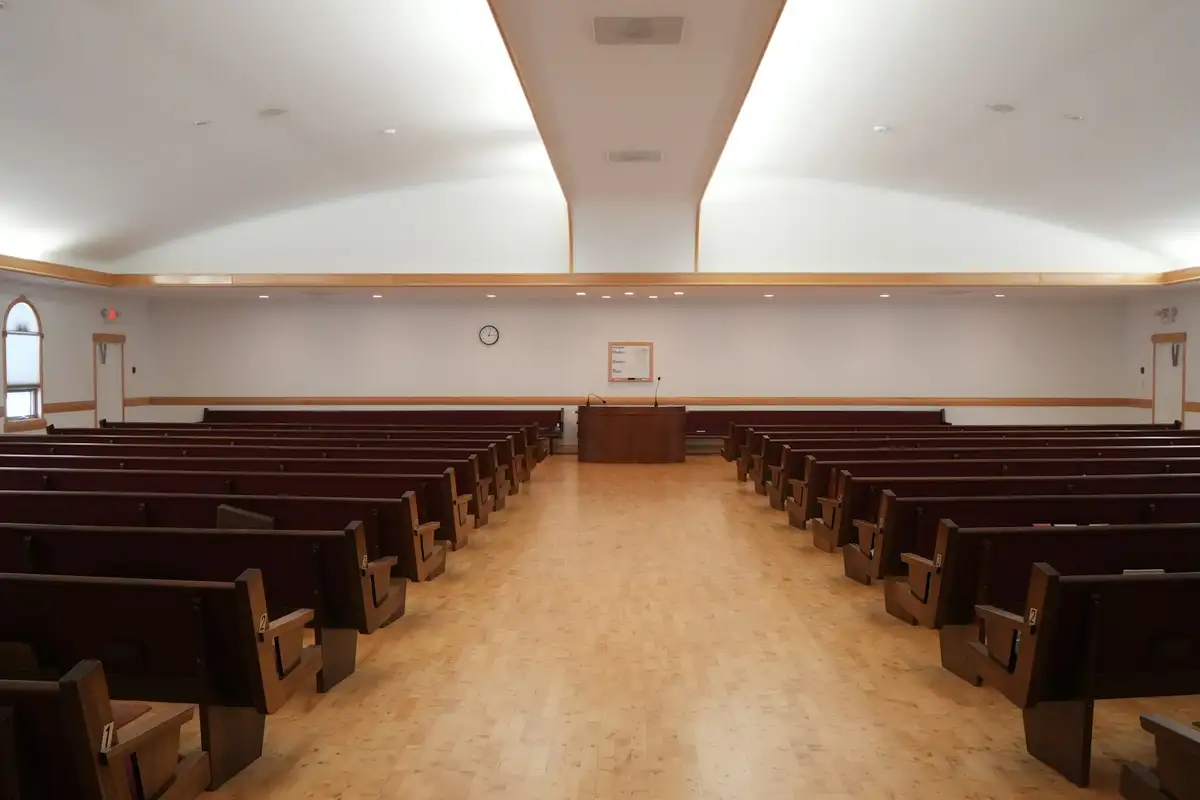
Make a joyful noise unto the Lord, all ye lands. Serve the Lord with gladness: come before his presence with singing. Know ye that the Lord he is God: it is he that hath made us, and not we ourselves; we are his people, and the sheep of his pasture. Enter into his gates with thanksgiving, and into his courts with praise: be thankful unto him, and bless his name.
Psalms 100:1-4 (KJV)
This psalm invites all lands to serve the LORD with gladness and enter His gates with thanksgiving, a classic call to worship.
O come, let us sing unto the Lord: let us make a joyful noise to the rock of our salvation. Let us come before his presence with thanksgiving, and make a joyful noise unto him with psalms.
Psalms 95:1-2 (KJV)
A call to sing unto the LORD and come before His presence with thanksgiving and psalms.
I will bless the Lord at all times: his praise shall continually be in my mouth. My soul shall make her boast in the Lord: the humble shall hear thereof, and be glad. O magnify the Lord with me, and let us exalt his name together.
Psalms 34:1-3 (KJV)
David resolves to bless the LORD at all times and invites others to magnify Him together.
Because thy lovingkindness is better than life, my lips shall praise thee. Thus will I bless thee while I live: I will lift up my hands in thy name.
Psalms 63:3-4 (KJV)
Because God’s lovingkindness is better than life, David lifts up his hands and praises Him.
Give unto the Lord the glory due unto his name; worship the Lord in the beauty of holiness.
Psalms 29:2 (KJV)
Read this line to open worship by giving the LORD the glory due unto His name.
Bless the Lord, O my soul: and all that is within me, bless his holy name. Bless the Lord, O my soul, and forget not all his benefits: Who forgiveth all thine iniquities; who healeth all thy diseases; Who redeemeth thy life from destruction; who crowneth thee with lovingkindness and tender mercies; Who satisfieth thy mouth with good things; so that thy youth is renewed like the eagle’s.
Psalms 103:1-5 (KJV)
David stirs his soul to bless the LORD and remember His benefits, from forgiveness to renewed strength.
O sing unto the Lord a new song: sing unto the Lord, all the earth. Sing unto the Lord, bless his name; shew forth his salvation from day to day. Declare his glory among the heathen, his wonders among all people.
Psalms 96:1-3 (KJV)
Sing a new song to the LORD and declare His glory among the nations.
Exalt ye the Lord our God, and worship at his footstool; for he is holy.
Psalms 99:5 (KJV)
Exalt the LORD our God and worship at His footstool, for He is holy.
I was glad when they said unto me, Let us go into the house of the Lord.
Psalms 122:1 (KJV)
The psalmist was glad when invited to go into the house of the LORD, a fitting verse for Sunday mornings.
Praise ye the Lord. Praise God in his sanctuary: praise him in the firmament of his power. Praise him for his mighty acts: praise him according to his excellent greatness. Praise him with the sound of the trumpet: praise him with the psaltery and harp. Praise him with the timbrel and dance: praise him with stringed instruments and organs. Praise him upon the loud cymbals: praise him upon the high sounding cymbals. Let every thing that hath breath praise the Lord. Praise ye the Lord.
Psalms 150:1-6 (KJV)
The final psalm calls everything that has breath to praise the LORD with every instrument.
And one cried unto another, and said, Holy, holy, holy, is the Lord of hosts: the whole earth is full of his glory.
Isaiah 6:3 (KJV)
The seraphim cry holy, holy, holy, a scene that shapes reverent worship.
God is a Spirit: and they that worship him must worship him in spirit and in truth.
John 4:24 (KJV)
Remember before you sing that God is a Spirit, worshipped in spirit and in truth.
Speaking to yourselves in psalms and hymns and spiritual songs, singing and making melody in your heart to the Lord; Giving thanks always for all things unto God and the Father in the name of our Lord Jesus Christ;
Ephesians 5:19-20 (KJV)
Paul encourages singing and making melody in your heart to the Lord, always giving thanks.
By him therefore let us offer the sacrifice of praise to God continually, that is, the fruit of our lips giving thanks to his name.
Hebrews 13:15 (KJV)
Praise offered continually is a sacrifice, the fruit of lips giving thanks to His name.
Although the fig tree shall not blossom, neither shall fruit be in the vines; the labour of the olive shall fail, and the fields shall yield no meat; the flock shall be cut off from the fold, and there shall be no herd in the stalls: Yet I will rejoice in the Lord, I will joy in the God of my salvation.
Habakkuk 3:17-18 (KJV)
Even when crops fail, the prophet chooses to rejoice in the LORD, a model for worship in hard seasons.
And at midnight Paul and Silas prayed, and sang praises unto God: and the prisoners heard them.
Acts 16:25 (KJV)
Imprisoned and in pain, Paul and Silas prayed and sang praises to God at midnight.
Saying with a loud voice, Worthy is the Lamb that was slain to receive power, and riches, and wisdom, and strength, and honour, and glory, and blessing. And every creature which is in heaven, and on the earth, and under the earth, and such as are in the sea, and all that are in them, heard I saying, Blessing, and honour, and glory, and power, be unto him that sitteth upon the throne, and unto the Lamb for ever and ever.
Revelation 5:12-13 (KJV)
Heaven’s song declares the Lamb worthy of power, riches, wisdom, strength, honour and glory.
A simple way to begin is to read one psalm aloud before you pray or sing. Psalm 100 and Psalm 95 were written as calls to worship, and many churches still open services with them. At home you might read Psalm 103:1-5 slowly and pause after each benefit to name one way God has shown it to you.
These verses also help in hard seasons. When worship feels difficult, Habakkuk 3:17-18 and the account of Paul and Silas singing in prison in Acts 16:25 show that praise can rise even when circumstances are painful. Pair them with Psalm 63:3-4 as a reminder that God’s lovingkindness is better than life itself.
For families or small groups, choose one verse each week, read it together and let each person share something they are thankful for. Ephesians 5:19-20 encourages believers to speak to one another in psalms and hymns, so singing a psalm set to music is a natural way to put these words to use.
John 4:24 works well read before a time of personal worship, as a reminder of what genuine worship actually requires.
You might also turn to Bible Verses About Eternal Life and Bible Verses About Spiritual Protection.
Quotations follow the King James Version of 1611, now in the public domain. To read any verse within its full chapter, try Blue Letter Bible.
This subject overlaps with Bible Verses For Peace and Fear and with Bible Verses For Wisdom and Understanding.
Two nearby collections worth opening next are Bible Verses For Family Love and Bible Verses For Miracles.
Some of the same ground is covered in Bible Verses For Trusting God in Hard Times and Bible Verses For Fear.
Bible Verses For Praise and Bible Verses About Praise explore related themes.
If the KJV wording feels unfamiliar, Bible Gateway lets you set it beside a modern translation.
Bible Hub collects commentary on every verse if you want to study one more closely.
Return to this verse as a regular guide for genuine, internal worship.
These verses were never meant to sit on a page as decoration \u2014 they’re meant to shape how you actually respond the next time it’s hard to worship when you’re hurting.
You don’t need polished or formal language for it \u2014 an honest, plainly worded sentence is enough, something as simple as telling God directly for the ability to worship honestly even through pain.
Reading a single verse is a good start, but reading the passage around it lets you see why the writer broke into praise in the first place. This week-long plan pairs each of these Bible Verses For Worship with its wider setting. Set aside ten to fifteen minutes, read the passage slowly, and end by speaking or singing one line of it back to God.
Keep a notebook open as you go. Each day, write down one attribute of God the passage names, such as holiness, mercy or strength. By the end of the week you will have a short list of reasons to worship that came straight from Scripture, and you can return to it on Sunday mornings when your heart feels slow to respond. If you miss a day, simply pick up where you left off; the aim is attention, not a perfect streak.
Among these Bible Verses For Worship, Day 3 often surprises readers. Isaiah does not move straight from seeing God’s glory into cheerful singing. He first cries, “Woe is me! for I am undone,” and only after the live coal touches his lips does he offer himself for service. Real worship can include honest confession. Many psalms hold praise and repentance side by side, so there is no need to hide your failures before you come to God.
Few stories show worship in action as clearly as 2 Chronicles 20. A great army from Moab, Ammon and mount Seir was coming against Judah, and King Jehoshaphat was afraid. Instead of pretending otherwise, he “set himself to seek the LORD, and proclaimed a fast throughout all Judah.” The people gathered, and the king prayed openly before them, ending with a plain confession of helplessness: “neither know we what to do: but our eyes are upon thee.”
God answered through a Levite named Jahaziel, who told them, “the battle is not yours, but God’s.” Jehoshaphat bowed his head with his face to the ground, and all Judah fell before the LORD, worshipping. The next morning the king appointed singers to go out ahead of the army, praising the beauty of holiness and saying, “Praise the LORD; for his mercy endureth for ever.” When they began to sing, the LORD set ambushments against the invaders, and Judah never had to fight.
The account ends in the valley of Berachah, a name meaning blessing, where the people gathered to bless the LORD for what He had done. Jehoshaphat’s example suggests a pattern you can follow with Bible Verses For Worship in your own hard seasons: admit your fear, fix your eyes on God, recall His promises, and begin to praise before you see the outcome. His mercy, as the singers declared, endures for ever.
If you lead music, read Scripture from the front or host a home fellowship, the order of your readings shapes the whole gathering. Many churches follow a simple flow that moves from invitation, to God’s holiness, to confession, to thanksgiving, and finally to sending out. Choosing Bible Verses For Worship for each stage helps the songs and prayers feel connected rather than random.
Short, direct invitations work well at the start because people are still settling in. Psalm 95:6 (“O come, let us worship and bow down: let us kneel before the LORD our maker”) and Psalm 118:24 (“This is the day which the LORD hath made; we will rejoice and be glad in it”) can each be read in a few seconds. Read slowly, pause, and then begin the first song.
After a song about God’s holiness, a reading such as 1 John 1:9 gives space for quiet confession: “If we confess our sins, he is faithful and just to forgive us our sins, and to cleanse us from all unrighteousness.” Follow it with a song of gratitude so the assurance of forgiveness leads straight into praise. For more readings suited to a whole congregation, see these Bible verses for corporate worship.
Close with a blessing rather than an announcement. Numbers 6:24-26 (“The LORD bless thee, and keep thee”) reminds the congregation that worship continues after they leave the building. Hebrews 13:20-21, which asks the God of peace to make believers perfect in every good work to do His will, is another fitting close. When the Bible Verses For Worship you choose follow this kind of path, even a short gathering has a clear beginning, middle and end.
Some days the words simply will not come. Praying Scripture back to God gives shape to a quiet or tired heart. Pray the following slowly, pausing at each line to add your own words. It draws on several of these Bible Verses For Worship as well as the passages in the reading plan above.
Lord, You are holy, holy, holy, and the whole earth is full of Your glory. I come into Your presence with thanksgiving, not because my week has been easy, but because Your lovingkindness is better than life. Forgive me where my worship has been only words. Teach me to worship You in spirit and in truth. I offer You my body and my ordinary work today as a living sacrifice. When I am afraid, like Jehoshaphat, let my eyes be on You. Put a new song in my mouth, and let everything that has breath praise You. In Jesus’ name, amen.
If you want to keep going on your own, the collection of Bible verses for personal worship offers passages for quiet times at home. Choosing just one of the Bible Verses For Worship above each week and memorising it is a simple habit that carries these words into the rest of your life.
Paul wrote to the church in Ephesus from a prison cell, and in the middle of a letter about unity he slipped in a line about music. Ephesians 5:19-20 says, “Speaking to yourselves in psalms and hymns and spiritual songs, singing and making melody in your heart to the Lord; giving thanks always for all things unto God and the Father in the name of our Lord Jesus Christ.” Look at the direction of the first phrase. They were speaking to themselves, meaning to one another.
Singing together in the first century was never only a private matter between a person and God. It was how a mixed congregation of Jews, Greeks, slaves and free people learned the same words and reminded each other what was true. A man who had been mocked all week could stand beside someone who had mocked him, and both sang the same line.
The phrase about melody in the heart is a gentle check on us. Voices can be perfect while the heart wanders, and a rough voice can carry real gladness. If you sit through the singing at your church feeling out of tune or out of sorts, try listening to the people around you. Often the best part of corporate worship is hearing someone else get the words right when you cannot.
Habakkuk lived in Judah when the Babylonian army was rising to the north, and he did not pretend to be calm. His book opens with complaint. Yet by chapter 3 he reaches a confession that still unsettles people: “Although the fig tree shall not blossom, neither shall fruit be in the vines; the labour of the olive shall fail, and the fields shall yield no meat; the flock shall be cut off from the fold, and there shall be no herd in the stalls: Yet I will rejoice in the LORD, I will joy in the God of my salvation.”
Read that list slowly. These were not poetic exaggerations to a farming people. Figs, olives, grain and livestock were the whole household economy. Losing all of them meant hunger. Habakkuk is not saying the loss is secretly good. He is saying that God remains worth praising when every visible reason has been removed.
That is a different thing from cheerfulness on demand. Honest worship can come with tears and unanswered questions, and Habakkuk had both. If you are in a season where the bank account, the diagnosis, or the empty chair at the table makes praise feel false, the prophet gives you permission to bring the whole mess. Pair that with real help from friends, a pastor, or a counselor. The Lord can be trusted with both your praise and your pain.
Acts 16 tells of Paul and Silas, who had just been beaten with rods and thrown into the inner prison at Philippi, their feet fastened in stocks. Their backs were bleeding. It was dark, damp and cold. Then verse 25: “And at midnight Paul and Silas prayed, and sang praises unto God: and the prisoners heard them.” The last clause is easy to skip. Other men, awake in the same dark, heard the singing.
Nothing in the text says they felt wonderful. It says they prayed and sang. Their worship was a decision made with sore bodies, not a mood that arrived on its own. What followed, an earthquake, open doors and a jailer asking how to be saved, is the part we remember, but the song came first and it came before anything changed.
It is worth noticing how little they had. No instruments, no congregation they had chosen, no guarantee of release. Some of the best Bible Verses For Worship are not psalms at all but moments like this one, where a few weary people turned toward God because that was the only direction left. If your own midnight is a hospital hallway or a lonely apartment, even a hummed line counts, and someone nearby may be listening.
Hebrews 13:15 says, “By him therefore let us offer the sacrifice of praise to God continually, that is, the fruit of our lips giving thanks to his name.” The word sacrifice would have landed hard on the original readers. Many of them had grown up watching animals brought to the temple. A sacrifice cost something, and everyone present understood that.
So calling praise a sacrifice is a deliberate choice. It admits that thanks is not always free. Sometimes it costs us the right to complain, or the comfort of staying quiet when we would rather be left alone. The writer says to do it continually, which means praise is meant to be a habit that runs through ordinary days and not an occasional event reserved for the best ones.
Notice also the phrase fruit of our lips. Fruit takes time and comes from a root. The thanks that rises from our mouths grows out of what is happening underneath, and the Spirit tends that soil slowly. If your gratitude feels thin right now, begin small: name three ordinary things from the last day and say them to God out loud. Gratitude practiced on small things has a way of getting stronger. It is a modest start, and a perfectly biblical one.
Psalm 122:1 reads, “I was glad when they said unto me, Let us go into the house of the LORD.” This belongs to the collection called the Songs of Ascents, pilgrim songs sung by travelers climbing toward Jerusalem for the great feasts. Imagine families walking for days, children asking when they would arrive, neighbors from the same village sharing bread on the road. The gladness in the psalm is partly the excitement of finally being almost there.
Many of us do not feel that gladness every week. Mornings are crowded, bodies ache, and the effort of getting out of the house can seem larger than the benefit. The psalm does not scold that feeling, but it does hint at something helpful. The pilgrims did not travel alone, and being invited by someone else, as the verse says, was part of what made it joyful.
If you have drifted from gathering with others, a simple invitation may do more than a big resolution. Ask a friend to go with you, or be that friend for someone else. Worship in company has a way of carrying you on days you could not carry yourself, and the walk itself becomes part of the song.
Isaiah 6:3 records what the prophet heard in the temple vision: “Holy, holy, holy, is the LORD of hosts: the whole earth is full of his glory.” Repeating a word three times was the Hebrew way of reaching for the highest degree. Holy here means set apart, wholly other, not one more item in the list of things we might admire. Isaiah responded not with a clever remark but with a cry of his own unworthiness.
Psalm 29:2 uses a related phrase: “Give unto the LORD the glory due unto his name; worship the LORD in the beauty of holiness.” The beauty of holiness may sound abstract, but it is the sense that God is both utterly pure and wonderfully attractive. Reverence and delight are not opposites. A child can love a mighty father and still be a little in awe of him.
Modern worship can lean casual or it can lean stiff, and both have their pitfalls. What these passages ask is that we remember who we are speaking to. You do not need candles or high ceilings for that, only a pause before you pray to say, quietly, that He is greater than whatever you are carrying into the room. That one honest sentence can reset an entire hour.
If you want to keep going with this theme, try Bible Verses For Corporate Worship, Bible Verses About Personal Worship, Bible Verses For Personal Worship, Bible Verses For Praise And Worship and Bible Verses For Worship Music.
For deeper study, Bible Gateway, Bible Hub and Bible Study Tools are all free to use.
A simple way to begin is to read one psalm aloud before you pray or sing. Psalm 100 and Psalm 95 were written as calls to worship, and many churches still open services with them.
This page brings together 17 King James Version references about worship, drawn from 12 different books of the Bible.
Psalm 103:1 is one of the verses about worship referenced in this collection, alongside Habakkuk 3:17.
Yes, the verses referenced on this page, including Psalm 103:1, are quoted according to the King James Version (KJV), and are suitable for daily reading, memorization, or devotional use.
Beyond the references highlighted on this page, worship appears throughout Scripture in books such as Psalm, Habakkuk, Acts, Ephesians, John; this collection focuses on some of the clearest examples.