
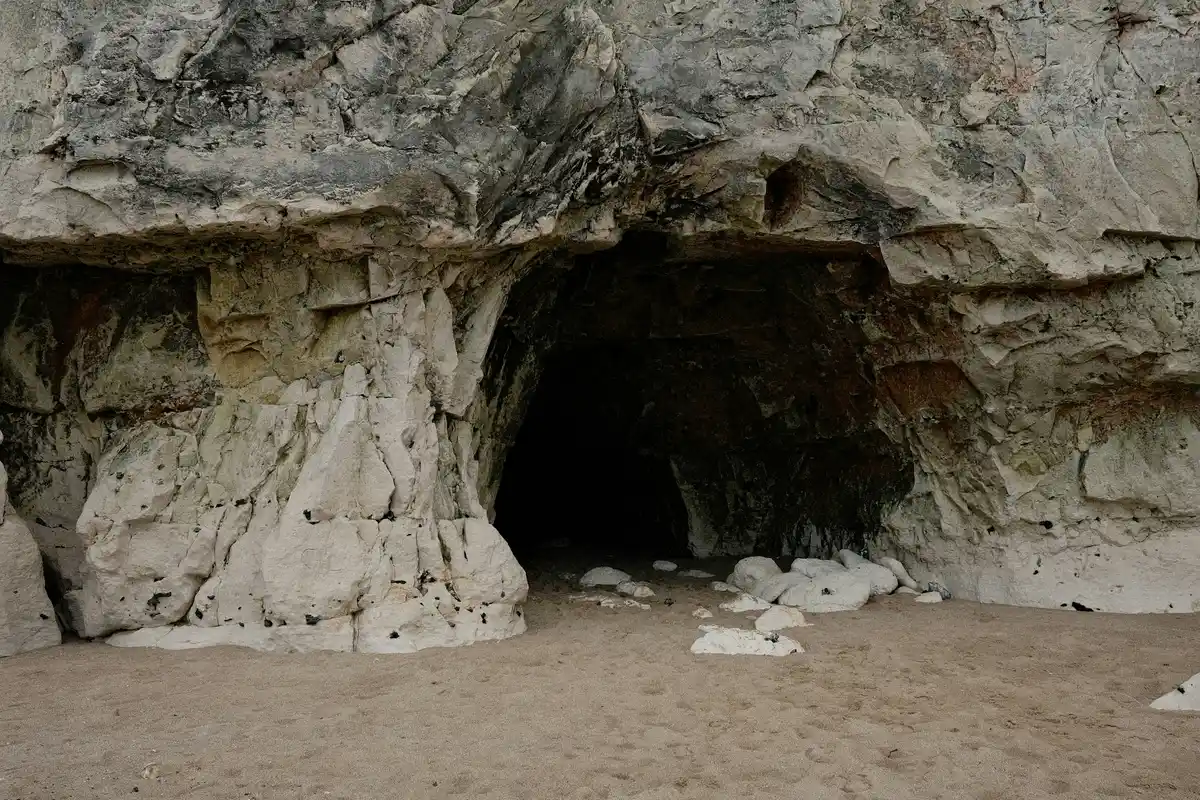
These passages cover the raising of Lazarus in John 11 and 12, followed by the parable of the beggar Lazarus in Luke 16, each quoted in the King James Version.
Now a certain man was sick, named Lazarus, of Bethany, the town of Mary and her sister Martha.
John 11:1 (KJV)
Every Bible verse about Lazarus in the raising story begins here, with an ordinary family in a small town near Jerusalem. The account starts with sickness, which is where many of our own stories begin.
Therefore his sisters sent unto him, saying, Lord, behold, he whom thou lovest is sick.
John 11:3 (KJV)
The sisters do not make a demand; they simply report the need. This Bible verse about Lazarus models a short, honest prayer that trusts Jesus to understand.
When Jesus heard that, he said, This sickness is not unto death, but for the glory of God, that the Son of God might be glorified thereby.
John 11:4 (KJV)
Jesus speaks of a larger purpose before anyone sees it. Readers who grieve often turn to this Bible verse about Lazarus when they need to believe that pain may serve something unseen.
Now Jesus loved Martha, and her sister, and Lazarus.
John 11:5 (KJV)
The text pauses to state love before it records delay. This simple Bible verse about Lazarus reminds us that waiting is not the same as indifference.
These things said he: and after that he saith unto them, Our friend Lazarus sleepeth; but I go, that I may awake him out of sleep.
John 11:11 (KJV)
Jesus calls death a sleep and Lazarus our friend. For anyone mourning, this Bible verse about Lazarus shows that Christ treats the end of life as something he can wake us from.
Then said Martha unto Jesus, Lord, if thou hadst been here, my brother had not died.
John 11:21 (KJV)
Martha says aloud what many grieving people think. Jesus does not rebuke her; this Bible verse about Lazarus proves honest sorrow is welcome in his presence.
Jesus said unto her, I am the resurrection, and the life: he that believeth in me, though he were dead, yet shall he live: And whosoever liveth and believeth in me shall never die. Believest thou this?
John 11:25-26 (KJV)
The heart of the chapter. In this Bible verse about Lazarus Jesus does not offer a doctrine but himself: resurrection is a person who stands in front of her.
She saith unto him, Yea, Lord: I believe that thou art the Christ, the Son of God, which should come into the world.
John 11:27 (KJV)
Martha answers before she sees any miracle. Her confession in this Bible verse about Lazarus is one of the clearest statements of faith in the Gospels.
Jesus wept.
John 11:35 (KJV)
The shortest verse in the Bible and one of the most precious. He knew he would raise Lazarus, yet he wept, which makes this Bible verse about Lazarus a comfort for every mourner.
Then said the Jews, Behold how he loved him!
John 11:36 (KJV)
The onlookers could see the love in Jesus’ tears. This Bible verse about Lazarus shows a God whose affection for his friends is visible in grief.
Jesus saith unto her, Said I not unto thee, that, if thou wouldest believe, thou shouldest see the glory of God?
John 11:40 (KJV)
Standing at the tomb, Jesus recalls his earlier promise. This Bible verse about Lazarus links trust with seeing God’s glory, even in a hard place.
Then they took away the stone from the place where the dead was laid. And Jesus lifted up his eyes, and said, Father, I thank thee that thou hast heard me.
John 11:41 (KJV)
He gives thanks before anything happens. This Bible verse about Lazarus models gratitude that trusts the Father in advance.
And when he thus had spoken, he cried with a loud voice, Lazarus, come forth. And he that was dead came forth, bound hand and foot with graveclothes: and his face was bound about with a napkin. Jesus saith unto them, Loose him, and let him go.
John 11:43-44 (KJV)
The central miracle, and then a quiet instruction to the crowd: loose him. This Bible verse about Lazarus reminds us that resurrection leads to freedom, and that the community helps with it.
Then many of the Jews which came to Mary, and had seen the things which Jesus did, believed on him.
John 11:45 (KJV)
The miracle brings many to faith. Every Bible verse about Lazarus in this chapter pushes the reader toward belief in Jesus as the Son of God.
Then Jesus six days before the passover came to Bethany, where Lazarus was which had been dead, whom he raised from the dead.
John 12:1 (KJV)
Lazarus is described as the man who had been dead. This Bible verse about Lazarus places him as a living witness just before Jesus’ own death and resurrection.
And there was a certain beggar named Lazarus, which was laid at his gate, full of sores, And desiring to be fed with the crumbs which fell from the rich man’s table: moreover the dogs came and licked his sores.
Luke 16:20-21 (KJV)
The other Lazarus of Scripture lives in a parable. This Bible verse about Lazarus describes poverty with unusual specificity, and he is the only person named in any of Jesus’ parables.
And it came to pass, that the beggar died, and was carried by the angels into Abraham’s bosom: the rich man also died, and was buried;
Luke 16:22 (KJV)
Heaven notices the one the street ignored. This Bible verse about Lazarus assures readers that suffering unseen on earth is seen by God.
But Abraham said, Son, remember that thou in thy lifetime receivedst thy good things, and likewise Lazarus evil things: but now he is comforted, and thou art tormented.
Luke 16:25 (KJV)
A sober reversal. The Bible verse about Lazarus here is a call to compassion, since the parable condemns indifference to a poor man at the door.
When people type a request for a Bible verse about Lazarus, they usually mean the man raised from the dead in John 11. Yet the Gospels offer a second Lazarus in Luke 16, the beggar of the parable. They share a name, which means God has helped, but their stories are very different.
This page treats both. The first half of the article works through the raising at Bethany, a story of friendship and resurrection. The second half turns to the parable of the rich man and Lazarus, a story about wealth, mercy and what lies beyond death. Together they show how fully the Bible speaks to grief.
Bethany was a village less than two miles from Jerusalem, and the home of Mary, Martha and Lazarus was a place where Jesus could rest. Luke records him being welcomed there earlier, with Martha busy in the kitchen and Mary at his feet. That background colors every Bible verse about Lazarus in John 11.
This was no distant crowd healing. The raising of Lazarus involves people Jesus knew by name and loved. It is the Gospel at kitchen-table scale, where sisters send word that their brother is ill and expect a friend to come. Their confidence in his care shapes the whole story.
The message from the sisters is eight words long and says everything. They do not ask for a miracle or specify a plan. They tell Jesus about the situation and who it concerns. In this Bible verse about Lazarus, prayer is as simple as naming what hurts.
Many of us over-explain when we pray. The sisters did not. They trusted that a friend who loved Lazarus needed only to be told. If you are praying for someone ill, you can do the same: Lord, the one you love is sick. It is a prayer that rests in his love, not in our eloquence.
The next verses are difficult. Jesus loved them, we are told, and yet he stayed two more days where he was. By the time he reached Bethany, Lazarus had been in the tomb four days. The Bible verse about Lazarus that explains this is John 11:4, where he says the sickness is for God’s glory.
His delay was not neglect but preparation for a greater act. This does not erase the sisters’ pain; Martha and Mary both said if thou hadst been here. But it does teach that apparent silence from heaven may hide a plan we cannot see. Look at Bible verses about faith in troubled times for more.
Jesus told the disciples that Lazarus slept, and they took him literally and said that sleep would help him recover. Then he spoke plainly: Lazarus is dead. Calling death sleep is a tender image that appears in other places in the New Testament and signals that death is not final for believers.
The Bible verse about Lazarus in John 11:11 invites a gentle reflection. A sleeper wakes. Someone who knows the sleeper is nearby and means to call them. For a family in mourning, that picture can soften the finality of the word dead and point toward the morning.
Martha ran to meet Jesus while Mary stayed home. Her first words are blunt: Lord, if thou hadst been here, my brother had not died. It is a complaint and a confession in one breath. She believed Jesus had power and wondered why he had not used it in time.
Her honesty is a gift to every grieving reader of a Bible verse about Lazarus. Jesus welcomed her words and answered with a theological promise. Faith in the Gospels does not require polite silence. It allows the cry, the question and the sorrow, and it brings them straight to Christ.
Martha said she knew Lazarus would rise on the last day. Jesus replied with one of the great I am statements of John: I am the resurrection and the life. He shifts the hope from a future event to a present person. Resurrection is not merely something Jesus does; it is who he is.
This is the most quoted Bible verse about Lazarus, and it is read at graves around the world. Notice it ends with a question: believest thou this? Jesus asks for trust, not for a debate. For related comfort, see Bible verses about the resurrection.
After Jesus’ question, Martha says yes, Lord, and adds that she believes he is the Christ, the Son of God. She does not yet know that her brother will rise. Her confession comes before the miracle, in the shadow of the tomb, which makes it all the more remarkable.
A Bible verse about Lazarus like this one shows that faith can be sincere and incomplete at the same time. She says yes and still hesitates when Jesus asks that the stone be removed. Both responses live in the same heart, and Jesus works with both.
When Mary came to Jesus she fell at his feet and repeated her sister’s words. John records that she was weeping, as were those with her. Jesus saw this and was deeply moved in spirit. He did not give a speech. He asked where they had laid Lazarus.
The Bible verse about Lazarus in this moment is a quiet one: the Lord bends toward grief and asks to be taken to the place of pain. He wants to be where we hurt. In your own sorrow you may find it helpful to picture him asking the same question, and to answer by showing him the place.
Two words, the shortest verse in the English Bible, carry the weight of an entire chapter. Jesus wept. He had just told Martha the resurrection was coming and he was about to prove it. Yet he stood among the mourners and shed real tears.
This Bible verse about Lazarus tells us he is not detached from our pain. The Son of God cries at graves. If you have been told to stop crying because someone has gone to a better place, remember that Jesus did not say that to Mary. He wept with her. Our page on Bible verses for comfort in grief continues the theme.
The bystanders saw the tears and said, Behold how he loved him. Some of them grumbled that the man who opened the eyes of the blind might have prevented this death. Their reactions are mixed, as ours often are: tenderness, accusation, confusion.
A Bible verse about Lazarus like John 11:36 shows that love and sorrow are woven together. The depth of grief shows the depth of attachment. Jesus did not hurry past this. He let love be seen, and his tears stand as proof that those we mourn mattered, and still matter, to God.
At the tomb, a cave with a stone across the entrance, Jesus said take ye away the stone. Martha objected that by now there would be a smell. It is a grimly honest detail. She was practical and afraid. Jesus reminded her of what he had said about seeing the glory of God.
Every Bible verse about Lazarus at the tomb highlights a pattern: Jesus asks people to do what they can, and then he does what only he can. The people removed the stone; Jesus called the dead man. Some obstacles in life need our hands before they need his miracle.
Before calling Lazarus, Jesus lifted his eyes and thanked the Father for hearing him. He then explained that he said it for the sake of the crowd, that they might believe. His prayer is not an attempt to persuade the Father but a declaration of union with him.
For readers drawn to the Bible verse about Lazarus, this scene teaches that thanksgiving can come before the answer. Gratitude in the face of the unseen is a form of faith. We can imitate it quietly: Father, thank you that you hear me, even here, even now.
He cried with a loud voice, Lazarus, come forth. Think of that. Jesus called a particular man by his name out of the grave, and the man came. John gives no description of the moment itself, only the result: he that was dead came forth, bound hand and foot.
This Bible verse about Lazarus is more than a spectacle. It points ahead to the voice that will call all of Christ’s people. In John 5 Jesus says the hour is coming when all that are in the graves shall hear his voice. Lazarus was a preview, a living promise.
Lazarus came out wrapped in grave clothes with a cloth over his face. He could not see or walk freely. So Jesus told the people nearby to loose him and let him go. A miracle was followed by ordinary, practical help from friends.
It is a lovely detail for anyone studying a Bible verse about Lazarus. Resurrection life is meant to be unbound, and the community has a part in that release. When someone comes out of a dark season, we can help remove what still wraps them: shame, fear, old labels.
Many who had come to comfort Mary saw what Jesus did and believed on him. Others went to the Pharisees and told them. The same miracle produced faith in some and hostility in others. Soon after, the chief priests plotted to kill Jesus, and even Lazarus.
The Bible verse about Lazarus in John 11:45 reminds us that signs do not force belief. People respond according to what is in them. Jesus remained gentle and clear, willing to face the cost of giving life, and the cost would soon be his own.
John 12 shows Lazarus sitting at the table with Jesus six days before the Passover. Martha served, and Mary anointed Jesus’ feet. The man who had been in the grave was now eating dinner. It is one of the most ordinary and wonderful pictures in the Gospels.
Any Bible verse about Lazarus that mentions the supper highlights that resurrection leads to fellowship. The risen man did not give speeches; his presence was the witness. Crowds came to see him as well as Jesus. His life was the evidence.
The Gospels never record a word spoken by Lazarus. We do not know what he saw or said about death. Later tradition says many things, but Scripture is silent. That silence invites us to focus on Jesus and not on speculation.
A reader seeking a Bible verse about Lazarus should receive the text as it stands, with humility about what it leaves unsaid. The point of the story is not a tour of the afterlife but the identity of Jesus as the resurrection and the life, and the invitation to trust him.
Luke 16 tells of a rich man dressed in purple and fine linen who feasted every day, and a poor man named Lazarus covered in sores who lay at his gate. The detail that Lazarus is named is striking, since parables usually keep characters anonymous.
A Bible verse about Lazarus in Luke 16 shows that God knows the names of the forgotten. The rich man had every opportunity to help. The beggar longed for scraps. The story is not an attack on wealth as such but a warning about the blindness that comfort can create.
When the beggar died, Luke says angels carried him to Abraham’s bosom. Nobody mentions a funeral for Lazarus; the rich man, by contrast, was buried. The contrast is quiet but unmistakable: God’s attention is on the unnoticed.
For anyone who has suffered poverty, illness or loneliness, this Bible verse about Lazarus is a profound consolation. Heaven’s records do not match earth’s. Those who were ignored are honored, and the comfort they lacked in life is given in full.
In the parable, the rich man finds himself in torment while Lazarus is comforted. Abraham explains that each received in life what he received and now the situations are reversed. The text also says there is a great gulf fixed between them.
The Bible verse about Lazarus in Luke 16:25 is not a prediction that every poor person will be saved and every rich person lost. It is a warning to listen now. We should treat people at our gates with mercy while we can. See Bible verses about eternal hope for the other side of the story.
The rich man asks that Lazarus be sent to warn his five brothers. Abraham answers that they have Moses and the prophets. The man insists that someone rising from the dead would convince them, and Abraham replies that if they do not hear the Scriptures, they will not be persuaded even then.
This eerie ending connects with the other Lazarus. Jesus later raised a man named Lazarus, and many refused to believe. A Bible verse about Lazarus here teaches that the problem is not lack of evidence but unwillingness to listen. Hearing God’s word is the beginning of wisdom.
The Lazarus story is a favorite at funerals because it holds both tears and hope. Jesus weeps and Jesus raises. A Bible verse about Lazarus can be read to someone who has lost a loved one, not to hurry them past sorrow but to remind them that Christ is present in it.
You do not need to say much. Sit with them. Read John 11:25-26 slowly. Let the silence do its work. Grief is a long road, and a verse like this can be a lamp on the way. Our collection of Bible verses about grief has more.
John places this miracle just before the final week of Jesus’ life. It stands as the last and greatest of the signs in his Gospel, pointing to his own resurrection. Lazarus was raised to die again; Jesus rose never to die. The difference is part of the message.
Reading a Bible verse about Lazarus in that light, we see a promise with a pledge. The raising shows that Jesus has authority over death, and his resurrection guarantees that those who trust him will share it. The story is a doorway into Easter.
Jesus calls Lazarus our friend. Few lines in the Gospels are as warm. The Son of God has friends, ordinary people to whom he returns for rest and a meal. This Bible verse about Lazarus gives dignity to human friendship and invites readers into one with Jesus.
He later told his disciples that he no longer called them servants but friends. If you have wondered whether Jesus cares for you personally, the household in Bethany is your answer. He knew their names, ate at their table and cried at their loss. See also Bible verses about friendship.
The people of Bethany asked hard questions. Why did he not come sooner? Could not the man who healed the blind have prevented this? Their doubts are recorded without apology. A Bible verse about Lazarus reassures us that questions are not out of bounds.
Take your own questions to Jesus as Martha and Mary did. Be as direct as they were. What matters is that you bring them to him and stay in the conversation. Often his answer comes in the form of presence and a step further into the story.
Choose one Bible verse about Lazarus and pray with it slowly. With John 11:35, picture Jesus standing beside you in your sorrow. With John 11:25-26, ask him to make the promise real. With John 11:43-44, ask what binds you and invite him to unbind it.
Keep a simple notebook of what you notice. Short entries are enough. Over a week, you may see themes: presence, patience, release. Praying Scripture in this way turns a familiar story into a personal conversation, with the voice of Christ speaking directly to the reader.
Children often love the raising of Lazarus because it is dramatic and hopeful. Tell it simply: Jesus had a friend who died, Jesus cried, and Jesus called him back to life. Be honest that this does not happen every time, but that Jesus promised a day when he will make everything right.
Pair the Bible verse about Lazarus with a drawing or a simple craft, like tying a scarf around a doll and then taking it off. The visual of unbinding sticks. Children who have lost grandparents or pets may find comfort in knowing that Jesus cried too.
The two sisters meet Jesus in different ways. Martha runs out to speak with him, direct and theological. Mary stays seated until called, then falls at his feet in tears. Neither approach is wrong, and Jesus meets each one where she is, with words for Martha and tears for Mary.
A Bible verse about Lazarus reminds us that grief has many faces. Some people talk, others go quiet. Some need an explanation, others need company. If you are supporting a grieving friend, watch for which sister they resemble and offer what fits, patience first and answers only if asked.
The four days in the tomb are a picture of waiting that feels too long. Everyone around Lazarus had stopped hoping, and the smell of death was a matter of fact. Yet nothing about that delay was wasted. When Jesus arrived, the miracle was unmistakable.
If you are in a long season of waiting, let a Bible verse about Lazarus encourage you. God’s timing is not late; it is purposeful. We may not be given the reason, but we can be given his presence. Hold onto the line that he whom he loves is never forgotten.
Once the miracle was done, life in Bethany went on. A supper was held, perfume was poured and Lazarus sat at the table. Gratitude took the form of hospitality. Good things that follow suffering should be received with open hands and shared generously.
Think of the Bible verse about Lazarus in John 12 when you come through a difficult stretch. Throw a meal, write a thank-you note, sit with a friend. The ordinary acts of thanks are a way of saying that the God who brought us through is worth celebrating.
Lazarus appears only in a handful of chapters, yet his name has comforted millions. Whether we meet him in the tomb at Bethany or at the rich man’s gate, we are shown the same Christ: attentive, tender, and powerful over death.
If you came here with grief, take with you the shortest verse and the greatest promise. Jesus wept. Jesus is the resurrection and the life. A Bible verse about Lazarus is not just history; it is an open door to the One who calls us by name.
If this Bible verse about Lazarus helped you, these related pages continue the theme of hope and comfort: Bible verses about the resurrection, Jesus’ miracles, life after death, Bible verses about death, verses for grief, loved ones passing away, dying loved ones, Jesus rising, eternal hope, friendship.
To study these verses in more depth, try Bible Gateway, Bible Hub, Bible Study Tools, Blue Letter Bible.
The raising of Lazarus is in John 11:1-44, with a follow-up in John 12:1-2, and the parable of Lazarus the beggar is in Luke 16:19-31. Each Bible verse about Lazarus belongs to one of these two stories.
John 11:35, Jesus wept, is the shortest verse in the English Bible and the best-known Bible verse about Lazarus. It shows Jesus sharing the sorrow of Mary, Martha and the mourners.
John 11:4 says the sickness was for the glory of God. The Bible verse about Lazarus shows that Jesus delayed so his friends and the crowd would witness a greater miracle and believe.
Yes. One is the friend of Jesus from Bethany, raised in John 11. The other is the poor beggar in Luke 16. Each Bible verse about Lazarus must be read in the context of the right story.
It teaches that Jesus is the resurrection and the life, cares for grieving friends and has power over death. A Bible verse about Lazarus like John 11:25-26 gives believers confidence in resurrection.
The Bible does not record his later life or second death, though it is understood that he eventually died. Every Bible verse about Lazarus points beyond him to Christ, whose resurrection brings lasting life.