
Bible verses about nature show that the natural world is God’s handiwork and a daily witness to his power and goodness. Scripture speaks of rain, seasons, mountains, lilies and even ants to teach us about the Creator. These passages invite you to see God’s care in the world around you.
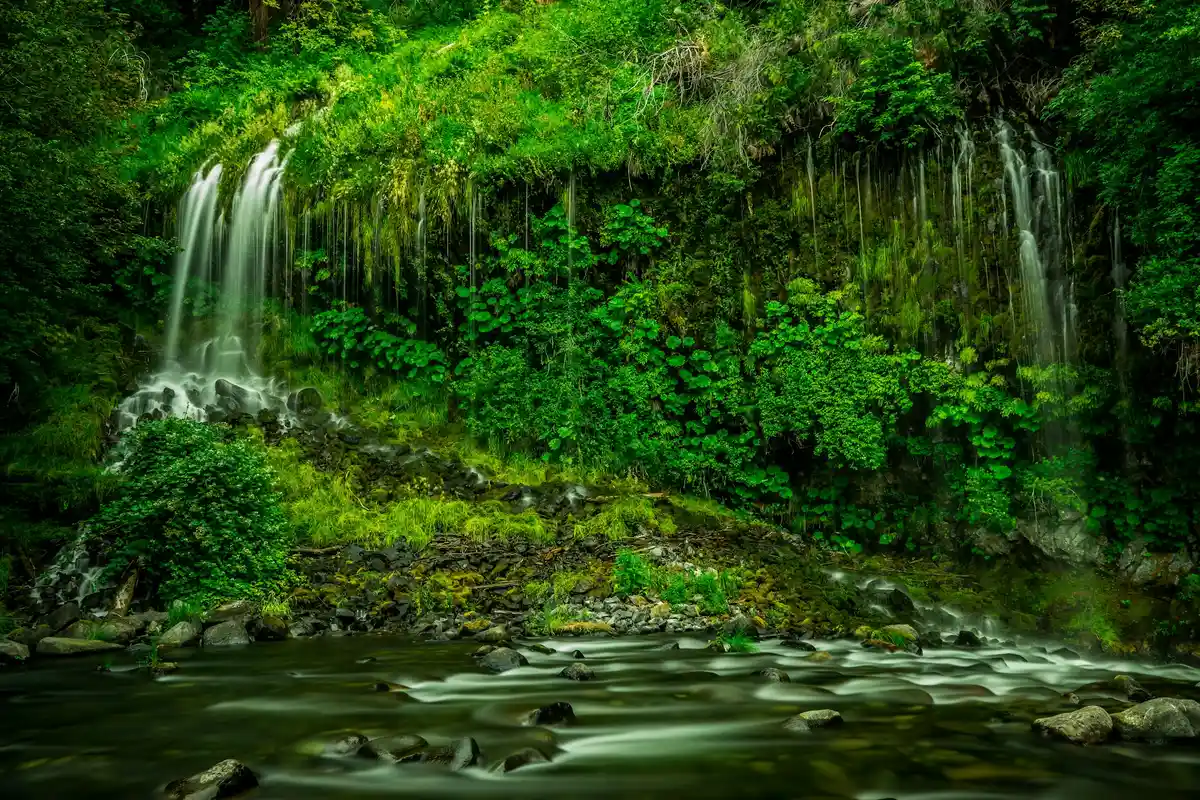
He sendeth the springs into the valleys, which run among the hills. They give drink to every beast of the field: the wild asses quench their thirst. By them shall the fowls of the heaven have their habitation, which sing among the branches. He watereth the hills from his chambers: the earth is satisfied with the fruit of thy works. He causeth the grass to grow for the cattle, and herb for the service of man: that he may bring forth food out of the earth;
Psalms 104:10-14 (KJV)
The psalmist describes God sending springs into valleys, watering hills and growing grass for cattle and plants for people.
The heavens declare the glory of God; and the firmament sheweth his handywork.
Psalms 19:1 (KJV)
The heavens themselves are presented as a constant declaration of God’s glory and handiwork.
Hearken unto this, O Job: stand still, and consider the wondrous works of God.
Job 37:14 (KJV)
Elihu urges Job to stand still and consider the wondrous works of God in the weather and sky.
Where wast thou when I laid the foundations of the earth? declare, if thou hast understanding. Who hath laid the measures thereof, if thou knowest? or who hath stretched the line upon it? Whereupon are the foundations thereof fastened? or who laid the corner stone thereof; When the morning stars sang together, and all the sons of God shouted for joy?
Job 38:4-7 (KJV)
God answers Job by asking where he was when the earth’s foundations were laid and the morning stars sang.
For the invisible things of him from the creation of the world are clearly seen, being understood by the things that are made, even his eternal power and Godhead; so that they are without excuse:
Romans 1:20 (KJV)
Nature reveals God’s eternal power and divine nature, so creation itself witnesses to him.
And God said, Let the earth bring forth grass, the herb yielding seed, and the fruit tree yielding fruit after his kind, whose seed is in itself, upon the earth: and it was so. And the earth brought forth grass, and herb yielding seed after his kind, and the tree yielding fruit, whose seed was in itself, after his kind: and God saw that it was good.
Genesis 1:11-12 (KJV)
At God’s word the earth brings forth grass, plants and fruit trees, each bearing seed after its kind.
While the earth remaineth, seedtime and harvest, and cold and heat, and summer and winter, and day and night shall not cease.
Genesis 8:22 (KJV)
After the flood God promises that seedtime and harvest, cold and heat, summer and winter will continue.
That ye may be the children of your Father which is in heaven: for he maketh his sun to rise on the evil and on the good, and sendeth rain on the just and on the unjust.
Matthew 5:45 (KJV)
Jesus notes that the Father makes his sun rise and sends rain on the just and the unjust alike.
Nevertheless he left not himself without witness, in that he did good, and gave us rain from heaven, and fruitful seasons, filling our hearts with food and gladness.
Acts 14:17 (KJV)
Paul says God has always left a witness in rain from heaven and fruitful seasons that fill hearts with gladness.
Who covereth the heaven with clouds, who prepareth rain for the earth, who maketh grass to grow upon the mountains. He giveth to the beast his food, and to the young ravens which cry.
Psalms 147:8-9 (KJV)
God covers the sky with clouds, prepares rain, makes grass grow on the mountains and feeds animals and young ravens.
Thou visitest the earth, and waterest it: thou greatly enrichest it with the river of God, which is full of water: thou preparest them corn, when thou hast so provided for it. Thou waterest the ridges thereof abundantly: thou settlest the furrows thereof: thou makest it soft with showers: thou blessest the springing thereof. Thou crownest the year with thy goodness; and thy paths drop fatness. They drop upon the pastures of the wilderness: and the little hills rejoice on every side. The pastures are clothed with flocks; the valleys also are covered over with corn; they shout for joy, they also sing.
Psalms 65:9-13 (KJV)
God waters and enriches the land so that meadows are clothed with flocks and valleys shout for joy.
And why take ye thought for raiment? Consider the lilies of the field, how they grow; they toil not, neither do they spin: And yet I say unto you, That even Solomon in all his glory was not arrayed like one of these. Wherefore, if God so clothe the grass of the field, which to day is, and to morrow is cast into the oven, shall he not much more clothe you, O ye of little faith?
Matthew 6:28-30 (KJV)
Jesus uses the lilies of the field, dressed more beautifully than Solomon, to teach trust in God’s care.
For, lo, the winter is past, the rain is over and gone; The flowers appear on the earth; the time of the singing of birds is come, and the voice of the turtle is heard in our land;
Song of Solomon 2:11-12 (KJV)
Winter passing, flowers appearing and birds singing make a vivid picture of spring’s arrival.
For as the rain cometh down, and the snow from heaven, and returneth not thither, but watereth the earth, and maketh it bring forth and bud, that it may give seed to the sower, and bread to the eater: So shall my word be that goeth forth out of my mouth: it shall not return unto me void, but it shall accomplish that which I please, and it shall prosper in the thing whereto I sent it.
Isaiah 55:10-11 (KJV)
Rain and snow watering the earth illustrate how God’s word always accomplishes what he intends.
For ye shall go out with joy, and be led forth with peace: the mountains and the hills shall break forth before you into singing, and all the trees of the field shall clap their hands.
Isaiah 55:12 (KJV)
In this joyful picture of redemption, mountains break into singing and the trees of the field clap their hands.
Go to the ant, thou sluggard; consider her ways, and be wise: Which having no guide, overseer, or ruler, Provideth her meat in the summer, and gathereth her food in the harvest.
Proverbs 6:6-8 (KJV)
The ant, preparing food in summer without a ruler, becomes a lesson in diligence and wisdom.
Let the heavens rejoice, and let the earth be glad; let the sea roar, and the fulness thereof. Let the field be joyful, and all that is therein: then shall all the trees of the wood rejoice
Psalms 96:11-12 (KJV)
Heaven, earth, sea, fields and trees are called to rejoice before the Lord.
Scripture presents nature as neither divine nor meaningless. The sun, sea and forests are not gods to be worshipped, but they are also not random. They are the works of God’s hands, and Psalms 104 describes him actively watering the hills, growing grass and feeding the animals. Romans 1:20 teaches that through nature people can perceive his eternal power and divine nature.
The Bible also uses nature to teach. Jesus pointed to the lilies of the field in Matthew 6:28-30 to show God’s care, Proverbs 6:6-8 points to the ant to teach diligence, and Isaiah 55:10-11 compares God’s word to rain that never returns without result. In Job 38, God answers Job’s questions by walking him through the wonders of the earth, sea and sky, humbling him and restoring his trust.
Nature’s rhythms are a sign of God’s faithfulness. After the flood he promised in Genesis 8:22 that the seasons would continue, and Acts 14:17 calls rain and harvest a witness to his kindness. Scripture also looks ahead with hope, picturing in Isaiah 55:12 a redeemed creation where the mountains sing and the trees clap their hands.
Romans 1:20s things that are made being understood treats creation as pointing toward its creator, not simply neutral backdrop.
Solomon is remembered for his wisdom, but Scripture adds a detail many readers pass over. According to 1 Kings 4:33, “he spake of trees, from the cedar tree that is in Lebanon even unto the hyssop that springeth out of the wall: he spake also of beasts, and of fowl, and of creeping things, and of fishes.” His God-given wisdom included careful attention to plants and animals, from the grandest tree to the humblest weed.
That detail shapes how the book of Proverbs reads. Many of its lessons come from watching the natural world closely and asking what God has built into it. Wisdom, in the biblical sense, is not only about ideas; it is about seeing the world as God made it.
Proverbs 30 records the words of Agur, who notices “four things which are little upon the earth, but they are exceeding wise” (Proverbs 30:24). Beyond the ant, he names:
Read alongside the other Bible verses about nature, Agur’s list shows that God often teaches through small things. Among the Bible verses about nature, these proverbs remind readers that humility and close observation go together. Solomon and Agur both looked carefully, and both found the Creator’s wisdom written into ordinary creatures.
Genesis lays the foundation for everything else Scripture says about creation. Some of the most important Bible verses about nature appear in its opening chapters, where God not only makes the world but also gives people a place and a task within it.
In Genesis 2:15, “the LORD God took the man, and put him into the garden of Eden to dress it and to keep it.” Adam’s first calling was to work the ground and to guard it. He was then invited to name the animals as God brought each one to him (Genesis 2:19-20), a task that required attention and care. Human beings were placed in creation as gardeners, not as owners.
Genesis 1:28 speaks of subduing the earth and having dominion over living things, and Christians have long read this alongside the command to keep the garden. Dominion in Genesis reflects the rule of a good God who repeatedly calls His works good. Psalm 24:1 adds that “the earth is the LORD’s, and the fulness thereof,” so people remain stewards who will answer to the true Owner.
Genesis also shows that sin affected the ground itself (Genesis 3:17-18), bringing thorns and toil into work that was once pure joy. Among the Bible verses about nature, this helps explain why creation is both beautiful and broken. The same book later records God’s covenant after the flood, made not only with Noah but “with every living creature” (Genesis 9:10), showing that God’s care reaches the whole created order.
The opening chapters also give creation a rhythm. After six days of work, God rested on the seventh day and blessed it (Genesis 2:2-3), and the law later extended a sabbath of rest even to the land (Leviticus 25:4). Read together, these Bible verses about nature teach that the world is not a machine to be driven without pause. Rest, seasons and limits are part of God’s good design.
Because people come to creation with strong opinions, the Bible verses about nature are sometimes read too quickly. A few misunderstandings are worth addressing directly.
People bear God’s image and hold a unique place, yet Scripture shows God’s concern for animals too. Proverbs 12:10 notes that a righteous man “regardeth the life of his beast,” treating care for animals as part of godly character. At the end of Jonah, God asks whether He should not spare Nineveh with its many people, “and also much cattle” (Jonah 4:11). Jesus taught that the Father feeds the birds of the air (Matthew 6:26). The Bible verses about nature describe a God whose care extends to every creature.
Paul writes that “the whole creation groaneth and travaileth in pain together until now” (Romans 8:22), waiting for the day when it “shall be delivered from the bondage of corruption” (8:21). Creation shares in the hope of redemption. Many Bible verses about nature look forward to renewal, not simply to an ending.
Admiring creation becomes a problem only when the gift replaces the Giver, which Paul warns about in Romans 1:25. Rightly received, the beauty of the world leads to worship. When David considered the moon and stars, the sight moved him to ask, “What is man, that thou art mindful of him?” (Psalm 8:4). Wonder at creation drew him closer to God, not further away.
The Bible verses about nature are well suited to being read outside. A walk, a quiet bench in a park or a few minutes looking at the sky can become a time of prayer.
One simple practice is to choose one of the Bible verses about nature before stepping outside, read it slowly two or three times, and then spend ten quiet minutes noticing what it describes: clouds, birds, grass or running water. Close by thanking God for one specific thing you saw. Over time, this habit trains the eyes to see creation as a daily reminder of the Creator. The questions below can guide personal reflection or a small group that meets outdoors.
When days feel crowded, Psalm 8:3-4, Matthew 6:26 and Job 12:7-10 invite a slower pace. Among the Bible verses about nature, these call people to look up, notice God’s care and remember their own place in His world. For practical ideas on praying and journaling outdoors, see these Bible verses for nature walks and outdoor prayer, and to reflect more deeply on the Creator Himself, read these Bible verses about the nature of God and His character.
Every one of the Bible verses about nature ultimately points beyond creation to the One who made it and still sustains it.
Most people think of the Sabbath as a day for people, but the law of Moses gave the soil its own rest too. Every seventh year Israelite farmers were told to leave their fields alone. Leviticus 25:4 says, “But in the seventh year shall be a sabbath of rest unto the land, a sabbath for the LORD: thou shalt neither sow thy field, nor prune thy vineyard.” Picture a farmer standing at the edge of a barley field with his hands empty, watching weeds and wildflowers take over ground he would normally have worked to the last furrow. That was an act of trust, and it was also an act of respect for the land itself.
Exodus 23:10-11 adds a detail that is easy to miss. Whatever grew by itself in that year was left for the poor and, strangely enough, for the wild animals. So the rest was never wasted. It fed people who had no field of their own and creatures who owned no barn. The soil, the poor and the animals were all treated as things God cared about at the same moment.
Modern readers can learn from this without turning it into a farming manual. A good deal of what the Bible says about the natural world is wrapped up in limits: take what you need, stop when it is time to stop, and leave something for others. A person who never rests from using the earth, or from using themselves, is working against a pattern that was built into the calendar of Israel.
Moses was minding a flock on the far side of the desert when a bush burned without burning up (Exodus 3:1-2). He had not gone looking for a holy moment. He was doing a shepherd’s chores, and the mountain at the back of the wilderness turned out to be where God spoke. Years later Elijah, worn out and frightened, ran to the same mountain range. There was a wind that split rocks, an earthquake, and a fire, yet the account says the LORD was in none of them. Then came “after the earthquake a fire; but the LORD was not in the fire: and after the fire a still small voice” (1 Kings 19:12). The point is not that loud weather is bad. It is that God is not limited to the dramatic.
Jesus kept the same habit. Mark 1:35 says that “in the morning, rising up a great while before day, he went out, and departed into a solitary place, and there prayed.” Notice that he chose open ground before sunrise, when Capernaum was still asleep and nobody was asking him for anything. If the Son of God needed that, the rest of us can stop feeling guilty about a slow walk on a trail or an hour on a back porch with the phone left inside.
A caution, though. A quiet field does not replace the gathered church, and the Bible never tells anyone to worship the mountain. It simply shows that wide, unhurried places often give the mind room to hear what a crowded week keeps drowning out.
Jesus grew up in Galilee, where a hillside of grain or a sparrow in the market was ordinary life. He used those everyday scenes as classrooms. In the story of the sower (Mark 4:3-8), seed falls on a path, on rocky ground, among thorns and on good soil, and only the last produces a crop. Anyone who had walked a Galilean field knew exactly what that looked like: the packed path where birds snatched the grain, the thin soil over limestone where a shoot sprang up and then scorched. He was not giving a lesson on agriculture. He was using what his listeners already understood to say something about how people hear.
Sparrows were cheap. Matthew 10:29 puts it plainly: “Are not two sparrows sold for a farthing? and one of them shall not fall on the ground without your Father.” The smallest, least valued bird in the market is still not beyond the Father’s notice, and the argument that follows is that people are worth far more. Notice the order of the reasoning. The sparrow is real evidence, seen with the eyes, and the conclusion about human worth rests on it.
Read the gospels with that in mind and almost every field, flock and fig tree becomes a small door. Try reading one parable slowly and then going outside to look for the very thing he mentioned. It changes how the story sounds.
Not every scene outdoors feels like praise. Floods, droughts, locusts and wildfires are part of the natural world too, and Scripture does not pretend otherwise. Paul writes in Romans 8:22 that “the whole creation groaneth and travaileth in pain together until now.” He treats the created world as something damaged and waiting, not as a flawless backdrop. In the verses just before, he says creation itself is longing to be set free from decay (Romans 8:19-21).
Job’s story shows another side. When God finally answers Job out of the whirlwind in chapters 38 and 39, he does not explain Job’s suffering. He asks about mountain goats giving birth, the wild donkey roaming the salt flats, and the ostrich that seems to forget her eggs. Some of those creatures are untamed and strange. The lesson is that the world is bigger than a human timetable, and that God’s wisdom runs through places no person has ever managed or even visited.
If you are grieving after a storm, a failed harvest or a loss that nature seemed to cause, it is honest to say that it hurts and does not make sense yet. Passages like these allow that. And if the heaviness lingers, talking with a pastor, a counselor or a doctor is wise, not a lack of faith.
The law of Moses has a surprising amount of concern for animals. Deuteronomy 22:6-7 tells a traveler who finds a bird’s nest with a mother sitting on the eggs not to take both; he may take the young but must let the mother go. Elsewhere an ox treading grain was not to be muzzled (Deuteronomy 25:4), and a stray animal belonging to an enemy had to be brought back (Exodus 23:4-5). These are small, almost domestic rules, yet they show that how you treat a creature matters to God.
Proverbs 12:10 gathers it up from the wisdom side: “A righteous man regardeth the life of his beast: but the tender mercies of the wicked are cruel.” The proverb ties character to animal care. A person’s goodness shows up in the barn, the yard and the kennel, where no one is applauding.
A short prayer fits here. Lord, you made the soil, the birds and the slow river down the road, and you have not stopped caring for any of them. Teach me to slow down enough to see what you have made, to take only what I need, and to leave the place a little better than I found it. When the world feels heavy, remind me that you are over it. Amen.
More verse collections related to nature: Bible Verses About Trusting God in Hard Times, Bible Verses For God's Presence, Bible Verses For Prayer and Protection, Bible Verses About Motivation, Bible Verses About Family Unity, Bible Verses For Peace and Strength, Bible Verses About Having Faith, Bible Verses For Peace and Fear, Bible Verses For Romantic Love, Bible Verses For Good Friends and Bible Verses For Money.
To study these verses in more depth, try Blue Letter Bible, Bible Gateway, Bible Hub and Bible Study Tools.
People bear God's image and hold a unique place, yet Scripture shows God's concern for animals too. Proverbs 12:10 notes that a righteous man "regardeth the life of his beast," treating care for animals as part of godly character. At the end of Jonah, God asks whether He should not spare Nineveh with its many people, "and also much cattle" (Jonah 4:11). Jesus taught that the Father feeds the birds of the air (Matthew 6:26). The Bible verses about nature describe a God whose care extends to every creature.
Paul writes that "the whole creation groaneth and travaileth in pain together until now" (Romans 8:22), waiting for the day when it "shall be delivered from the bondage of corruption" (8:21). Creation shares in the hope of redemption. Many Bible verses about nature look forward to renewal, not simply to an ending.
Admiring creation becomes a problem only when the gift replaces the Giver, which Paul warns about in Romans 1:25. Rightly received, the beauty of the world leads to worship. When David considered the moon and stars, the sight moved him to ask, "What is man, that thou art mindful of him?" (Psalm 8:4). Wonder at creation drew him closer to God, not further away.
When days feel crowded, Psalm 8:3-4, Matthew 6:26 and Job 12:7-10 invite a slower pace. Among the Bible verses about nature, these call people to look up, notice God's care and remember their own place in His world. For practical ideas on praying and journaling outdoors, see these Bible verses for nature walks and outdoor prayer, and to reflect more deeply on the Creator Himself, read these Bible verses about the nature of God and His character.