
These Bible Verses For Wilderness Seasons are for the stretches of life that feel dry, quiet and uncertain, when prayers seem to echo and the way ahead is hard to see. Scripture is full of people who met God in the desert, from Israel gathering manna to Elijah resting under a juniper tree. Let these words remind you that the wilderness is still a place where God leads, feeds and speaks.
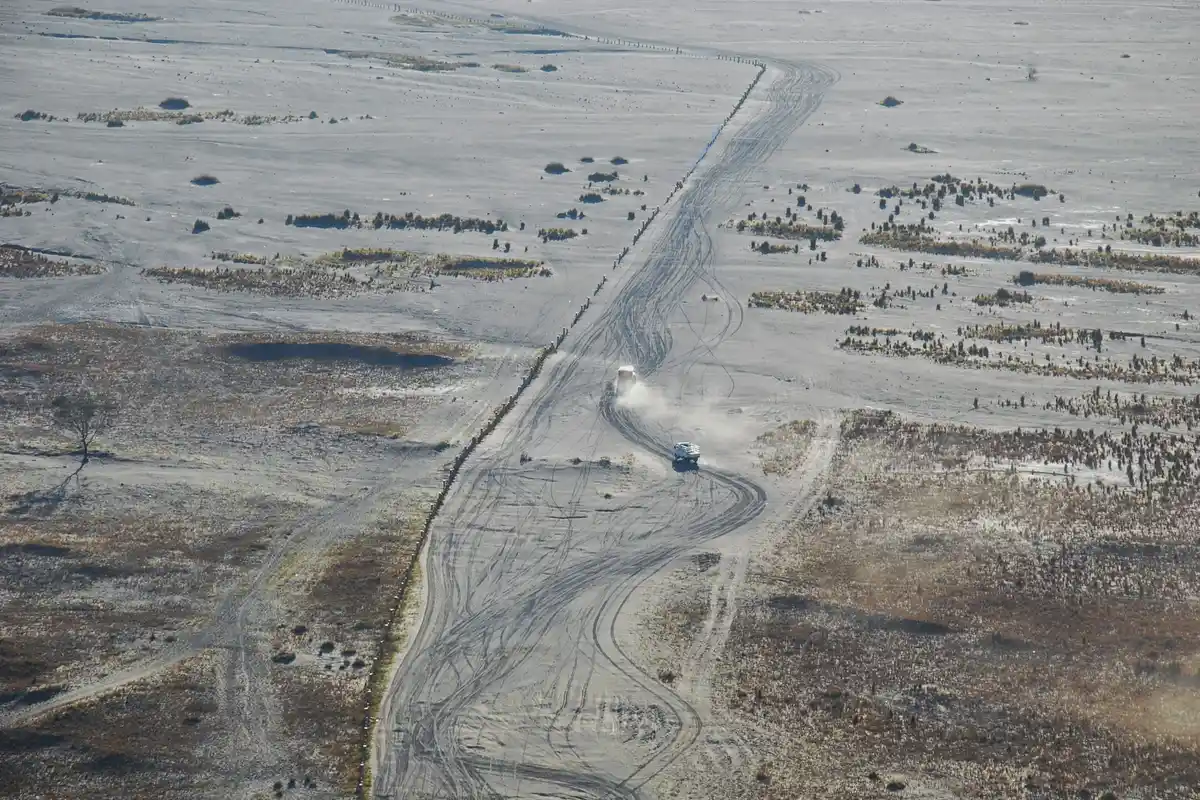
Behold, I will do a new thing; now it shall spring forth; shall ye not know it? I will even make a way in the wilderness, and rivers in the desert.
Isaiah 43:19 (KJV)
God promises to make a way in the wilderness and rivers in the desert, a hope for anyone who feels stuck in a barren place.
Therefore, behold, I will allure her, and bring her into the wilderness, and speak comfortably unto her.
Hosea 2:14 (KJV)
Here the Lord says He will lead His people into the wilderness to speak tenderly to them, so dry places can become places of closeness.
And thou shalt remember all the way which the Lord thy God led thee these forty years in the wilderness, to humble thee, and to prove thee, to know what was in thine heart, whether thou wouldest keep his commandments, or no.
Deuteronomy 8:2 (KJV)
Moses explains that the forty desert years were used to humble Israel, test their hearts and teach them to trust God.
And he humbled thee, and suffered thee to hunger, and fed thee with manna, which thou knewest not, neither did thy fathers know; that he might make thee know that man doth not live by bread only, but by every word that proceedeth out of the mouth of the Lord doth man live.
Deuteronomy 8:3 (KJV)
Manna taught Israel that people live not by bread alone but by every word from God’s mouth, a lesson for lean seasons.
O God, thou art my God; early will I seek thee: my soul thirsteth for thee, my flesh longeth for thee in a dry and thirsty land, where no water is;
Psalms 63:1 (KJV)
Written in the wilderness of Judah, David’s prayer voices deep thirst for God in a dry land where no water is.
The wilderness and the solitary place shall be glad for them; and the desert shall rejoice, and blossom as the rose. It shall blossom abundantly, and rejoice even with joy and singing: the glory of Lebanon shall be given unto it, the excellency of Carmel and Sharon, they shall see the glory of the Lord, and the excellency of our God.
Isaiah 35:1-2 (KJV)
A picture of the desert bursting into bloom, reminding weary believers that barren ground can rejoice again.
I will open rivers in high places, and fountains in the midst of the valleys: I will make the wilderness a pool of water, and the dry land springs of water.
Isaiah 41:18 (KJV)
God promises to open rivers on bare heights and turn the wilderness into a pool, providing where nothing seems possible.
Then was Jesus led up of the Spirit into the wilderness to be tempted of the devil. And when he had fasted forty days and forty nights, he was afterward an hungred. And when the tempter came to him, he said, If thou be the Son of God, command that these stones be made bread. But he answered and said, It is written, Man shall not live by bread alone, but by every word that proceedeth out of the mouth of God.
Matthew 4:1-4 (KJV)
Jesus Himself was led into the wilderness, fasted and answered temptation with Scripture, showing how to stand firm in a hard season.
And in the wilderness, where thou hast seen how that the Lord thy God bare thee, as a man doth bear his son, in all the way that ye went, until ye came into this place.
Deuteronomy 1:31 (KJV)
Moses reminds Israel that God carried them through the wilderness as a father carries his son.
For the Lord thy God hath blessed thee in all the works of thy hand: he knoweth thy walking through this great wilderness: these forty years the Lord thy God hath been with thee; thou hast lacked nothing.
Deuteronomy 2:7 (KJV)
Even after forty years of wandering, Israel is told the Lord was with them and they lacked nothing.
But he himself went a day’s journey into the wilderness, and came and sat down under a juniper tree: and he requested for himself that he might die; and said, It is enough; now, O Lord, take away my life; for I am not better than my fathers. And as he lay and slept under a juniper tree, behold, then an angel touched him, and said unto him, Arise and eat. And he looked, and, behold, there was a cake baken on the coals, and a cruse of water at his head.
And he did eat and drink, and laid him down again. And the angel of the Lord came again the second time, and touched him, and said, Arise and eat; because the journey is too great for thee. And he arose, and did eat and drink, and went in the strength of that meat forty days and forty nights unto Horeb the mount of God.
1 Kings 19:4-8 (KJV)
Exhausted Elijah asked to die under a juniper tree, and God answered with sleep, food and gentle care before the next step.
Then said the Lord unto Moses, Behold, I will rain bread from heaven for you; and the people shall go out and gather a certain rate every day, that I may prove them, whether they will walk in my law, or no.
Exodus 16:4 (KJV)
In the desert God promised bread from heaven each day, teaching His people to rely on Him one day at a time.
Yea, forty years didst thou sustain them in the wilderness, so that they lacked nothing; their clothes waxed not old, and their feet swelled not.
Nehemiah 9:21 (KJV)
Looking back, Israel confessed that God sustained them forty years in the wilderness so that their clothes and feet held up.
He turneth the wilderness into a standing water, and dry ground into watersprings.
Psalms 107:35 (KJV)
The psalmist praises God for turning the wilderness into standing water and dry ground into springs.
And he withdrew himself into the wilderness, and prayed.
Luke 5:16 (KJV)
Jesus regularly withdrew into the wilderness to pray, turning lonely places into places of communion with the Father.
And the Lord shall guide thee continually, and satisfy thy soul in drought, and make fat thy bones: and thou shalt be like a watered garden, and like a spring of water, whose waters fail not.
Isaiah 58:11 (KJV)
The Lord promises to guide continually and satisfy the soul in drought, making the weary like a watered garden.
The Lord is my shepherd; I shall not want. He maketh me to lie down in green pastures: he leadeth me beside the still waters. He restoreth my soul: he leadeth me in the paths of righteousness for his name’s sake.
Psalms 23:1-3 (KJV)
David’s shepherd psalm reminds us the Lord leads to still waters and restores the soul, even when the land feels dry.
But they that wait upon the Lord shall renew their strength; they shall mount up with wings as eagles; they shall run, and not be weary; and they shall walk, and not faint.
Isaiah 40:31 (KJV)
Those who wait on the Lord renew their strength, a promise for anyone worn out by a long wilderness stretch.
Start by being honest with God about the dryness. David wrote Psalm 63 in the wilderness of Judah and began with longing rather than pretending all was well. Read one verse slowly each morning, then turn it into a short prayer in your own words, telling God what you are thirsty for.
Keep a simple record of daily provision. Israel received manna one day at a time, and Deuteronomy 8 says the lesson was that we live by every word from the mouth of the LORD. Writing down small mercies, such as a kind message, strength for a task or a verse that met you, helps you notice that you are not lacking as much as it feels.
Remember that Jesus Himself was led into the wilderness and answered temptation with Scripture. Memorise one or two of these passages, such as Isaiah 43:19, and repeat them when discouragement comes. If a dry season is tied to grief, depression or burnout, talk with a pastor, a trusted friend or a counsellor as well; seeking help is part of trusting God, not a lack of faith.
Deuteronomy 8:2-3 explains why Israel spent forty years wandering before entering the promised land: God was humbling them, testing them, and teaching them that man does not live by bread alone but by every word that proceeds from His mouth. These Bible verses for wilderness seasons make clear that a long delay is not always a sign of God’s absence; sometimes it is the very method He uses to build trust that shortcuts could never produce.
Reading Israel’s story honestly also means noticing their complaining, their fear, and their repeated refusal to trust God’s provision fully. These Bible verses for wilderness seasons are as much a warning as a comfort: a wilderness season can be shortened by faith or lengthened by unbelief, and the choice often belongs to the person walking through it.
God still fed Israel every single day of those forty years, even during the seasons when their complaining was loudest, and their sandals and clothing never wore out the whole time they wandered through the desert. These Bible verses for wilderness seasons remind a discouraged reader that provision and discipline can arrive from God in the very same season, sometimes within the very same long week.
Before Moses ever stood before Pharaoh, he spent roughly forty years tending sheep in the wilderness of Midian, a season with no recorded miracles, no burning bush, and seemingly no purpose. Yet that quiet stretch shaped a man who had once acted rashly in Egypt into someone humble enough to lead a nation.
Anyone using these Bible verses for wilderness seasons to make sense of a long, uneventful stretch of life can take real comfort from Moses: the years that feel wasted are often the very years God is quietly preparing someone for what comes next.
Matthew 4 places Jesus in the wilderness for forty days before He ever preached a sermon or performed a miracle, fasting while the devil offered Him shortcuts around the cross. Each temptation was really an offer to skip the harder path, and Jesus answered every one with Scripture rather than argument.
These Bible verses for wilderness seasons point to Jesus as proof that a wilderness is not evidence of God’s disfavor; the very Son of God walked one before stepping into the ministry the Father had planned for Him all along.
These Bible verses for wilderness seasons are often misunderstood as proof of hidden sin or spiritual failure, as though a faithful life should be free of long, dry stretches. Job’s friends made exactly that mistake, insisting his suffering had to be punishment, and God corrected them at the end of the book for speaking wrongly about Him.
A wilderness is also not the same as abandonment. Israel had a cloud by day and fire by night the entire forty years; Elijah had bread brought by ravens and later an angel; Jesus had angels ministering to Him the moment His testing ended. These Bible verses for wilderness seasons consistently pair the hardship with a form of provision, even when that provision looks nothing like what a person expected or asked for.
David hid from Saul in the wilderness of Ziph, unsure when the danger would end.
A short prayer for a season like that might sound like this: “Lord, this waiting feels endless and I cannot see where it leads. Teach me what only this wilderness can teach me. Provide for me the way You provided manna and water for Israel. Keep my heart from growing bitter while I wait for You to move.”
Praying through these Bible verses for wilderness seasons out loud, rather than only reading them silently, often steadies a mind that keeps circling the same worries, especially late at night when the waiting feels heaviest.
None of these steps rushes the timeline. They simply keep a person faithful while the timeline runs its course, and these Bible verses for wilderness seasons make that kind of patient faithfulness easier to picture day by day.
Spreading these passages across a week lets each story settle before moving to the next one.
Working through these Bible verses for wilderness seasons one day at a time keeps hope anchored in specific promises rather than a vague feeling that things should improve soon.
Writing down honest answers, rather than only thinking through them, tends to surface what a busy mind would otherwise skip past.
These Bible verses for wilderness seasons do not promise a quick exit, but they do promise a Guide who has walked every wilderness Himself and who never once left Israel, Moses, David, or Jesus to face their own wilderness completely and utterly alone.
Pairing these Bible verses for wilderness seasons with these Bible verses about waiting seasons can round out both the endurance and the steady hope this kind of long, uncertain season truly requires.
Elijah had just seen fire fall on Mount Carmel, and a few days later he was running for his life from a queen’s threat. He walked a day into the desert, sat down under a juniper tree and asked to die. “It is enough; now, O LORD, take away my life; for I am not better than my fathers” (1 Kings 19:4). Read that slowly. This is a prophet, not a doubter on the edges of the story, and he is spent. What does God do? He does not argue. He does not hand him a sermon. An angel touches him and says, “Arise and eat” (1 Kings 19:5), and there is a cake baked on hot stones and a jar of water beside his head.
He eats, and he sleeps again. A second time the angel wakes him, because “the journey is too great for thee” (1 Kings 19:7). Only after two meals and two naps does Elijah walk on, “in the strength of that meat forty days and forty nights” (1 Kings 19:8). The first stage of help in this wilderness was bread and rest.
That matters for anyone dragging through a dry season right now. Sometimes the most faithful thing is to eat something, sleep, and let the larger questions wait until morning. If the heaviness does not lift, or if thoughts of not wanting to live show up the way Elijah’s did, please talk to a doctor or a counselor and tell someone close to you. Scripture shows God sending practical help first, and he often sends it through other hands.
Not every desert is a punishment or an accident. Luke records a habit of Jesus that is easy to read past: “And he withdrew himself into the wilderness, and prayed” (Luke 5:16). The verse comes right after crowds were pressing in to be healed. He had more need around him than any person could meet, and he still walked out to a lonely place. Notice the tense of the verb in the older English, a settled pattern and not a single retreat.
It helps to sort the empty places in our own lives into two piles. Some we were pushed into: the layoff, the diagnosis, the move to a town where nobody knows our name. Others we can choose, like turning off the phone for an evening, driving to an empty parking lot at the edge of a lake, or sitting in a church sanctuary on a weekday. Jesus’ practice suggests that a chosen quiet place can make an unchosen one easier to carry, because by the time the hard desert arrives, we already know how to pray in silence.
None of this requires a heroic schedule. Ten unhurried minutes with one short passage, read aloud, beats an hour of guilty intentions. The wilderness he withdrew into was not a place of failure. It was where the Father and the Son met without interruption, and the same invitation stands open to people who feel they have nothing left to bring.
The prophets did not only describe dry land. They described what God does to it. Isaiah wrote, “The wilderness and the solitary place shall be glad for them; and the desert shall rejoice, and blossom as the rose” (Isaiah 35:1). Anyone who has driven through the Negev or the Arizona desert after an unusual rain knows this is not poetic exaggeration. Seeds that lay buried for years open within days, and a brown hillside turns purple and yellow almost overnight. The life was in the ground the whole time. It needed water, not a new landscape.
God makes a similar promise in Isaiah 41:18: “I will open rivers in high places, and fountains in the midst of the valleys: I will make the wilderness a pool of water, and the dry land springs of water.” And the psalmist, looking back on rescue, sings the same song in Psalm 107:35. These are promises spoken to people who had no reason, at the moment of hearing, to believe them. Exiles, in Isaiah’s case, who were far from home and sure their story was finished.
The honest lesson is patient rather than hurried. We do not get to schedule the rain. What we can do is stay planted, keep praying, and keep doing small, faithful things in the dry soil, trusting that the same God who made the desert bloom for Israel is still watching the ground you are standing on. When the water does come, many people say they are astonished by how much had been quietly waiting.
Wilderness stretches are lonely partly because other people do not know what to say. Job’s three friends are a case worth studying. When they first heard of his losses, they traveled to him, wept aloud, tore their robes, and then “sat down with him upon the ground seven days and seven nights, and none spake a word unto him: for they saw that his grief was very great” (Job 2:13). That week of silence was the best thing they ever did for him. Trouble began when they started to explain.
If someone you love is in a dry stretch, the old account suggests a few plain things. Show up. Bring food that does not require a plate to be returned. Sit down, and let silence be silence. Resist the urge to hunt for a reason, because most of us are quite sure we know why a friend is suffering, and most of us are wrong. Exodus tells of Moses on a hill with weary arms while Israel fought below, and Aaron and Hur “stayed up his hands, the one on the one side, and the other on the other side” (Exodus 17:12). They did not take over the battle. They held up the arms of the man who was doing it.
If you are the one in the desert, let people do that for you, even when pride says you should carry it alone. And if you have walked through a dry season yourself, you may be the exact person who can sit quietly beside someone else, because you know the road.
Isaiah 40:31 is a verse many of us learned young: “But they that wait upon the LORD shall renew their strength; they shall mount up with wings as eagles; they shall run, and not be weary; and they shall walk, and not faint.” The Hebrew word translated “wait” is often linked to the idea of stretching toward something, hope with its face turned in a direction, rather than idle time on a waiting-room chair. It is a posture, and it can be held for years.
The order of the last three phrases is also worth a look. Wings come first, then running, then walking. You would expect it the other way around, building toward the glory of flight. But anyone who has lived through a long dry stretch knows that the real victory is often the last one: still walking, not fainting, putting one foot in front of the other on an ordinary Tuesday. Flying is a high point. Walking is the daily answer.
This verse was first spoken to exiles in Babylon who believed God had stopped noticing them (Isaiah 40:27 names that complaint exactly). The answer was not a quick rescue. It was a character description of the One they were waiting for, who “fainteth not, neither is weary” (Isaiah 40:28). Waiting, then, is not putting life on hold. It is continuing to live, with eyes lifted, because you know who is coming.
Isaiah 58 begins in a surprising place. It is a rebuke of people who fast and look pious while ignoring hungry neighbors. Then, after that blunt opening, comes a promise that many readers cherish without knowing where it sits: “And the LORD shall guide thee continually, and satisfy thy soul in drought, and make fat thy bones: and thou shalt be like a watered garden, and like a spring of water, whose waters fail not” (Isaiah 58:11). The context is easy to miss. God’s care in drought is tied to how people treat the hungry and the afflicted around them.
That is not a rule that says helping others will fix your dry season. It does suggest something observant people notice, though: when we are empty, serving someone in a small, concrete way can loosen the grip of our own distress. Bringing groceries to a widow down the street, writing a note to a nurse, or helping a child with homework will not remove the desert. It can keep the heart from shrinking.
A watered garden is not a flooded one. Notice the picture is steady, a spring that does not fail, not a sudden rush. Many people in long wilderness seasons look back and realize that God did not end the drought quickly but quietly kept them supplied day by day. Read the verse again this week, and ask where a small cup of water might be needed within a short walk of your front door.
If you would like to read further, try Bible Verses For Grief, Bible Verses About Trusting God in Hard Times, Bible Verses About God's Protection, Bible Verses About Encouragement, Bible Verses About Spiritual Healing, Bible Verses About Strength During Trials, Bible Verses For Having Faith, Bible Verses About Family Love, Bible Verses For Marriage, Bible Verses For God's Grace and Bible Verses For Peace.
Free tools for studying these passages further: Bible Gateway, Bible Hub and Bible Study Tools.
Start by being honest with God about the dryness. David wrote Psalm 63 in the wilderness of Judah and began with longing rather than pretending all was well.
This page brings together 7 King James Version references about wilderness Seasons, drawn from 6 different books of the Bible.
Isaiah 43:19 is one of the verses about wilderness Seasons referenced in this collection, alongside Deuteronomy 8:2.
Yes, the verses referenced on this page, including Isaiah 43:19, are quoted according to the King James Version (KJV), and are suitable for daily reading, memorization, or devotional use.
Beyond the references highlighted on this page, wilderness Seasons appears throughout Scripture in books such as Isaiah, Deuteronomy, Exodus, 1 Samuel, Matthew; this collection focuses on some of the clearest examples.