
Bible verses about adoption show that adoption sits close to the heart of the gospel itself. Paul uses the word to describe how God brings people into his family through Jesus Christ, and the Old Testament tells of children like Moses and Esther who were raised and loved by someone other than their birth parents.
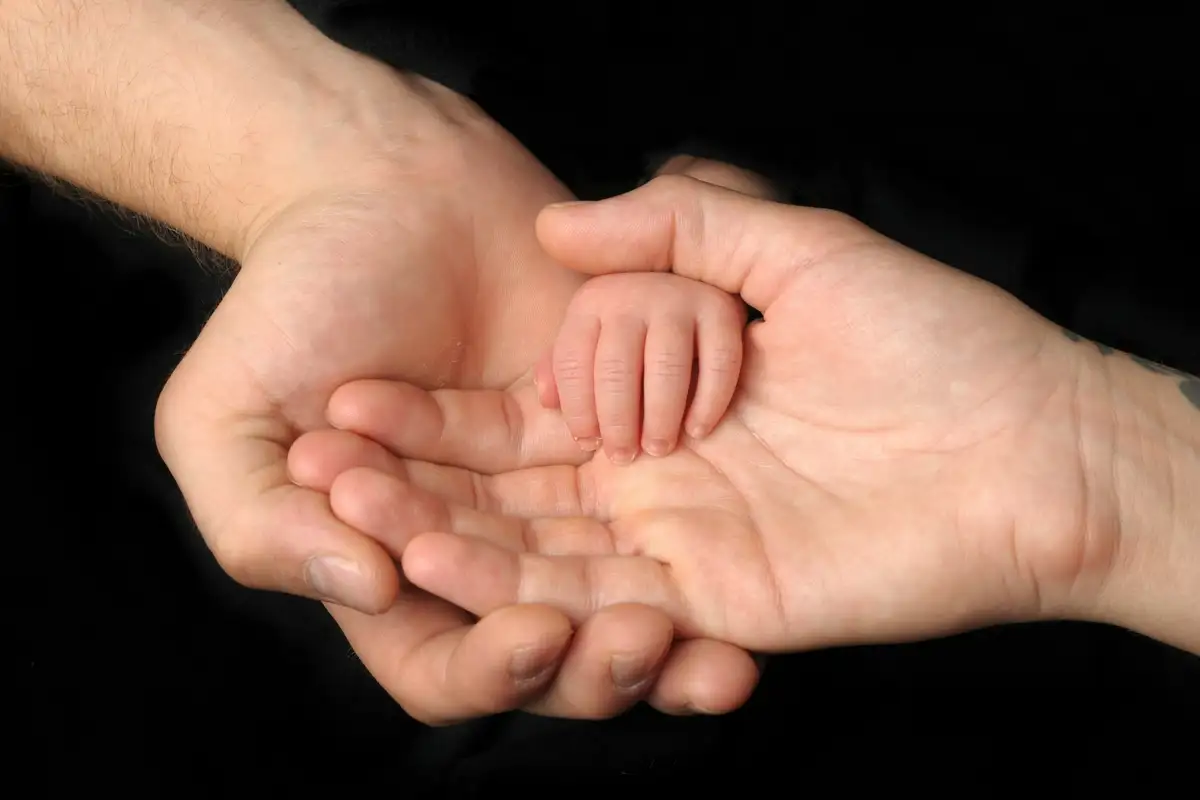
Having predestinated us unto the adoption of children by Jesus Christ to himself, according to the good pleasure of his will,
Ephesians 1:5 (KJV)
Paul teaches that God chose, in love, to adopt believers as his children through Jesus Christ.
For ye have not received the spirit of bondage again to fear; but ye have received the Spirit of adoption, whereby we cry, Abba, Father.
Romans 8:15 (KJV)
Believers receive the Spirit of adoption rather than fear, and so can call God Abba, Father.
But when the fulness of the time was come, God sent forth his Son, made of a woman, made under the law, To redeem them that were under the law, that we might receive the adoption of sons. And because ye are sons, God hath sent forth the Spirit of his Son into your hearts, crying, Abba, Father. Wherefore thou art no more a servant, but a son; and if a son, then an heir of God through Christ.
Galatians 4:4-7 (KJV)
God sent his Son to redeem people so they might receive adoption as sons and become heirs.
The Spirit itself beareth witness with our spirit, that we are the children of God: And if children, then heirs; heirs of God, and joint-heirs with Christ; if so be that we suffer with him, that we may be also glorified together.
Romans 8:16-17 (KJV)
The Spirit confirms that believers are God’s children, and as children they are heirs with Christ.
And not only they, but ourselves also, which have the firstfruits of the Spirit, even we ourselves groan within ourselves, waiting for the adoption, to wit, the redemption of our body.
Romans 8:23 (KJV)
Adoption is also a future hope, completed when God redeems our bodies at the resurrection.
But as many as received him, to them gave he power to become the sons of God, even to them that believe on his name:
John 1:12 (KJV)
Everyone who receives Jesus is given power to become a son of God, the heart of spiritual adoption.
Behold, what manner of love the Father hath bestowed upon us, that we should be called the sons of God: therefore the world knoweth us not, because it knew him not.
1 John 3:1 (KJV)
John marvels at the kind of love that lets believers be called the sons of God.
And will be a Father unto you, and ye shall be my sons and daughters, saith the Lord Almighty.
2 Corinthians 6:18 (KJV)
God promises to be a Father to his people and to count them as his sons and daughters.
A father of the fatherless, and a judge of the widows, is God in his holy habitation. God setteth the solitary in families: he bringeth out those which are bound with chains: but the rebellious dwell in a dry land.
Psalms 68:5-6 (KJV)
God is a father of the fatherless and sets the solitary in families, the pattern behind human adoption.
And the child grew, and she brought him unto Pharaoh’s daughter, and he became her son. And she called his name Moses: and she said, Because I drew him out of the water.
Exodus 2:10 (KJV)
Pharaoh’s daughter raised the rescued Moses as her own son and gave him his name.
And he brought up Hadassah, that is, Esther, his uncle’s daughter: for she had neither father nor mother, and the maid was fair and beautiful; whom Mordecai, when her father and mother were dead, took for his own daughter.
Esther 2:7 (KJV)
When Esther lost her parents, her cousin Mordecai took her in as his own daughter.
But while he thought on these things, behold, the angel of the Lord appeared unto him in a dream, saying, Joseph, thou son of David, fear not to take unto thee Mary thy wife: for that which is conceived in her is of the Holy Ghost. And she shall bring forth a son, and thou shalt call his name JESUS: for he shall save his people from their sins.
Matthew 1:20-21 (KJV)
Joseph was told to take Mary as his wife and name her child, becoming Jesus’ earthly father.
And David said unto him, Fear not: for I will surely shew thee kindness for Jonathan thy father’s sake, and will restore thee all the land of Saul thy father; and thou shalt eat bread at my table continually.
2 Samuel 9:7 (KJV)
David brings Mephibosheth, Jonathan’s son, to eat at the king’s table continually, a picture of grace to an outsider.
Pure religion and undefiled before God and the Father is this, To visit the fatherless and widows in their affliction, and to keep himself unspotted from the world.
James 1:27 (KJV)
Pure religion includes visiting the fatherless in their affliction, so caring for orphans is part of real faith.
He doth execute the judgment of the fatherless and widow, and loveth the stranger, in giving him food and raiment.
Deuteronomy 10:18 (KJV)
The Lord defends the fatherless and the widow, showing his special concern for children without families.
Asshur shall not save us; we will not ride upon horses: neither will we say any more to the work of our hands, Ye are our gods: for in thee the fatherless findeth mercy.
Hosea 14:3 (KJV)
Israel confesses that in God the fatherless finds mercy, a truth adoption lives out.
In the New Testament, adoption is one of the richest pictures of salvation. Ephesians 1:5 says God chose to adopt us as children through Jesus Christ, and Romans 8:15 explains that believers receive the Spirit of adoption, allowing them to call God Abba, Father. Galatians 4:4-7 adds that adopted children are no longer servants but heirs.
Scripture also records real adoptions. Pharaoh’s daughter drew Moses from the river and raised him as her son (Exodus 2:10), Mordecai took his orphaned cousin Esther as his own daughter (Esther 2:7), and Joseph accepted the child Mary carried and gave him his name. David’s kindness to Mephibosheth, welcoming him to eat at the king’s table, echoes the same grace.
Because God is described as a father of the fatherless (Psalms 68:5), caring for children without families is treated as part of genuine faith. James 1:27 calls visiting the fatherless in their affliction pure religion before God. Adoption, then, is both a truth to believe and a way of life to practise.
Romans 8:15 says believers have received “the Spirit of adoption,” by which they cry “Abba, Father.” Paul is not using adoption loosely here — it is one of his primary ways of describing what it means to belong to God, chosen deliberately rather than born into the family by default.
Families who have adopted a child often say this verse reads differently once they have lived it — the theological metaphor becomes something they recognize firsthand. Adoption, in both the spiritual and literal sense the Bible describes, is chosen, not accidental, and Scripture treats that as significant rather than incidental.
If your family has adopted, or is in the process, Romans 8:15 is worth returning to specifically — it is describing your family’s story, not just a spiritual concept.
Late in his life, Jacob told Joseph that his two grandsons, Ephraim and Manasseh, would be counted as his own sons, equal to Reuben and Simeon in the family inheritance (Genesis 48:5). This was a formal, legal kind of adoption within Scripture itself, not a metaphor.
Jacob placed his hands on both boys and blessed them exactly as he would his own children, giving them full standing in the tribes of Israel. This single act shaped two entire tribes, showing how far-reaching Bible Verses About Adoption can be once lived out rather than only recited. Anyone looking for an Old Testament example of a family tree deliberately widened by choice will find one here.
When Ruth gave birth to Obed, the text says Naomi took the child, laid him in her bosom, and became nurse unto him, and the neighboring women even said a son had been born to Naomi (Ruth 4:16-17). Naomi was Obed’s grandmother by law, yet Scripture describes her role in language usually reserved for a mother.
Families formed through step-parent adoption or kinship care often recognize themselves in this passage more than in almost any other. Bible Verses About Adoption rarely acknowledge this quieter kind of family-building, where a child already has living relatives yet is raised, loved, and claimed by someone stepping into a parent’s role. Naomi’s quiet devotion shows that adoption within Scripture was not always dramatic; sometimes it looked simply like one woman refusing to let a grandson grow up without her.
In the parable of the prodigal son, a father runs to meet his returning child while he is still far off, calling for a robe, a ring, and a feast before the son can even finish his rehearsed apology (Luke 15:20-24).
The son had planned to ask only to be treated as a hired servant, yet the father restored him fully to the status of son. This parable pictures the very heart behind Bible Verses About Adoption: full restoration, not a probationary status. The father never mentions a waiting period or proof of good behavior before restoring the son fully to his household.
Some people quietly assume that an adopted child’s place in a family is somehow less permanent or less real than a biological child’s place, a misunderstanding that a closer reading of Bible Verses About Adoption corrects fairly quickly. Scripture argues the opposite. Romans 9:4 lists adoption among Israel’s greatest privileges, right alongside the covenants and the promises, never treating it as a consolation prize.
Jacob’s blessing over Ephraim and Manasseh made this explicit: he told Joseph plainly that the two boys were his, exactly as Reuben and Simeon were his. Bible Verses About Adoption consistently describe adopted status as full and complete, not partial or provisional in any sense. An adopted child in Scripture never carries an asterisk next to their name in the family record.
Many adoptions today include some ongoing contact with birth family, a reality Scripture does not directly address but does not contradict either. Naomi and Ruth managed a household that held space for both a biological mother and a woman functioning as a second mother to Obed, without either relationship needing to be erased for the other to be real.
Families walking through the practical details of an open adoption relationship, letters, visits, shared photos, can look to Naomi and Ruth’s example as an early picture of a family that included more caregivers than it excluded. Reading Bible Verses About Adoption together as a family, including with an older adopted child, can also open honest conversation about a birth family without anyone feeling threatened by the topic.
Father of the fatherless, You have already shown us in Scripture what it means to bring someone into a family by choice rather than by birth alone. We bring You our waiting, our paperwork, our home studies, and our uncertainty about timing.
Steady us during delays we cannot control. When the process feels slow, remind us that You are the one who sets the solitary in families. Prepare our hearts fully for whichever child You bring to us, and prepare that child’s heart for us as well. Let the Bible Verses About Adoption we hold onto during this wait become part of the story we tell this child one day. Amen.
Mordecai raised his orphaned cousin Esther as his own daughter long before either of them knew she would one day become queen (Esther 2:7). Their household was shaped by loss first, an adoption born out of necessity rather than convenience, and it later became the very foundation Esther stood on when she risked her life for her people. Mordecai’s steady care is easy to overlook next to the drama of the rest of Esther’s story, yet it is exactly the kind of ordinary faithfulness Bible Verses About Adoption tend to celebrate.
Bible Verses About Adoption often highlight households like Mordecai and Esther’s, formed under real hardship rather than ideal circumstances, as proof that a family built out of necessity can still carry enormous purpose. Mordecai never treated Esther as a burden he tolerated; Scripture simply says he took her as his own daughter and raised her as such.
Mephibosheth was the crippled son of Jonathan, living in obscurity and expecting nothing from the new king, when David sought him out specifically to show him kindness for his father’s sake (2 Samuel 9:6-7). David restored his land and gave him a permanent seat at the king’s own table, an ongoing relationship rather than a single act of charity. Bible Verses About Adoption rarely picture a king reaching this far down, yet that is exactly what David did.
Mephibosheth’s story is one of the clearest pictures among Bible Verses About Adoption of a king reaching down to bring someone with nothing to offer into his own household, permanently and without condition. He did not earn the seat at David’s table; it was given because of a promise made before he was ever born.
A short set of readings can anchor a family through the waiting, paperwork, and adjustment that adoption usually involves.
These five passages move from an ancient legal adoption to a modern-sounding parable, giving a wide picture of how consistently Scripture treats chosen family as real family. A family walking through Bible Verses About Adoption together, even a few minutes a day, tends to absorb this pattern more than reading a single verse in isolation ever could.
A few honest questions, read alongside a short list of Bible Verses About Adoption, can help a family notice what they are actually carrying during an adoption journey.
Families further along in the process, or exploring the language most often searched, may also want to read Bible verses for adoption, and those needing steadiness during delays can find encouragement in Bible verses about trust as well.
Every adoption in Scripture, whether Jacob’s grandsons, Naomi’s grandson, or a Father running to meet a returning son, shares one detail in common: someone chose to claim another person as their own, at real cost, with no requirement placed on the child beyond simply being received. Bible Verses About Adoption keep returning to that same picture, because it is the picture the gospel itself is built on. Whatever paperwork, waiting, or uncertainty a family walks through to get there, the end result Scripture describes is always the same: a child fully received.
When Paul wrote to the Galatians about adoption, his readers knew exactly what he meant, because Roman family law was part of everyday life across the empire. A father could take a young man, sometimes a grown one, into his house by a formal act, and from that day the new son carried the family name and stood first in line for the estate. His old standing no longer defined him. It was a legal change, not a sentimental one, and it was not something a family undid on a whim.
That helps with Galatians 4:4-5: “But when the fulness of the time was come, God sent forth his Son, made of a woman, made under the law, To redeem them that were under the law, that we might receive the adoption of sons.” Paul has just described an heir who, while still a child, is no better off than a servant even though he owns everything in theory (Galatians 4:1-2). Adoption, in his picture, is the moment a person moves from waiting under supervision to standing as a grown son with a full place at the table.
Notice who does the acting. The Son is sent, the redeeming is done, and the believer receives. Nobody applies for the position or earns it by good behavior. A reader who grew up feeling like an outsider in his own church or family can find something steadying here. The standing is granted, and the one who grants it does not change his mind on a bad week.
Matthew gives Joseph very few lines, but his decision may be the quietest act of adoption in the Bible. He discovered that Mary was expecting before the two had come together, and he planned to end the engagement privately, to spare her public shame. Then an angel spoke to him in a dream, telling him not to fear taking Mary as his wife and that the child was to be named Jesus (Matthew 1:19-21).
The next part of the story is short. “Then Joseph being raised from sleep did as the angel of the Lord had bidden him, and took unto him his wife” (Matthew 1:24). By giving the child his name, he placed Jesus in the line of David, which is why the genealogy at the start of Matthew runs through him. A man with no biological claim handed the boy a legal place in a royal family.
Think about what that cost him. Neighbors in a small village would count months on their fingers and draw conclusions. He took it anyway. Adoptive fathers sometimes talk about relatives who questioned the decision or acquaintances who asked awkward questions at the grocery store, and Joseph is a reminder that this kind of fatherhood has always meant standing in front of a child and absorbing the talk. The Bible does not record a single sentence he spoke. Everything he said, he said by what he did.
Romans 8:15 reads, “For ye have not received the spirit of bondage again to fear; but ye have received the Spirit of adoption, whereby we cry, Abba, Father.” Abba is an Aramaic word, the language spoken at home, and it was a warm, familiar word for a father. Paul keeps the foreign sound in his Greek letter, as though it were too precious to translate.
Picture the difference between standing before a magistrate and calling across a kitchen. One is formal and careful; the other needs no preparation. Paul says the believer has the second kind of access. The same sentence names the old alternative, bondage and fear, the posture of someone who keeps a nervous eye on the master.
For a child who joined a family by adoption, that word can be a milestone of its own. Many parents remember the day a child first called them Mom or Dad without being prompted, and some recall the first time it was shouted in anger, which is its own odd proof of belonging. Nobody slams a door like that on a stranger. Paul says the Spirit does something similar in the believer. He makes the cry rise from inside, so that prayer starts to sound less like a recital and more like talking to the one who knows your name.
Paul does something odd in Romans 8. He says believers have received the Spirit of adoption (verse 15), and then eight verses later he says that we ourselves “groan within ourselves, waiting for the adoption, to wit, the redemption of our body” (Romans 8:23). Same word, two tenses. The standing is real now, and the full experience of it is still coming.
Families going through the legal process feel this tension in their bones. The home study is finished, the child may already be living in the house, and yet a court date still hangs ahead, and until a judge signs, an uneasy part of everyone stays braced. Paul would not tell them to ignore that feeling. He names the groaning honestly and ties it to hope. A few verses earlier he writes, “And if children, then heirs; heirs of God, and joint-heirs with Christ” (Romans 8:17), which tells the waiting heart where the story is heading.
Not every child who comes through adoption arrives untouched by loss, and parents sometimes feel they should be happier than they are. Grief and gratitude can sit in the same house. If a child is struggling with anger, nightmares, or withdrawal, a counselor trained in adoption and attachment can help in ways that prayer and patience alone may not, and seeking one out is a faithful act, not a failure of faith.
Most congregations include a few adoptive families and many more people who will never adopt, and the passages above are not only for the first group. James 1:27 puts it plainly: “Pure religion and undefiled before God and the Father is this, To visit the fatherless and widows in their affliction, and to keep himself unspotted from the world.” Visiting, in the sense James uses, means looking after someone, not dropping in for coffee.
Deuteronomy 10:18 says God “doth execute the judgment of the fatherless and widow, and loveth the stranger, in giving him food and raiment.” Food and clothing. That is a very ordinary list, and it hints at what help looks like: a meal left on the porch the week a child comes home, a bag of outgrown jackets in the right size, a babysitter who lets two exhausted parents see a movie. Foster and adoptive families rarely need a sermon. They need a Tuesday casserole.
Be careful with questions, though. A child who overhears an adult asking about his real parents, or what happened to them, can feel put on display. Let the family decide what to share and when. Welcome the child as simply one of the kids in the Sunday school class, and let the details belong to the people who have earned the right to hold them.
Related topics on this site include Bible Verses About Answered Prayer, Bible Verses About Prayer for Healing, Bible Verses For Husbands and Wives, Bible Verses For Relationship Problems, Bible Verses For Miracles, Bible Verses About Hard Times, Bible Verses For Answered Prayer, Bible Verses For Anxiety, Bible Verses About Identity in Christ, Bible Verses For Hard Times and Bible Verses About Strength in Difficult Times.
For deeper study, Blue Letter Bible, Bible Gateway and Bible Hub are all free to use.
In the New Testament, adoption is one of the richest pictures of salvation. Ephesians 1:5 says God chose to adopt us as children through Jesus Christ, and Romans 8:15 explains that believers receive the Spirit of adoption, allowing them to call God Abba, Father.
This page brings together 17 King James Version references about adoption, drawn from 12 different books of the Bible.
These adoption verses are drawn from books including Ephesians, Romans, Galatians, Exodus, Esther, among others.
Yes. The verses about adoption gathered here include passages from both the Old Testament and the New Testament, such as Exodus 2:10 and Ephesians 1:5.
Ephesians 1:5 is one of the verses about adoption referenced in this collection, alongside Romans 8:15.