
Bible verses about creation reveal God as the maker of the heavens, the earth and every living thing. From Genesis to Revelation, Scripture teaches that the world was made by his word, sustained by his Son and declared very good. These passages also explain humanity’s place in creation and its future restoration.
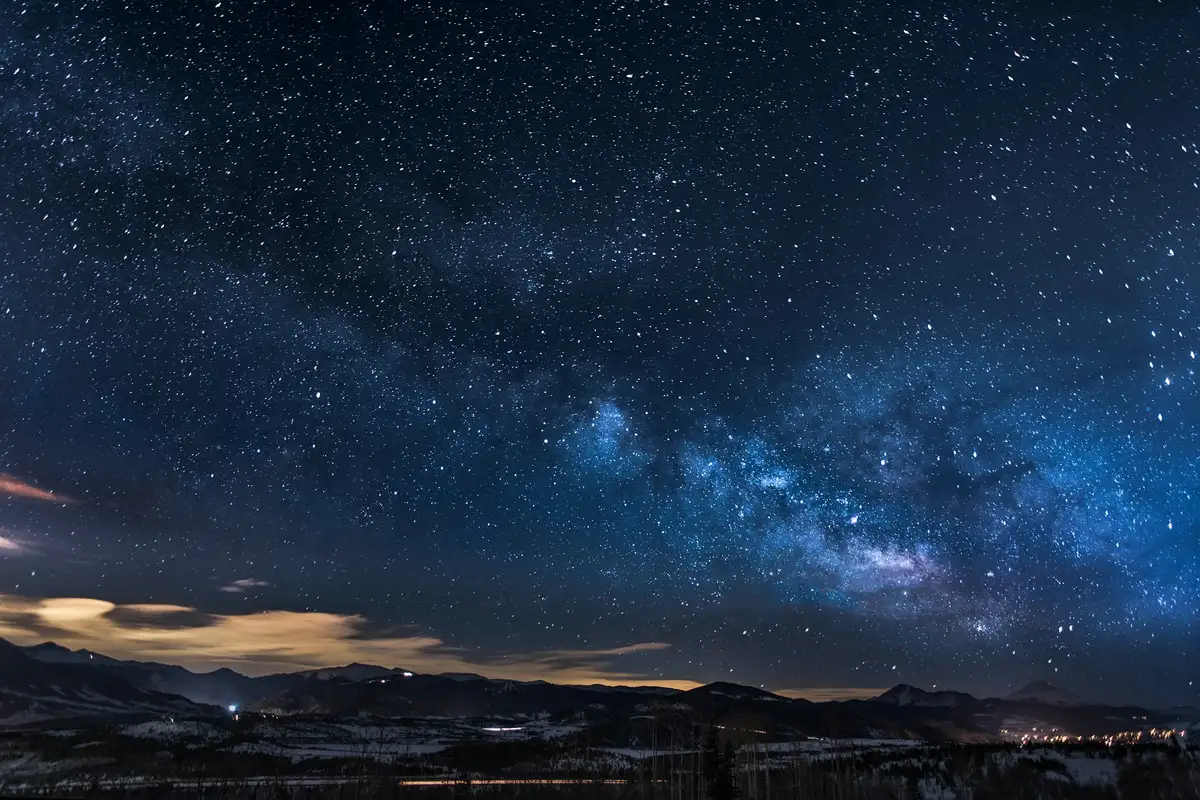
In the beginning God created the heaven and the earth.
Genesis 1:1 (KJV)
The Bible opens by declaring that in the beginning God created the heavens and the earth.
And God said, Let us make man in our image, after our likeness: and let them have dominion over the fish of the sea, and over the fowl of the air, and over the cattle, and over all the earth, and over every creeping thing that creepeth upon the earth. So God created man in his own image, in the image of God created he him; male and female created he them.
Genesis 1:26-27 (KJV)
Humanity is made in God’s image, male and female, and given care over the rest of creation.
And God saw every thing that he had made, and, behold, it was very good. And the evening and the morning were the sixth day.
Genesis 1:31 (KJV)
Looking over everything he had made, God saw that it was very good.
Thus the heavens and the earth were finished, and all the host of them. And on the seventh day God ended his work which he had made; and he rested on the seventh day from all his work which he had made. And God blessed the seventh day, and sanctified it: because that in it he had rested from all his work which God created and made.
Genesis 2:1-3 (KJV)
Creation is finished, and God rests on the seventh day, blessing it and setting it apart.
And the Lord God formed man of the dust of the ground, and breathed into his nostrils the breath of life; and man became a living soul.
Genesis 2:7 (KJV)
God forms man from the dust and breathes into him the breath of life.
In the beginning was the Word, and the Word was with God, and the Word was God. The same was in the beginning with God. All things were made by him; and without him was not any thing made that was made.
John 1:1-3 (KJV)
John teaches that all things were made through the eternal Word, and nothing came into being without him.
For by him were all things created, that are in heaven, and that are in earth, visible and invisible, whether they be thrones, or dominions, or principalities, or powers: all things were created by him, and for him: And he is before all things, and by him all things consist.
Colossians 1:16-17 (KJV)
Everything in heaven and earth was created by and for Christ, who holds all things together.
Through faith we understand that the worlds were framed by the word of God, so that things which are seen were not made of things which do appear.
Hebrews 11:3 (KJV)
By faith we understand the worlds were framed by God’s word, the seen made from what was not visible.
By the word of the Lord were the heavens made; and all the host of them by the breath of his mouth. He gathereth the waters of the sea together as an heap: he layeth up the depth in storehouses. Let all the earth fear the Lord: let all the inhabitants of the world stand in awe of him. For he spake, and it was done; he commanded, and it stood fast.
Psalms 33:6-9 (KJV)
The heavens were made by the word of the Lord; he spoke, and it was done.
Thou, even thou, art Lord alone; thou hast made heaven, the heaven of heavens, with all their host, the earth, and all things that are therein, the seas, and all that is therein, and thou preservest them all; and the host of heaven worshippeth thee.
Nehemiah 9:6 (KJV)
In prayer the Levites confess the Lord alone as maker of the heavens, the earth, the seas and all life.
For thus saith the Lord that created the heavens; God himself that formed the earth and made it; he hath established it, he created it not in vain, he formed it to be inhabited: I am the Lord; and there is none else.
Isaiah 45:18 (KJV)
God did not create the earth in vain but formed it to be inhabited.
O Lord, how manifold are thy works! in wisdom hast thou made them all: the earth is full of thy riches.
Psalms 104:24 (KJV)
The psalmist marvels at the variety of God’s works, all made in wisdom and full of his riches.
For the invisible things of him from the creation of the world are clearly seen, being understood by the things that are made, even his eternal power and Godhead; so that they are without excuse:
Romans 1:20 (KJV)
Paul argues that God’s eternal power and nature are clearly seen through the things he has made.
God that made the world and all things therein, seeing that he is Lord of heaven and earth, dwelleth not in temples made with hands; Neither is worshipped with men’s hands, as though he needed any thing, seeing he giveth to all life, and breath, and all things; And hath made of one blood all nations of men for to dwell on all the face of the earth, and hath determined the times before appointed, and the bounds of their habitation;
Acts 17:24-26 (KJV)
Paul tells Athens that the God who made the world and everything in it gives life and breath to all.
For the earnest expectation of the creature waiteth for the manifestation of the sons of God. For the creature was made subject to vanity, not willingly, but by reason of him who hath subjected the same in hope, Because the creature itself also shall be delivered from the bondage of corruption into the glorious liberty of the children of God. For we know that the whole creation groaneth and travaileth in pain together until now.
Romans 8:19-22 (KJV)
The whole creation groans under corruption while it waits to be set free with the children of God.
Thou art worthy, O Lord, to receive glory and honour and power: for thou hast created all things, and for thy pleasure they are and were created.
Revelation 4:11 (KJV)
Heaven praises God as worthy, because he created all things and by his will they exist.
The Bible’s first sentence sets the foundation: God created the heavens and the earth. Creation is not an accident or a struggle between rival powers but the free work of one God who spoke and it was done, as Psalms 33:9 puts it. Hebrews 11:3 adds that we grasp this by faith, and Revelation 4:11 says all things exist by his will.
The New Testament reveals that the Son was at the heart of creation. John 1:3 says all things were made through the Word, and Colossians 1:16-17 says they were made by and for Christ, who holds them together. Humanity has a special place within this work. Genesis 1:26-27 describes people as made in God’s image and entrusted with caring for the earth, and Genesis 2:7 pictures God breathing life into the first man.
Scripture is honest that creation is now marked by sin and decay. Romans 8:19-22 describes it groaning like a woman in labour, waiting for liberation. Yet the story does not end there. God will renew what he made, and Romans 1:20 reminds us that even now creation displays his eternal power and divine nature.
Genesis 1 describes a specific, ordered sequence, language of intention rather than undirected process.
These Bible Verses About Creation are answered most directly in this exchange. After thirty-some chapters of Job and his friends arguing about why he was suffering, God finally answers Job directly in chapters 38 through 41, and the answer is almost entirely about creation. God asks where Job was when the foundations of the earth were laid, who shut up the sea behind its doors, whether Job can bind the sweet influences of the Pleiades or loose the bands of Orion, whether he can make the ostrich foolish or teach the hawk to fly south. None of these questions address Job’s suffering directly. They reframe the entire conversation by reminding Job how much of the created world operates on a scale and complexity he had no part in designing, which turns out to be its own kind of answer.
Among these Bible Verses About Creation, this one shows people taking part in the work. Genesis 2 describes God bringing every beast of the field and every fowl of the air to Adam specifically to see what he would call them, and whatsoever Adam called each living creature, that became its name. This was not a decorative detail; naming in the ancient world carried real authority and relationship, and God gave that task to the first man rather than assigning names himself. The same chapter notes that among all these creatures, none was found to be a suitable companion for Adam, setting up the creation of Eve. Naming the animals turns out to be part of a larger pattern in these early chapters: God creates the raw material of the world and then invites the people he made to participate in shaping and ordering it.
Few of these Bible Verses About Creation are woven into daily life as deliberately as this one. Exodus 20 gives the reason behind the fourth commandment directly: in six days the Lord made heaven and earth, the sea and all that in them is, and rested the seventh day, so he blessed the Sabbath day and hallowed it. The command to rest was not an arbitrary rule handed down separately from the creation account; it was explicitly tied back to the pattern God himself had set at the very beginning. Keeping the Sabbath, in this light, functioned as a weekly reminder of creation itself, built into the ordinary rhythm of Israel’s life rather than left as a once-told story people might eventually forget.
These Bible Verses About Creation also reward close, patient attention. First Kings 4 records that Solomon’s wisdom extended well beyond governing a kingdom or writing proverbs about human behavior. He spoke of trees, from the cedar in Lebanon to the hyssop growing out of a wall, and of beasts, fowl, creeping things, and fish, and people came from other nations specifically to hear this part of his wisdom. Solomon’s attention to the ordinary details of the created world, not just its grand sweep, suggests that studying creation closely was itself considered a form of wisdom worth traveling to learn from, not a distraction from more serious spiritual matters.
Few of these Bible Verses About Creation sound as personal as this psalm. Psalm 8 reads like a shepherd’s reflection written after an actual night spent under an open sky, full of stars he had no way to count or fully explain. David’s response was not scientific curiosity for its own sake; it moved immediately into a question about his own significance: what is man, that thou art mindful of him? and the son of man, that thou visitest him? Looking carefully at the scale of what God had made did not make David feel insignificant in a dismissive sense. It made him marvel that a God who could make something so vast still paid attention to a man small enough to stand beneath it and wonder.
These Bible Verses About Creation include a promise that reaches further than one family. Genesis 9 records God making a covenant after the flood, and the striking detail is how far that covenant extends. God says the promise, sealed by the rainbow, is between himself and the earth, and specifically names every living creature, the cattle, the fowl, and every beast of the earth, as parties who benefit from it, not only Noah’s human family. The flood had been judgment on a corrupted creation, and the rainbow afterward marked a renewed commitment to that same creation, now including every living thing that had survived it. The sign was set in the sky itself, visible to the whole created order the promise was actually made to, not hidden away in a private agreement between God and one family alone.
Looking back across these Bible Verses About Creation, God’s questions to Job pointed to creation’s scale, Adam’s task pointed to creation’s order, the Sabbath pointed to creation’s rhythm, Solomon’s wisdom pointed to creation’s detail, David’s psalm pointed to creation’s wonder, and the rainbow pointed to creation’s renewal after judgment. Six very different moments, spread across most of the Bible’s major sections, all return to the same conviction: the created world is not incidental background to the real story Scripture tells. It keeps showing up as evidence, reminder, invitation, and promise, worked into the structure of ordinary life rather than left as a one-time event in a distant opening chapter.
Lord, like Job standing before Your questions about the foundations of the earth, help me hold my own problems with a little more humility about how much I do not fully understand. Give me Adam’s sense of responsibility toward the created world placed under my care rather than careless use of it. Like David under the night sky, let the scale of what You have made lead me to wonder rather than to feel small in a way that pushes me away from You. Thank You for a covenant, like the one sealed with the rainbow, that extends Your care beyond just my own concerns to the whole world You made. Amen.
Spend unhurried time outside occasionally, the way David’s reflection in Psalm 8 seems to have come from an actual night spent watching the sky rather than a quick glance. Let Job’s experience remind you that not every hard question gets a direct answer, and that sometimes being reminded of creation’s scale is itself a meaningful response. Take seriously the responsibility of caring well for whatever part of the created world is actually in your hands, following the pattern set when Adam was given the animals to name. Build a regular rhythm of rest into your week, as the Sabbath command intentionally ties back to God’s own pattern at creation. And notice small details in the natural world the way Solomon studied everything from cedar trees to hyssop.
Is there a hard question in your life right now where, like Job, the most honest response might be humility about the scale of what you do not understand, rather than a tidy explanation? How are you caring for whatever part of the created world has actually been placed under your responsibility, the way Adam was given the animals to name? Do you build any regular rhythm of rest into your life that connects back to God’s own pattern at creation, or has rest become only an afterthought? And when was the last time you, like David, spent unhurried time simply looking at what God has made rather than rushing past it?
Genesis 1:3 is one of the shortest commands in all of literature: ‘And God said, Let there be light: and there was light.’ Readers have noticed for centuries that the sun, moon and stars do not appear until the fourth day. That order is not a slip. The writer is telling us that light belongs to God before it belongs to any lamp in the sky, and that the things people in the ancient world worshipped were not the source of anything. They were made, placed, and given a job.
Think about who first heard these words. Israel had lived among neighbors who bowed to the sun and moon. Hearing that these were created objects, hung up as lights by a Maker who spoke, would have been a quiet kind of liberation. Even the dark is handled with care. Verse 4 says God divided the light from the darkness, and verse 5 gives each its name. Evening comes first in the Hebrew way of counting a day, and then morning.
I like to read this slowly when I cannot sleep. The first thing God made in an unformed, empty world was not a mountain or an animal but daylight, and he called it good before anything lived under it. For anyone working through Bible Verses About Creation for the first time, this opening scene is a gentle place to stand. Nothing has gone wrong yet, and nothing needs fixing. There is only a Maker, a word, and a light that came when it was called.
Proverbs 3:19 says, ‘The LORD by wisdom hath founded the earth; by understanding hath he established the heavens.’ That sentence is easy to read past, but it claims something specific. Creation was not simply powerful. It was wise. A builder who pours a foundation does so with a plan, and the writer of Proverbs wants us to see the same careful thought behind soil, seasons and sky.
Proverbs 8 goes further and lets wisdom speak for herself, describing how she was beside the Lord when he set the heavens in place and marked out the circle of the deep. Christians have long connected that picture with John 1:3 and Colossians 1:16, where all things came into being through Christ. You do not have to settle every question about how those passages fit together to notice the shared point: the world was made on purpose, and the purpose has a face and a voice.
This changes how we receive the ordinary. A farmer who knows when to plant has learned something from the world’s built-in order. A nurse who understands how a wound closes is trusting a design she did not invent. Among the Bible Verses About Creation, the wisdom passages remind us that learning how things work is not a rival to faith. It can be a way of admiring the Builder. Where the order seems to break down, in drought or disease, the same Bible tells us honestly that something is groaning and unfinished. We hold both truths without pretending either away.
Genesis 1:27 says God made man in his own image, male and female. Later in the Bible, James writes about the tongue and says people ‘are made after the similitude of God’ (James 3:9). Put those two verses beside each other and a serious consequence appears: you cannot curse a person without in some sense insulting the one whose likeness they carry. Creation is not only about mountains and oceans. It is about the stranger on the bus.
In the ancient Near East, kings set up statues of themselves to show where their authority reached. Genesis quietly turns that idea around. It is not a statue of stone that stands for God on the earth but a living human being, any human being, whether rich or poor, strong or weak. That is a startling claim about worth, and it does not depend on skill, age, or usefulness.
Think of a care home at three in the afternoon, a classroom with one struggling reader, a street corner where someone sleeps rough. If the opening chapter of the Bible is true, each of them has been stamped with a dignity that nobody gave and nobody can fully take away. The practical response is plain. Speak to them as you would speak in front of God. Keep this in mind whenever you read the Bible Verses About Creation about stars and seas: the most remarkable creature in the passage is the one reading it, and the one sitting across from you.
Careful readers sometimes ask why Genesis 1 and Genesis 2 seem to tell the story differently. Chapter 1 moves in a stately sequence of days and ends with humans as the last creatures made. Chapter 2 zooms in on the garden and gives a closer, more personal portrait of the man and the woman, with attention to the ground, the breath of life, and a companion. Many teachers see two complementary views, one wide-angle and one close-up, rather than a contradiction. That reading respects the text without forcing it into a single mould.
Christians who love the Bible also disagree about how to understand the days, the age of the earth, and how Scripture relates to scientific findings. I do not think it helps to pretend those disagreements do not exist, and I would be wary of anyone who says that a different view proves a person is not really a believer. What the passage insists on, and what believers across those lines affirm, is that God made everything, that it was good, and that humanity holds a special place in it.
If you are curious, take your questions to the text itself first. Read the verses slowly, notice the repeated phrases, and look at how other writers, like the psalmists and Paul, refer back to it. Then talk to a pastor or a trusted teacher, and read more than one voice. Honest questions are not a threat to faith. Treat the passage with respect and do not claim it says more than it does.
The Bible does not end with the world abandoned. Isaiah 65:17 has the Lord say, ‘For, behold, I create new heavens and a new earth: and the former shall not be remembered, nor come into mind.’ Revelation 21:1 picks up that promise: ‘And I saw a new heaven and a new earth: for the first heaven and the first earth were passed away.’ The creating is not finished. Something is still being made.
That matters for how we treat the present world. If the physical creation were only a disposable shell, we could stop caring for it. Instead the final pages of Scripture picture a restored home, with God dwelling among his people (Revelation 21:3). The garden of Genesis and the city of Revelation share a river and a tree, and the story bends back toward where it began.
People who read the Bible Verses About Creation in a hard season often find this part surprisingly steadying. A hospital room, a failed harvest or a grave can make the world feel like a place where things only end. The Bible answers that the Maker has more to say. It does not tell us the details of how, or when, and I would not trust anyone who claims to have a timetable. It simply says that what God started, he intends to complete. Hold that loosely enough to stay humble and firmly enough to keep hoping. If grief is sitting heavily on you, share it with someone you trust, and with a counselor or doctor if it will not ease.
Other collections you may find useful: Bible Verses For Protection and Fear, Bible Verses About God's Presence, Bible Verses For Strength, Bible Verses For Motherhood, Bible Verses About Christian Living, Bible Verses For Prayer and Protection, Bible Verses For God's Protection, Bible Verses About Powerful Prayer, Bible Verses About Healing and Faith, Bible Verses For Money and Bible Verses About Happiness.
Helpful free resources for further study include Blue Letter Bible, Bible Gateway, Bible Hub and Bible Study Tools.
The Bible's first sentence sets the foundation: God created the heavens and the earth. Creation is not an accident or a struggle between rival powers but the free work of one God who spoke and it was done, as Psalms 33:9 puts it.
This page brings together 9 King James Version references about creation, drawn from 7 different books of the Bible.
Beyond the references highlighted on this page, creation appears throughout Scripture in books such as Psalms, Hebrews, Revelation, John, Colossians; this collection focuses on some of the clearest examples.
These creation verses are drawn from books including Psalms, Hebrews, Revelation, John, Colossians, among others.
Yes. The verses about creation gathered here include passages from both the Old Testament and the New Testament, such as Psalms 33:9 and Hebrews 11:3.