
Bible Verses About Father’s Day reveal what Scripture expects of fathers and how God himself models fatherhood. The Bible calls dads to teach, to correct without harshness, and to lead their homes in faith. Stories like Abraham’s instruction to his household and the prodigal son’s welcoming father show both the responsibility and the tenderness of a godly father.
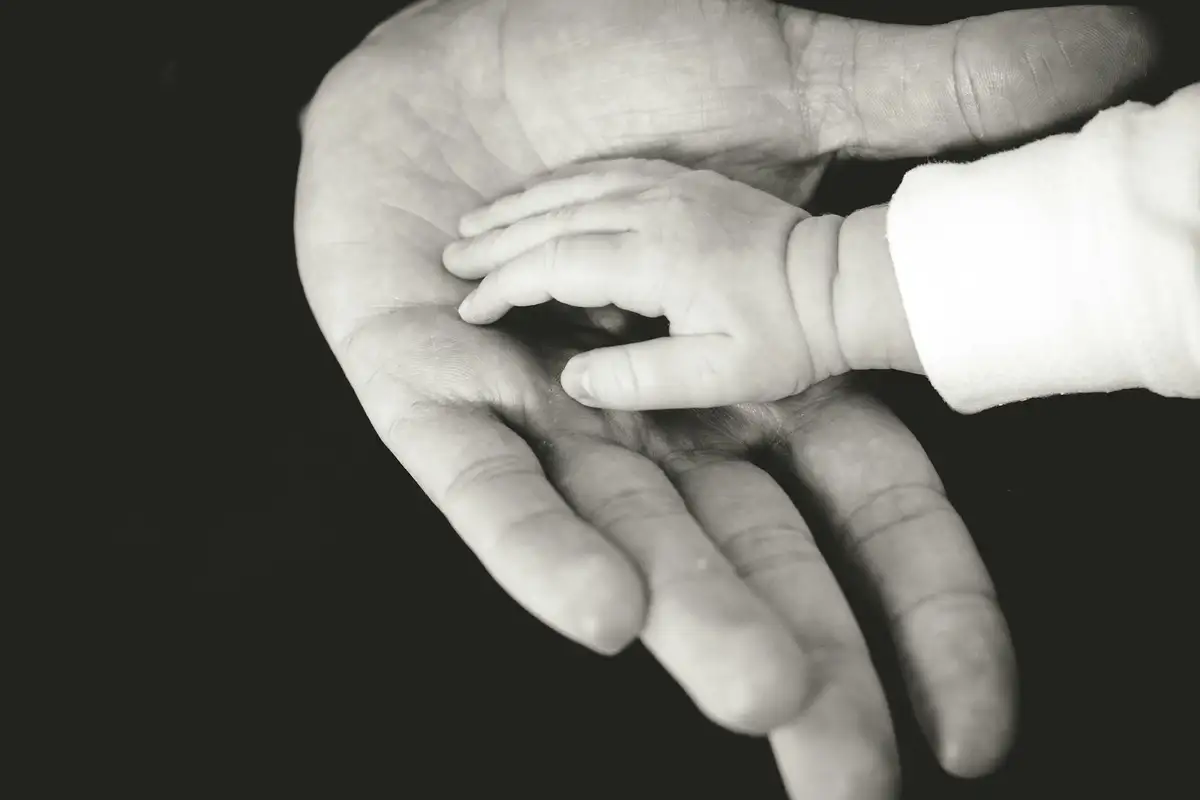
And, ye fathers, provoke not your children to wrath: but bring them up in the nurture and admonition of the Lord.
Ephesians 6:4 (KJV)
Fathers are told not to provoke their children to anger but to raise them in the nurture and admonition of the Lord.
Fathers, provoke not your children to anger, lest they be discouraged.
Colossians 3:21 (KJV)
Paul warns fathers not to provoke their children, lest they become discouraged.
And these words, which I command thee this day, shall be in thine heart: And thou shalt teach them diligently unto thy children, and shalt talk of them when thou sittest in thine house, and when thou walkest by the way, and when thou liest down, and when thou risest up.
Deuteronomy 6:6-7 (KJV)
Parents are to teach God’s words diligently, talking of them at home, on the road, at bedtime and in the morning.
The just man walketh in his integrity: his children are blessed after him.
Proverbs 20:7 (KJV)
A just man walks in integrity, and his children are blessed after him.
My son, despise not the chastening of the Lord; neither be weary of his correction: For whom the Lord loveth he correcteth; even as a father the son in whom he delighteth.
Proverbs 3:11-12 (KJV)
The Lord corrects those he loves, just as a father corrects the son he delights in.
Furthermore we have had fathers of our flesh which corrected us, and we gave them reverence: shall we not much rather be in subjection unto the Father of spirits, and live? For they verily for a few days chastened us after their own pleasure; but he for our profit, that we might be partakers of his holiness. Now no chastening for the present seemeth to be joyous, but grievous: nevertheless afterward it yieldeth the peaceable fruit of righteousness unto them which are exercised thereby.
Hebrews 12:9-11 (KJV)
Earthly fathers discipline for a short time, but God’s discipline produces the peaceable fruit of righteousness.
Like as a father pitieth his children, so the Lord pitieth them that fear him.
Psalms 103:13 (KJV)
The Lord’s compassion toward those who fear him is compared to a father’s pity for his children.
And he arose, and came to his father. But when he was yet a great way off, his father saw him, and had compassion, and ran, and fell on his neck, and kissed him. And the son said unto him, Father, I have sinned against heaven, and in thy sight, and am no more worthy to be called thy son. But the father said to his servants, Bring forth the best robe, and put it on him; and put a ring on his hand, and shoes on his feet:
And bring hither the fatted calf, and kill it; and let us eat, and be merry: For this my son was dead, and is alive again; he was lost, and is found.
And they began to be merry.
Luke 15:20-24 (KJV)
In the parable of the prodigal son, the father runs to embrace his returning son and celebrates his return.
For I know him, that he will command his children and his household after him, and they shall keep the way of the Lord, to do justice and judgment; that the Lord may bring upon Abraham that which he hath spoken of him.
Genesis 18:19 (KJV)
God chose Abraham so that he would teach his children and household to keep the way of the Lord.
And if it seem evil unto you to serve the Lord, choose you this day whom ye will serve; whether the gods which your fathers served that were on the other side of the flood, or the gods of the Amorites, in whose land ye dwell: but as for me and my house, we will serve the Lord.
Joshua 24:15 (KJV)
Joshua publicly commits himself and his household to serving the Lord.
One that ruleth well his own house, having his children in subjection with all gravity; (For if a man know not how to rule his own house, how shall he take care of the church of God?)
1 Timothy 3:4-5 (KJV)
A church leader must manage his own household well, showing that fatherhood is a form of leadership.
Hear, ye children, the instruction of a father, and attend to know understanding. For I give you good doctrine, forsake ye not my law. For I was my father’s son, tender and only beloved in the sight of my mother. He taught me also, and said unto me, Let thine heart retain my words: keep my commandments, and live.
Proverbs 4:1-4 (KJV)
A father passes on the instruction he himself received from his own father.
And he shall turn the heart of the fathers to the children, and the heart of the children to their fathers, lest I come and smite the earth with a curse.
Malachi 4:6 (KJV)
God promises to turn the hearts of fathers to their children and children to their fathers.
Children’s children are the crown of old men; and the glory of children are their fathers.
Proverbs 17:6 (KJV)
The glory of children is their fathers, and grandchildren are the crown of the old.
Or what man is there of you, whom if his son ask bread, will he give him a stone? Or if he ask a fish, will he give him a serpent? If ye then, being evil, know how to give good gifts unto your children, how much more shall your Father which is in heaven give good things to them that ask him?
Matthew 7:9-11 (KJV)
Jesus points out that earthly fathers give good gifts, and our heavenly Father gives even more.
As ye know how we exhorted and comforted and charged every one of you, as a father doth his children, That ye would walk worthy of God, who hath called you unto his kingdom and glory.
1 Thessalonians 2:11-12 (KJV)
Paul describes encouraging and comforting believers as a father does his own children.
The father of the righteous shall greatly rejoice: and he that begetteth a wise child shall have joy of him.
Proverbs 23:24 (KJV)
The father of a righteous child greatly rejoices.
Scripture gives fathers a clear calling to teach. Deuteronomy 6:6-7 describes parents talking about God’s words throughout ordinary life, at home, on the road, at bedtime and in the morning. God chose Abraham so that he would direct his children in the way of the Lord (Genesis 18:19), and Proverbs 4 shows a father passing on the wisdom he learned from his own father. Faith is meant to be handed down through daily example.
The Bible also guides how fathers correct. Ephesians 6:4 and Colossians 3:21 warn fathers not to provoke or discourage their children. Discipline is to be loving, as Proverbs 3:12 and Hebrews 12 describe, aimed at a child’s good rather than a parent’s frustration.
Most importantly, God reveals himself as Father. Psalms 103:13 compares his compassion to a father’s pity for his children, and Jesus teaches in Matthew 7:9-11 that our heavenly Father gives good gifts. In the parable of the prodigal son (Luke 15), the father runs to welcome his son home. Earthly fathers are imperfect, but they reflect God best when they combine steady guidance with open-hearted love.
Scripture speaks both to fathers directly and about God as father, two related but distinct threads worth reading separately.
Scripture does more good on a card or at the table than it does sitting unread. Bible verses about Father’s Day can turn a quick greeting into a real blessing when they are chosen with a particular dad in mind. Think about what you actually see in him, and pick a verse that names it.
A short handwritten note that pairs a verse with one specific memory usually means more to a father than a long quotation. Keep it simple and honest.
Remember spiritual fathers too. Paul called Timothy “my own son in the faith” (1 Timothy 1:2) and told the Corinthians that though they had many instructors, they did not have many fathers (1 Corinthians 4:15). A pastor, coach, teacher or older friend who invested in your faith may be deeply encouraged to hear from you this week.
If your family gathers for a meal, set aside ten minutes. Read Psalm 103:13 aloud, let each person share one way their father or grandfather has shown care, and close by thanking God together. Children can draw a picture of a favorite memory while the adults talk. This keeps the day centered on gratitude rather than gifts, and it gives younger ones a picture of what honoring a parent looks like, as the fifth commandment asks (Exodus 20:12).
Not everyone approaches this day with warm memories. Some have lost their fathers, some never knew them, and some carry wounds from a father who failed them. For these readers, Bible verses about Father’s Day may feel painful rather than comforting. Scripture does not ignore that pain.
David wrote, “When my father and my mother forsake me, then the LORD will take me up” (Psalm 27:10). Psalm 68:5 calls God “a father of the fatherless.” These promises do not erase loss, but they remind us that no one is truly without a father in heaven. Jesus taught His disciples to pray “Our Father” (Matthew 6:9), inviting every believer into that relationship, whatever their earthly story.
If this day stirs grief, it is fine to spend part of it quietly. You might read the Bible verses about God as Father and ask Him to meet you where you are. Others choose to honor a grandfather, uncle, pastor or mentor who stood in the gap. Forgiveness toward a father who hurt you may take time, and it does not require pretending the hurt was small. God is patient with that process.
Praying Scripture back to God is a good way to close the day. This prayer draws on the passages above and can be prayed by a family, by a father himself, or by anyone thinking of the dads in their life.
Heavenly Father, thank You that You pity Your children and give good gifts to those who ask You. Thank You for the fathers You have placed in our lives. Give them integrity, so their children are blessed after them. Help them to teach Your words at home and on the way, and to correct with patience instead of anger. Turn the hearts of fathers to their children, and the hearts of children to their fathers. Where there is distance, bring healing. Where there is grief, bring comfort. Where fathers have wandered, run to meet them as the father ran to his son. In Jesus’ name, amen.
Fathers looking for more encouragement can continue with these Bible verses for fathers, written for daily use through the whole year and not just one Sunday in June.
Joseph never speaks a single recorded word in the Gospels, yet his actions say a great deal. Matthew calls him “a just man” who, before he understood what God was doing, still chose not to shame Mary publicly (Matthew 1:19). When the angel explained, Joseph “did as the angel of the Lord had bidden him” (Matthew 1:24). Later he rose by night and took the young child and his mother into Egypt to keep them safe (Matthew 2:14). Obedience, gentleness and protection mark his fatherhood from the very start.
Joseph also gave Jesus an ordinary home. Neighbors knew Jesus as “the carpenter’s son” (Matthew 13:55), and Luke records that the family went to Jerusalem every year at the feast of the Passover (Luke 2:41). In that home, Jesus “increased in wisdom and stature, and in favour with God and man” (Luke 2:52). Among Bible verses about Father’s Day, these short Gospel lines are easy to overlook, but they honor the father who works faithfully, keeps worship in the family rhythm and serves without needing credit.
A common misunderstanding is that the Bible presents fathers as flawless heroes. In fact, Scripture is candid about their mistakes. Jacob “loved Joseph more than all his children” (Genesis 37:3), and that favoritism fed a jealousy that tore the family apart. Eli was judged because “his sons made themselves vile, and he restrained them not” (1 Samuel 3:13). David mourned Absalom with the cry, “O my son Absalom, my son, my son Absalom! would God I had died for thee” (2 Samuel 18:33), after years of distance between them.
These accounts are not there to shame fathers but to warn and to comfort them. They show that favoritism, passivity and unresolved conflict carry real costs. They also show that God kept working through flawed families: Joseph forgave his brothers, and Jacob lived to see his lost son again (Genesis 45-46). When you read Bible verses about Father’s Day alongside these stories, the commands to teach, correct gently and love well feel less like distant ideals and more like mercy for real homes.
A week of short readings can prepare a father, or a whole family, for the day. Each passage below takes only a few minutes. Read it, write one sentence about what it shows about God as Father or about earthly fathers, and pray briefly. Working through Bible verses about Father’s Day this way gives the Sunday itself more meaning.
By Sunday, the Bible verses about Father’s Day you hear at church or read in a card will already feel familiar. Households led by one parent may also find encouragement in these Bible verses about single fathers, which speak to carrying the load alone.
Children often want to give their dad something that feels meaningful, and a memorized verse is a gift they can carry for life. Choose one short passage suited to their age. Younger children can manage Proverbs 17:6 or Psalm 103:13, while older ones can learn Ephesians 6:1-3, which pairs obeying parents with the promise attached to honoring them.
Short, concrete verses work best. Among these Bible verses about Father’s Day, Proverbs 23:24 is a favorite because children can see how their choices bring their father joy. Exodus 20:12 is another, since it names honor directly. Practice a verse at breakfast for a week, then let the child recite it at the family meal or copy it into a homemade card. For more ideas to print or write out, see these Bible verses for Father’s Day cards and blessings.
Keep it gentle. The aim is gratitude, not performance. If a child forgets a word, laugh together and try again. Learning Bible verses about Father’s Day should feel like a gift shared between parent and child, not a test to pass.
The opening chapter of Job sketches a father most of us never picture. His sons and daughters were adults, living in their own houses and throwing their own feasts. Job was not at the parties. Instead, once the feasting days had run their course, he “sent and sanctified them, and rose up early in the morning” to offer sacrifices for each one, thinking, “It may be that my sons have sinned, and cursed God in their hearts.” Then comes a short, steady line: “Thus did Job continually.” (Job 1:5)
Nothing here is flashy. A man gets up before dawn, quietly, and prays for children who may not even know he is doing it. Plenty of dads today do the same thing without announcing it, standing in a dark kitchen with coffee and a worry about a grown son’s marriage or a daughter’s job. The text does not say Job controlled his children or lectured them over dinner. It says he prayed, and that he did it as a habit rather than a crisis response. If you are a father whose kids no longer listen the way they once did, this is a model worth keeping. Your voice may carry less weight in their daily choices, but your prayers still reach a place their schedules cannot block.
Dying kings are usually remembered for their military orders, but 1 Kings 2 opens with something more personal. David, near the end of a long and messy life, calls Solomon close. “I go the way of all the earth: be thou strong therefore, and shew thyself a man.” (1 Kings 2:2) He goes on to tell Solomon to keep the commandments of the LORD, walking in his ways, so that whatever he does, he does wisely.
Remember who is speaking. David had failed badly as a husband and as a father. His household had seen betrayal, a murdered son, a rebellion led by another son, and years of bitter fallout. Yet here he is at the end, not covering any of it up, and still pointing his boy toward faithfulness. The advice is short because a man who has made large mistakes tends to say what matters most and skip the rest. For fathers carrying regrets, this scene is reassuring and sobering at once. It is reassuring because a flawed dad still has something true to hand down. It is sobering because the best time to say it is well before the deathbed. A brief conversation in a parked car, a letter slipped into a duffel bag, a text on a hard morning. Words like that can be small and still last.
Not every father in Scripture is held up as an example. Eli, the priest at Shiloh, is a warning, and the Bible does not hide it. In 1 Samuel 3, God tells young Samuel that judgment is coming on Eli’s household. The reason is stated bluntly: “his sons made themselves vile, and he restrained them not.” (1 Samuel 3:13) Eli was not a wicked man, and he even scolded his sons once in chapter 2. But a scolding with no follow-through is only noise, and his sons knew it.
Fathers sometimes read this and feel crushed, assuming every misstep with a teenager is a disaster waiting to happen. That is not the point. The passage is about a pattern of seeing a serious problem and deciding, year after year, that it was easier to say nothing. Most of us have a milder version. We notice the late nights, the cruelty to a sibling, the attitude, and we tell ourselves it will pass. Sometimes it does. Sometimes love needs a firm, calm conversation held at a time when it is uncomfortable for everyone. Eli reminds a father that avoiding conflict can look like peace while quietly costing his children more than a hard talk would have.
Genesis 22 is one of the most unsettling chapters in the Bible, and it is easy to read it too fast. Abraham and his son walk toward Moriah carrying wood and fire. Isaac, who is old enough to notice that something is missing, breaks the silence. “And Isaac spake unto Abraham his father, and said, My father: and he said, Here am I, my son.” (Genesis 22:7) The boy asks where the lamb is, and Abraham answers that God will provide.
Set the theology of the chapter aside for a moment and listen to the exchange itself. A child says, “My father,” and the father answers with the same words he used when God called him: “Here am I.” He is present, attentive, and honest enough to say what he trusts without inventing a comforting lie. Many sons and daughters remember a walk, a drive, or a late-night talk when they asked a question that was bigger than they knew and watched their dad choose his words carefully. That moment shapes more than lectures do. A father does not need every answer. He needs to be the sort of person whose child still feels safe asking, and who can say honestly, “I do not know how this will turn out, but I am here and I am trusting God.”
For some readers, the word father opens a locked room. Dad left, died young, was never named, or was around but unkind. For them, Psalm 68:5 may be one of the most welcome lines in the book: “A father of the fatherless, and a judge of the widows, is God in his holy habitation.” The verse puts God’s care for the unprotected in the center of his character rather than treating it as an afterthought.
That does not erase the ache, and a reader should not rush past it. A grown man might still catch himself watching other fathers at a ball game with a feeling he cannot name. Scripture does not scold that feeling. It gives a place to take it. Along with the psalm, it helps to notice the practical side: God often answers through people, a coach, an uncle, a church deacon, a neighbor who showed up with a toolbox. If you had such a person, a note of thanks on Father’s Day may mean more than they ever let on. And if you are the one who could be that presence for a boy or girl without a dad nearby, the day is a good reminder that the role is open to more than biological fathers. If the pain runs deep, a pastor or counselor can walk through it with you at a pace that is kind.
Other collections you may find useful: Bible Verses About Gratitude and Thankfulness, Bible Verses For Protection for Family, Bible Verses About Being Thankful, Bible Verses For Prayer and Strength, Bible Verses For Courage, Bible Verses About Staying Strong, Bible Verses For Spiritual Protection, Bible Verses For Powerful Prayer, Bible Verses For Faith in Hard Times, Bible Verses For Calling and Bible Verses For Blessings and Prosperity.
Helpful free resources for further study include Blue Letter Bible, Bible Gateway, Bible Hub and Bible Study Tools.
Scripture gives fathers a clear calling to teach. Deuteronomy 6:6-7 describes parents talking about God's words throughout ordinary life, at home, on the road, at bedtime and in the morning.
This page brings together 34 King James Version references about father’s Day, drawn from 14 different books of the Bible.
Beyond the references highlighted on this page, father’s Day appears throughout Scripture in books such as Deuteronomy, Genesis, Ephesians, Colossians, Proverbs; this collection focuses on some of the clearest examples.
These father’s Day verses are drawn from books including Deuteronomy, Genesis, Ephesians, Colossians, Proverbs, among others.
Yes. The verses about father’s Day gathered here include passages from both the Old Testament and the New Testament, such as Deuteronomy 6:6 and Ephesians 6:4.