
Bible Verses About First Communion show what a child is receiving when they come to the Lord’s table for the first time. Jesus took bread and the cup on the night before He died, gave thanks, and asked His followers to do this in remembrance of Him. These passages explain the meaning of the meal, from the Passover to the cross to the bread of life.
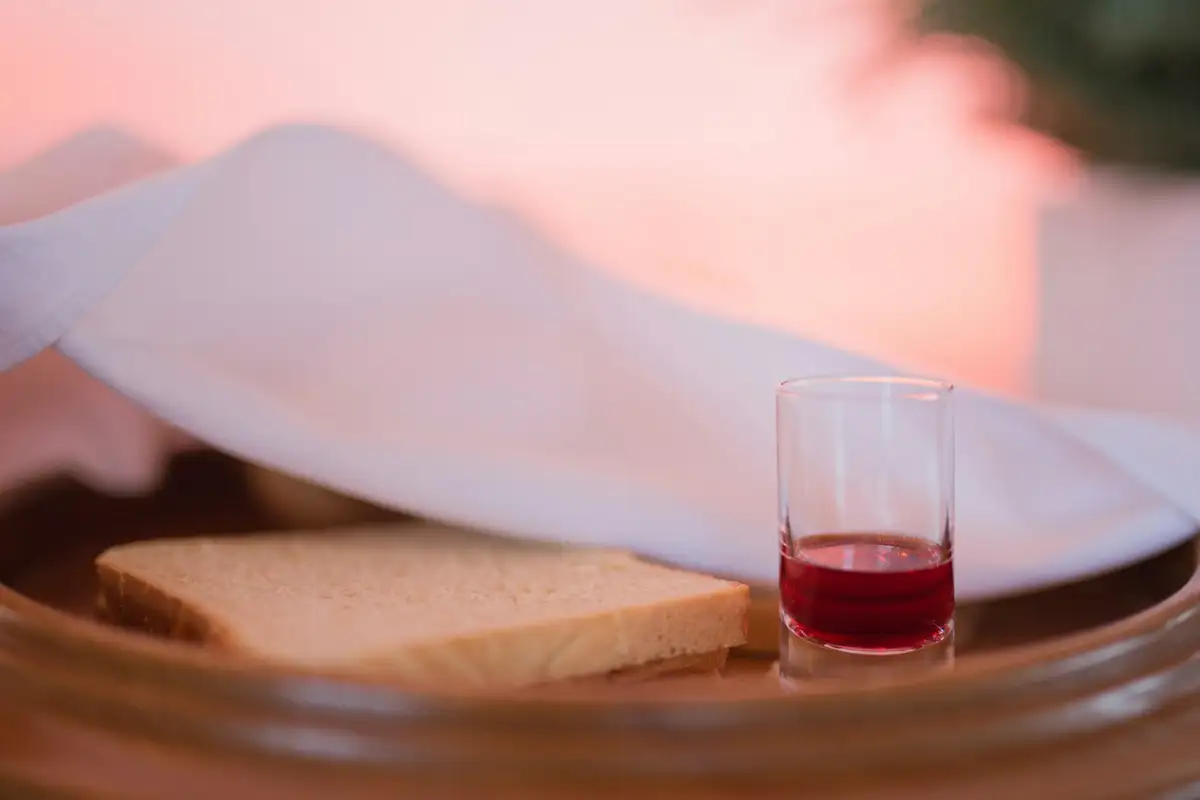
And he took bread, and gave thanks, and brake it, and gave unto them, saying, This is my body which is given for you: this do in remembrance of me. Likewise also the cup after supper, saying, This cup is the new testament in my blood, which is shed for you.
Luke 22:19-20 (KJV)
Jesus gives the bread as His body and the cup as the new testament in His blood, asking His followers to remember Him.
And as they were eating, Jesus took bread, and blessed it, and brake it, and gave it to the disciples, and said, Take, eat; this is my body. And he took the cup, and gave thanks, and gave it to them, saying, Drink ye all of it; For this is my blood of the new testament, which is shed for many for the remission of sins.
Matthew 26:26-28 (KJV)
Matthew records Jesus blessing the bread and cup and linking His blood to the remission of sins.
And as they did eat, Jesus took bread, and blessed, and brake it, and gave to them, and said, Take, eat: this is my body. And he took the cup, and when he had given thanks, he gave it to them: and they all drank of it. And he said unto them, This is my blood of the new testament, which is shed for many.
Mark 14:22-24 (KJV)
Mark’s account of the Last Supper shows Jesus giving thanks and sharing the bread and cup with all the disciples.
For I have received of the Lord that which also I delivered unto you, That the Lord Jesus the same night in which he was betrayed took bread: And when he had given thanks, he brake it, and said, Take, eat: this is my body, which is broken for you: this do in remembrance of me. After the same manner also he took the cup, when he had supped, saying, This cup is the new testament in my blood: this do ye, as oft as ye drink it, in remembrance of me. For as often as ye eat this bread, and drink this cup, ye do shew the Lord’s death till he come.
1 Corinthians 11:23-26 (KJV)
Paul hands on the words of institution and says the meal proclaims the Lord’s death until He comes.
Wherefore whosoever shall eat this bread, and drink this cup of the Lord, unworthily, shall be guilty of the body and blood of the Lord. But let a man examine himself, and so let him eat of that bread, and drink of that cup.
1 Corinthians 11:27-28 (KJV)
Believers are asked to examine themselves before eating, which is why preparation matters before First Communion.
The cup of blessing which we bless, is it not the communion of the blood of Christ? The bread which we break, is it not the communion of the body of Christ? For we being many are one bread, and one body: for we are all partakers of that one bread.
1 Corinthians 10:16-17 (KJV)
The cup and bread are a sharing in Christ, and one loaf makes many believers one body.
And Jesus said unto them, I am the bread of life: he that cometh to me shall never hunger; and he that believeth on me shall never thirst.
John 6:35 (KJV)
Jesus calls Himself the bread of life and promises that those who come to Him will never hunger.
I am the living bread which came down from heaven: if any man eat of this bread, he shall live for ever: and the bread that I will give is my flesh, which I will give for the life of the world.
John 6:51 (KJV)
Here Jesus says He is the living bread from heaven, given for the life of the world.
Whoso eateth my flesh, and drinketh my blood, hath eternal life; and I will raise him up at the last day. For my flesh is meat indeed, and my blood is drink indeed. He that eateth my flesh, and drinketh my blood, dwelleth in me, and I in him.
John 6:54-56 (KJV)
Jesus speaks of eating His flesh and drinking His blood, words many churches read in connection with communion.
And he said unto them, With desire I have desired to eat this passover with you before I suffer:
Luke 22:15 (KJV)
Jesus tells His disciples how much He longed to eat this Passover with them before He suffered.
And the blood shall be to you for a token upon the houses where ye are: and when I see the blood, I will pass over you, and the plague shall not be upon you to destroy you, when I smite the land of Egypt. And this day shall be unto you for a memorial; and ye shall keep it a feast to the Lord throughout your generations; ye shall keep it a feast by an ordinance for ever.
Exodus 12:13-14 (KJV)
At the first Passover the blood of the lamb marked the homes God passed over, and the day became a lasting memorial.
Purge out therefore the old leaven, that ye may be a new lump, as ye are unleavened. For even Christ our passover is sacrificed for us:
1 Corinthians 5:7 (KJV)
Paul calls Christ our passover, sacrificed for us, linking the Lord’s Supper to the Exodus meal.
The next day John seeth Jesus coming unto him, and saith, Behold the Lamb of God, which taketh away the sin of the world.
John 1:29 (KJV)
John the Baptist points to Jesus as the Lamb of God who takes away the sin of the world.
But he was wounded for our transgressions, he was bruised for our iniquities: the chastisement of our peace was upon him; and with his stripes we are healed.
Isaiah 53:5 (KJV)
This prophecy says He was wounded for our transgressions, the sacrifice that communion remembers.
And they continued stedfastly in the apostles’ doctrine and fellowship, and in breaking of bread, and in prayers.
Acts 2:42 (KJV)
The first believers continued steadfastly in teaching, fellowship, breaking of bread and prayers.
And it came to pass, as he sat at meat with them, he took bread, and blessed it, and brake, and gave to them. And their eyes were opened, and they knew him; and he vanished out of their sight.
Luke 24:30-31 (KJV)
The disciples at Emmaus recognized the risen Jesus when He took bread, blessed it and broke it.
Churches understand and celebrate communion in different ways, but all draw on the same passages. On the night He was betrayed, Jesus shared the Passover meal with His disciples, took bread and said, ‘This is my body,’ and took the cup and spoke of His blood of the new testament (Matthew 26:26-28; Luke 22:19-20). Paul passes on the same words in 1 Corinthians 11:23-26 and adds that each time believers eat and drink, they proclaim the Lord’s death until He comes.
The meal has deep roots. At the first Passover, the blood of a lamb marked the homes God spared (Exodus 12:13-14), and the New Testament calls Christ our passover and the Lamb of God (1 Corinthians 5:7; John 1:29). In John 6, Jesus calls Himself the bread of life and promises that whoever comes to Him will never hunger.
Communion is also about belonging. Paul says that because there is one bread, believers, though many, are one body (1 Corinthians 10:16-17), and the early church devoted itself to the breaking of bread together (Acts 2:42). For a child receiving First Communion, these passages explain both the gift of Christ and the family of faith they are joining.
Luke 22:19s this do in remembrance of me gives the direct instruction communion specifically commemorates.
Jesus did not invent a new ritual out of nothing. He sat down with his twelve friends to eat the Passover, a meal Jewish families had kept for well over a thousand years. Luke 22:15 gives us his own words as they gathered: With desire I have desired to eat this passover with you before I suffer. He was not going through the motions. He wanted this table, these men, this night.
Everything on the table already had a story. The unleavened bread recalled a hurried escape from Egypt, with no time to let dough rise. The cups of wine marked stages of the meal. A father would explain, year after year, why the night was different from all other nights. When Jesus took the bread and the cup and attached new words to them, the disciples were hearing familiar things said in an unfamiliar way.
A child coming to the table for the first time does not need all of that, but a parent or teacher who knows it can answer a bright question. Why do we eat bread at church? Because Jesus did it first, at a supper where he knew what the next day held. Anyone searching for Bible verses about first communion is really starting at that room, with the lamp on and the door shut and the soldiers not yet at the gate.
Exodus 12 explains why the Passover mattered. Each household was told to take a lamb and put its blood on the doorposts, and the LORD said in verse 13, when I see the blood, I will pass over you, and the plague shall not be upon you to destroy you. Families stayed inside, ate, and waited. Nobody could rescue themselves that night by being good. The lamb stood in the place of the firstborn.
The New Testament keeps pointing back to this scene. John the Baptist saw Jesus coming and said in John 1:29, Behold the Lamb of God, which taketh away the sin of the world. Paul wrote in 1 Corinthians 5:7, For even Christ our passover is sacrificed for us. Isaiah 53:5 sits behind all of it: he was wounded for our transgressions, he was bruised for our iniquities.
For a seven-year-old the idea is heavy, and adults should not try to make it graphic. A simple version works well: long ago God kept his people safe through a lamb, and Jesus is the one who keeps us safe now. The details can come later. What matters for a first reception of the supper is that the table is about being rescued, and a child knows what it feels like to be carried out of something scary.
Three Gospels and Paul record the words, and they agree on the heart of it. Matthew 26:26-28 has Jesus taking bread, blessing it, breaking it, and saying, Take, eat; this is my body. Then he took the cup, gave thanks, and said, Drink ye all of it; for this is my blood of the new testament, which is shed for many for the remission of sins. Luke 22:19-20 adds the instruction, this do in remembrance of me.
Paul passes on the same tradition in 1 Corinthians 11:23-26, and he writes that he received it from the Lord. That letter was written perhaps twenty-five years after the Last Supper, so the church was already repeating these words before any Gospel had been written down. Verse 26 states the purpose: as often as ye eat this bread, and drink this cup, ye do shew the Lord’s death till he come.
Notice two things. The word often assumes repetition, so this is not a once in a lifetime rite. And the words till he come point forward. The meal looks back to the cross and ahead to the return. People who study Bible verses about first communion tend to spend all their attention on the first part. The second part is what makes the table hopeful and not only sad.
John 6 does not describe the Last Supper, but it is often read alongside it. After feeding five thousand people, Jesus said in verse 35, I am the bread of life: he that cometh to me shall never hunger; and he that believeth on me shall never thirst. A little later in verse 51 he said, I am the living bread which came down from heaven: if any man eat of this bread, he shall live for ever.
The crowd argued about it, and some of his followers left. Verses 54-56 are the strongest: whoso eateth my flesh, and drinketh my blood, hath eternal life. Christians have read those lines in different ways for twenty centuries. Catholic and Orthodox churches see a direct link to the sacrament. Many Protestants read the language as a picture of trusting Christ with your whole self. It would not be honest to pretend the question is closed.
What can be said fairly is that Jesus made himself the source of life, and that he spoke about it using the plainest daily objects: bread, which nobody could do without. A family working through John 6 as part of Bible verses about first communion might read it aloud and stop after verse 35. A child understands being hungry. They can hold on to that, and the harder verses can be waiting for them when they are older.
After the resurrection, two disciples were walking from Jerusalem to Emmaus, discouraged, talking about everything that had gone wrong. A stranger joined them and explained the Scriptures to them as they walked. They still did not know who he was. Then, Luke 24:30-31 says, as he sat at meat with them, he took bread, and blessed it, and brake, and gave to them. And their eyes were opened, and they knew him.
It is easy to miss how ordinary this is. There was no thunder. A man picked up a loaf and did what a host does. And in that gesture, they recognised him. It had been the way he always handled the bread, and their memory of it was stronger than the grief that had blinded them.
Communion has been like that for many people. Not an overwhelming event, but a small repeated act that suddenly makes God feel near. Among the Bible verses about first communion, this passage offers an encouraging note to anyone who is nervous that they will not feel anything special. Feeling is not the test. Sometimes recognition comes later, on the road home, as it did for those two men who ran seven miles back to Jerusalem that same evening.
Paul wrote to the Corinthians in 1 Corinthians 10:16-17, The cup of blessing which we bless, is it not the communion of the blood of Christ? The bread which we break, is it not the communion of the body of Christ? For we being many are one bread, and one body: for we are all partakers of that one bread. He was addressing a congregation that was splitting into factions, and he used the shared loaf to remind them that they were bound together.
The point lands hard for a child making first communion. They are not simply receiving something privately. They are being welcomed to sit with a particular group of people, some of whom they find boring, some of whom are loud, and one of whom always hands out peppermints. They are joining a family.
Acts 2:42 gives a short glimpse of what the earliest church looked like. They continued stedfastly in the apostles’ doctrine and fellowship, and in breaking of bread, and in prayers. Four habits, all done together. If you are reading Bible verses about first communion with a young person, you might ask who they would like to sit beside the next time the bread goes round. It sounds trivial. But communion that never touches how we treat each other has missed what Paul was saying.
1 Corinthians 11:27-28 can alarm parents. Whosoever shall eat this bread, and drink this cup of the Lord, unworthily, shall be guilty of the body and blood of the Lord. But let a man examine himself, and so let him eat of that bread, and drink of that cup. It helps to know the setting. Wealthy Corinthians were arriving early at the church supper, eating and drinking heavily, and leaving the poor with nothing. Paul was angry about that, and the unworthy manner he describes is exactly this kind of selfish behaviour.
He was not telling anxious believers to stay away until they felt perfectly clean. Self-examination in the passage leads to the table, not away from it. The instruction is to look honestly at how you have treated others and to settle it, then come.
For a child this can be reduced to something plain. Have I been unkind to someone I should make right? Is there something I need to say sorry for? Then come to the table, because the bread is for people who need it. If your church has a time of confession before communion, the same logic applies. Those studying Bible verses about first communion should not leave a young person with the idea that they have to be good enough. The supper exists because none of us are.
Churches differ on communion, and a family moving between congregations will notice. In the Catholic Church, first communion is typically received around the age of seven, after the child has made a first confession. Orthodox churches commonly give communion to infants after baptism. Many Protestant churches wait until a child can profess faith, and others hold the table open to anyone who trusts Christ. Some use wine, others grape juice. Some break one loaf, others pass wafers or tiny cups.
These practices come from different readings of the same passages. They also reflect different views on what happens in the meal, whether Christ is present in the bread and wine in a real and substantial way, in a spiritual way, or whether the meal is mainly a memorial. People have argued over this since the sixteenth century, and a few lost their lives over it. A short page is the wrong place to settle it.
What helps families is learning how their own church understands the table, and asking the pastor or priest to explain it simply. When you collect Bible verses about first communion, choose ones that your congregation actually uses, so the child hears them again in worship. A child who learns to love the rhythm of their own church’s table will usually find the larger questions less frightening later.
Good preparation is calm. Explain what will happen in the service: when the bread will come, what the child will be asked to do, whether they kneel or stand, what words they will hear. Surprises make children anxious. If your church has a class, attend with them and sit beside them. If it does not, sit down one evening and walk through the order of service together.
Then talk about the meaning in language that fits their age. Jesus had a last dinner with his friends before he died and asked them to keep eating together to remember him. That is enough for a small child. For an older one, read Luke 22:19-20 aloud and ask what the words this do in remembrance of me might mean. Let them use their own words, even if they sound clumsy. A nine-year-old who says it is like looking at a photo of someone you miss has grasped more than they know.
Keep the day itself simple. A family meal afterwards is a lovely idea, since the supper began as a meal. Resist the temptation to turn it into an event larger than the sacrament. People looking up Bible verses about first communion for a card or keepsake can pick a single line, perhaps John 6:35 or Luke 22:19, and write it inside a small gift Bible where it will stay.
Not everybody receives their first communion as a child. Some people come to faith in their thirties, or forties, or seventies, and find themselves walking toward the front of a church with a strange mix of eagerness and embarrassment. They worry about doing it wrong. They worry the person behind them knows the routine better than they do.
The Bible has something to say to them. Luke 22:15 records the eagerness in Jesus himself, and the table was set for people who had fallen asleep in the garden, who would run, who would deny him. Nobody at that supper had earned a place. If you are coming late, you come exactly as they did.
A short prayer may help in plain words. Lord, I am new at this, and I am nervous that I will do it wrong. Thank you for inviting me anyway. Help me to remember what you did, and keep me close to the people around me. If you are walking through your first Bible verses about first communion because of something recent, a baptism or a loss or a long season of questions, there is no need to hurry the feeling. Take the bread, say thank you, and let the meaning grow into the following weeks.
The first time is memorable. The fiftieth is the challenge. Many Christians report that communion becomes routine, a thing they do while thinking about lunch. That is not a failure. It is human nature, and Paul’s word shew in 1 Corinthians 11:26 suggests that part of the purpose is to keep stating the story whether we feel it or not.
A few habits help. Arrive a few minutes early and sit quietly. Pick one thing to thank God for as the plate comes round. Read a verse before bed on communion Sunday, such as Isaiah 53:5 or John 1:29. If your church celebrates infrequently, keep a note of the date. If it celebrates weekly, rotate which Bible verses about first communion you reflect on, spending a month with each Gospel account in turn.
Children watch closely. When they see a parent come back from the table calm, or tearful, or simply attentive, they learn that something real is happening there. That quiet example teaches more than any class. And years later, when they are grown and carrying their own worries into a pew, the bread will feel familiar, like a table they have always known they belonged at.
Readers interested in first communion often continue with Bible Verses About Strength, Bible Verses For Love and Marriage, Bible Verses For Emotional Healing, Bible Verses For God's Promises, Bible Verses About Peace in the Storm, Bible Verses About Spiritual Protection, Bible Verses About Mercy, Bible Verses For Spiritual Growth, Bible Verses For Healing and Strength, Bible Verses About Discipleship and Bible Verses About Stress.
Helpful free resources for further study include Blue Letter Bible, Bible Gateway and Bible Hub.
Churches understand and celebrate communion in different ways, but all draw on the same passages.
This page brings together 8 King James Version references about first Communion, drawn from 6 different books of the Bible.
Yes. The verses about first Communion gathered here include passages from both the Old Testament and the New Testament, such as Exodus 12:13 and Matthew 26:26.
Matthew 26:26 is one of the verses about first Communion referenced in this collection, alongside Luke 22:19.
Yes, the verses referenced on this page, including Matthew 26:26, are quoted according to the King James Version (KJV), and are suitable for daily reading, memorization, or devotional use.