
Bible verses about humbling yourself show that humility is not thinking poorly of yourself but seeing yourself rightly before God. Scripture warns that pride goes before a fall and promises that God gives grace to the humble. From Moses to the tax collector in Jesus’ parable, these passages show what lowliness looks like and why God lifts up those who bow before him.
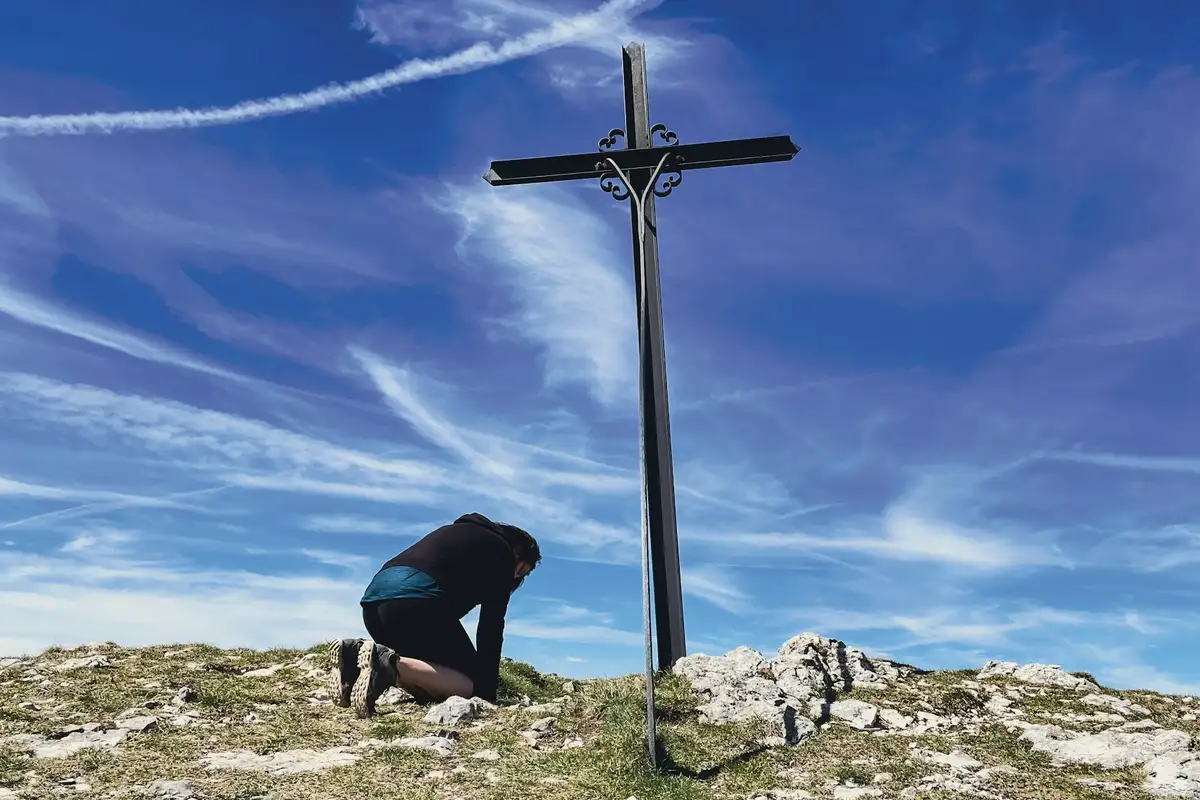
Humble yourselves in the sight of the Lord, and he shall lift you up.
James 4:10 (KJV)
A direct command to humble ourselves before the Lord, paired with the promise that he will lift us up.
Likewise, ye younger, submit yourselves unto the elder. Yea, all of you be subject one to another, and be clothed with humility: for God resisteth the proud, and giveth grace to the humble. Humble yourselves therefore under the mighty hand of God, that he may exalt you in due time:
1 Peter 5:5-6 (KJV)
Peter explains that God resists the proud but gives grace to the humble, so we bow under his mighty hand.
Let this mind be in you, which was also in Christ Jesus: Who, being in the form of God, thought it not robbery to be equal with God: But made himself of no reputation, and took upon him the form of a servant, and was made in the likeness of men: And being found in fashion as a man, he humbled himself, and became obedient unto death, even the death of the cross.
Philippians 2:5-8 (KJV)
Christ, though equal with God, took the form of a servant and humbled himself to the cross.
Let nothing be done through strife or vainglory; but in lowliness of mind let each esteem other better than themselves. Look not every man on his own things, but every man also on the things of others.
Philippians 2:3-4 (KJV)
Lowliness of mind means valuing others above ourselves and looking to their interests too.
He hath shewed thee, O man, what is good; and what doth the Lord require of thee, but to do justly, and to love mercy, and to walk humbly with thy God?
Micah 6:8 (KJV)
Walking humbly with God is named alongside justice and mercy as what the Lord requires.
Pride goeth before destruction, and an haughty spirit before a fall.
Proverbs 16:18 (KJV)
Pride and a haughty spirit are shown as the road that leads to destruction and a fall.
When pride cometh, then cometh shame: but with the lowly is wisdom.
Proverbs 11:2 (KJV)
Shame follows pride, but wisdom is found with the lowly, according to this proverb.
And whosoever shall exalt himself shall be abased; and he that shall humble himself shall be exalted.
Matthew 23:12 (KJV)
Jesus teaches a reversal: those who exalt themselves will be humbled, and the humble will be exalted.
Two men went up into the temple to pray; the one a Pharisee, and the other a publican. The Pharisee stood and prayed thus with himself, God, I thank thee, that I am not as other men are, extortioners, unjust, adulterers, or even as this publican. I fast twice in the week, I give tithes of all that I possess. And the publican, standing afar off, would not lift up so much as his eyes unto heaven, but smote upon his breast, saying, God be merciful to me a sinner.
I tell you, this man went down to his house justified rather than the other: for every one that exalteth himself shall be abased; and he that humbleth himself shall be exalted.
Luke 18:10-14 (KJV)
In this parable the proud Pharisee boasts while the tax collector begs for mercy and goes home justified.
If my people, which are called by my name, shall humble themselves, and pray, and seek my face, and turn from their wicked ways; then will I hear from heaven, and will forgive their sin, and will heal their land.
2 Chronicles 7:14 (KJV)
God links humbling ourselves, praying and turning from sin with his promise to hear and heal.
By humility and the fear of the Lord are riches, and honour, and life.
Proverbs 22:4 (KJV)
Humility and the fear of the Lord are said to bring riches, honour and life.
For thus saith the high and lofty One that inhabiteth eternity, whose name is Holy; I dwell in the high and holy place, with him also that is of a contrite and humble spirit, to revive the spirit of the humble, and to revive the heart of the contrite ones.
Isaiah 57:15 (KJV)
The high and holy God chooses to dwell with those who have a contrite and humble spirit.
But when thou art bidden, go and sit down in the lowest room; that when he that bade thee cometh, he may say unto thee, Friend, go up higher: then shalt thou have worship in the presence of them that sit at meat with thee. For whosoever exalteth himself shall be abased; and he that humbleth himself shall be exalted.
Luke 14:10-11 (KJV)
Choosing the lowest seat at a feast illustrates how God honours those who do not push themselves forward.
For I say, through the grace given unto me, to every man that is among you, not to think of himself more highly than he ought to think; but to think soberly, according as God hath dealt to every man the measure of faith.
Romans 12:3 (KJV)
Paul warns against thinking of ourselves more highly than we ought, urging sober judgment instead.
Surely he scorneth the scorners: but he giveth grace unto the lowly.
Proverbs 3:34 (KJV)
God scorns the scornful but gives grace to the lowly, a verse later quoted by James and Peter.
Whosoever therefore shall humble himself as this little child, the same is greatest in the kingdom of heaven.
Matthew 18:4 (KJV)
Greatness in the kingdom, Jesus says, belongs to whoever humbles himself like a little child.
(Now the man Moses was very meek, above all the men which were upon the face of the earth.)
Numbers 12:3 (KJV)
Moses, a powerful leader, is described as very meek, showing humility and strength can go together.
Put on therefore, as the elect of God, holy and beloved, bowels of mercies, kindness, humbleness of mind, meekness, longsuffering;
Colossians 3:12 (KJV)
Believers are told to clothe themselves with humbleness of mind, meekness and longsuffering.
The Bible treats humility as the right response to who God is. Micah 6:8 lists walking humbly with God alongside justice and mercy, and Isaiah 57:15 says the high and lofty One dwells with the contrite and humble spirit. Pride, by contrast, sets itself against God, which is why Proverbs 16:18 links it with destruction and James 4:6 says God resists the proud.
Humbling yourself is described as something we choose. James 4:10 and 1 Peter 5:6 both call believers to humble themselves and leave the lifting up to God. Jesus illustrated this in Luke 18 with the Pharisee who praised himself and the tax collector who simply asked for mercy; it was the tax collector who went home justified.
The greatest example is Christ himself. Philippians 2:5-8 describes how he took the form of a servant and became obedient unto death, and Paul urges believers to share that same mind. Humility therefore shows up in practical ways: esteeming others, accepting correction, and serving without seeking credit.
James 4:10s humble yourselves in the sight of the Lord gives direct instruction, a choice made rather than a passive circumstance.
English has only a couple of words for this idea, and both can sound gloomy. The Bible is more specific. In the Old Testament, the common Hebrew verb is kana, which means to be bowed down or brought low, and it is often used when people respond to God after being confronted. In the New Testament, the Greek verb tapeinoo means to make low, to level out. Jesus uses it in Matthew 23:12, and James and Peter use it when they tell believers to humble themselves.
Notice something about the grammar. In several of the most famous passages the verb is reflexive: humble yourselves. God sometimes humbles people by force, as we will see with a Babylonian king, but the invitation in Scripture is to do it before it is done to you. That is why Bible verses about humbling yourself tend to arrive with a promise attached, usually that God lifts the lowly in His time.
Humility here is not self-hatred, and it is not saying false things about your abilities. It is seeing yourself accurately next to God and next to other people. The sections below follow several stories and letters that show how that looks in ordinary life, from a temple courtyard to a wedding table.
Jesus tells a short story to people who were confident in their own goodness. Two men go up to the temple to pray. One is a Pharisee, a respected religious man. The other is a tax collector, a man whom neighbors despised because he worked for Rome and often skimmed extra for himself.
The Pharisee stands and prays about himself. He thanks God that he is not like other men, and he lists his fasting and giving. Every sentence points back at him. The tax collector stays at a distance, will not even lift his eyes, beats his chest, and says, God be merciful to me a sinner. That is the whole prayer.
Jesus says the tax collector went home justified, rather than the other. Then He repeats a line He used more than once: everyone who exalts himself shall be abased, and he that humbleth himself shall be exalted. The shock of the story is that the Pharisee did most things right. His mistake was using his good record as a platform for looking down on someone. If you ever catch yourself thinking, ‘at least I’m not like that person,’ you have walked into the first man’s prayer without noticing. Few Bible verses about humbling yourself are as vivid as this courtyard scene.
Jesus is at a dinner hosted by a leading Pharisee, and He watches guests scramble for the best places. So He tells a practical story. When you are invited to a wedding, do not sit in the place of honor, in case someone more distinguished arrives and the host asks you to move. You would end up taking the lowest place in embarrassment. Instead, sit down in the lowest room, so that when the host comes he says, Friend, go up higher.
It sounds like etiquette advice, and it works on that level. But the closing line in verse 11 shows the real target: whoever exalts himself will be abased, and he that humbles himself will be exalted. The story is about a posture of heart that shows itself in small habits, like who gets introduced first or who takes credit in a meeting.
Modern versions of this are everywhere. The conference seat nearest the front. The promotion everyone knows you want. The family argument about who did the most work at the holiday dinner. This passage does not forbid being honored. It trusts the host to decide the seating, and asks you to stop campaigning for it. Many of us would feel lighter if we did. Among the Bible verses about humbling yourself, this one is the most practical about daily habits.
Numbers 12:3 contains a surprising sentence: now the man Moses was very meek, above all the men which were upon the face of the earth. The setting is family trouble. Miriam and Aaron have been grumbling about Moses, and God is about to step in. The remarkable thing is that Moses does not defend himself in the story. God does it for him.
This is the same Moses who stood before Pharaoh, split a sea, and led a nation for forty years. Nobody could call him timid. Meekness in the Bible describes strength under control, a person who could push back and chooses not to. The Hebrew word, anav, is often translated humble or afflicted, and the later Psalms use it of people who depend on God.
Think of how much of daily life depends on this. A tired parent answers a rude teenager calmly. A manager takes the blame for a team mistake. A pastor receives sharp criticism and listens before replying. Those scenes usually look like weakness from a distance. Up close they take enormous steadiness. Among the Bible verses about humbling yourself, the example of Moses is a good corrective for anyone who thinks lowering yourself means getting walked over.
Paul writes from prison to a church that had some friction in it, and he asks them to do nothing through strife or vainglory, but in lowliness of mind to count others better than themselves. Verse 4 widens that: look not every man on his own things, but every man also on the things of others.
Then he points to the example. Christ Jesus, being in the form of God, did not consider equality with God something to hold on to. He made Himself of no reputation, took the form of a servant, was made in the likeness of men, and humbled Himself, becoming obedient unto death, even the death of the cross. Paul may be quoting an early hymn here, and either way the movement is plain: down, and down, and down.
What strikes me is that the verse does not say Christ lost His status. He set it aside on purpose. That changes how humbling yourself feels. It is not a defeat you suffer. It is a choice made from security, the way a person who knows their worth can afford to carry someone else’s bags. If Jesus could kneel with a towel in the upper room and wash feet, nobody reading Philippians 2 has a good excuse for guarding their dignity too hard. Of all the Bible verses about humbling yourself, this passage gives the deepest reason to do it.
Proverbs says it in several ways. Pride goeth before destruction, and an haughty spirit before a fall (Proverbs 16:18). When pride cometh, then cometh shame: but with the lowly is wisdom (Proverbs 11:2). God resisteth the proud, but giveth grace unto the lowly (Proverbs 3:34, quoted again in James 4:6 and 1 Peter 5:5). These are not threats from an angry deity. They are observations about how life works, and they come from people who had watched kings and households rise and fall.
Daniel 4 gives one vivid case. Nebuchadnezzar walks on his palace roof and boasts about the great Babylon he built by his own power. While the words are still in his mouth, a voice says the kingdom is taken from him. For a season he lives like an animal, until he lifts his eyes to heaven and his understanding returns. He ends by praising the King of heaven and saying that those who walk in pride He is able to abase.
Most of us will not lose a kingdom. We do lose friendships, jobs, and marriages when we cannot hear correction or admit a mistake. A fall is often the end of a long stretch where nobody could tell us anything. It is a sobering thing to read these verses and think of one person you have stopped listening to.
When Solomon finished building the temple, God appeared to him and gave a conditional promise. If my people, which are called by my name, shall humble themselves, and pray, and seek my face, and turn from their wicked ways; then will I hear from heaven, and will forgive their sin, and will heal their land.
People quote this verse a great deal in discussions about their country, and it deserves careful reading. It was spoken to Israel as a covenant nation with the temple at its center. Applying it word for word to any modern country goes beyond what the text says. Still, the pattern carries over to believers and churches in a fair way: humbling comes first, then prayer, then seeking God, then turning from what is wrong. Humility is the doorway, not an afterthought.
Notice that the verse gives a sequence, not a mood. Humbling is paired with action, turning away from specific wickedness. A general sense of sorrow is not the same as the change God asks for. If you are reading this because you want your family, church, or community to change, start with your own house. The verse begins with my people, and that includes the person holding the Bible. It is one of the longer Bible verses about humbling yourself, and the order of its verbs matters.
The disciples ask Jesus a very human question: who is the greatest in the kingdom of heaven? Jesus calls a little child, sets him in the middle of them, and says that unless they are converted and become as little children, they will not enter the kingdom. Then He adds: whosoever therefore shall humble himself as this little child, the same is greatest in the kingdom of heaven (Matthew 18:4).
In first-century culture a child had no rank, no wealth, and no voice in public affairs. Jesus does not praise children for being innocent or sweet, though we sometimes read it that way. He points to their position. A child cannot earn a place at the table. A child receives it, and trusts the parents who feed him.
That is humility in its simplest form: receiving. Asking for help. Letting someone else pay. Saying you do not know. A lot of adults find receiving harder than giving, because giving keeps us in control. Jesus suggests the greatest people in His kingdom are those who are comfortable not being in control. If that stings a little, it is probably touching something real. Let it sit rather than hurrying to explain it away. These Bible verses about humbling yourself come from a conversation that began with an argument about rank.
Humility is sometimes confused with low self-esteem, and the Bible does not make that mistake. Romans 12:3 says, not to think of himself more highly than he ought to think; but to think soberly, according as God hath dealt to every man the measure of faith. The key word is soberly. It means sound-minded, with accurate judgment. You are not told to pretend you have no gifts. You are told to see them as gifts.
Micah 6:8 puts it in one sentence: what doth the LORD require of thee, but to do justly, and to love mercy, and to walk humbly with thy God? Walking is a daily, steady word. It suggests small steps, not one grand gesture. It also sits right between justice and mercy, which suggests that humility affects how we treat people who have less power than we do.
A good test is how you respond to honest feedback. Someone who is secure can hear that a report was weak, say thank you, and fix it. Someone who is insecure either collapses or argues. Bible verses about humbling yourself are not meant to shrink anyone. They free a person from needing to look better than they are, which is a heavy thing to carry.
Peter writes, Likewise, ye younger, submit yourselves unto the elder. Yea, all of you be subject one to another, and be clothed with humility: for God resisteth the proud, and giveth grace to the humble. Therefore humble yourselves under the mighty hand of God, that he may exalt you in due time (1 Peter 5:5-6). The word for clothed likely echoes a servant tying on an apron before work. Humility, in other words, is something you put on deliberately, like a work uniform.
James uses a similar phrase: Humble yourselves in the sight of the Lord, and he shall lift you up (James 4:10). It follows a call to wash hands, purify hearts, and mourn over sin, so the context is real repentance, not just a pleasant attitude.
Both writers tie exaltation to God’s timing, and that phrase matters. In due time may be longer than we like. People who humble themselves at work are not guaranteed a promotion, and people who apologize in a family are not guaranteed instant peace. What is promised is that God notices, that He gives grace, and that He will honor what is done in the open before Him. Colossians 3:12 adds that humbleness of mind is part of the clothing believers put on, along with mercy and patience.
Reading about humility is easy. Practicing it is where most of us stall. Here are a few ordinary places to begin. Apologize first in the next small disagreement, without adding the word but. Say thank you to someone who does background work in your office or church. Take a task nobody will notice. Ask a friend you trust, ‘What is one thing I do that makes me hard to work with?’ and then listen all the way through.
Practice also means letting go of the need to win. In a heated argument, try asking a real question before making a point. Let a coworker get credit for an idea you helped with. Sit in the back at an event and see who needs to be greeted. Isaiah 57:15 says God dwells with him that is of a contrite and humble spirit, to revive the spirit of the humble. That is a striking address for the Most High to choose.
One honest caution is needed. Humbling yourself does not mean staying quiet when someone is harming you or others. Scripture never tells a person to accept abuse in the name of humility. If you are in a situation of mistreatment, seek help from a pastor, counselor, or other trusted person. Real humility has a spine, and it also knows when to ask for protection.
If you want words for a quiet moment, here is one way to pray.
Lord, You know how quickly I defend myself. You know the conversations where I wanted the last word, and the times I let someone else carry the blame. Teach me to see myself the way You do, no bigger and no smaller. Where I have been proud, forgive me. Where I have been afraid to ask for help, give me courage. Show me one person I can serve this week without being noticed, and give me the patience to do it well. Help me hear correction as a gift and not an attack. Thank You for lifting up the lowly and for sending Your Son to kneel down with a towel. Let me follow Him in the small, daily places where nobody is keeping score. Amen.
Come back to Luke 18, Philippians 2, and Micah 6:8 over the next week, reading one at a time. Write down where each one pinches. A pinch is useful. It usually shows where God is about to do some careful work.
More verse collections related to humbling yourself: Bible Verses About Strength and Hope, Bible Verses For Courage, Bible Verses About Loss, Bible Verses For Unconditional Love, Bible Verses About Children's Protection, Bible Verses For Discipleship, Bible Verses For Being Thankful, Bible Verses For God's Peace, Bible Verses For Protection for Family, Bible Verses About Trusting God and Bible Verses For Finding Peace.
Free tools for studying these passages further: Blue Letter Bible, Bible Gateway, Bible Hub and Bible Study Tools.
The Bible treats humility as the right response to who God is. Micah 6:8 lists walking humbly with God alongside justice and mercy, and Isaiah 57:15 says the high and lofty One dwells with the contrite and humble spirit.
This page brings together 7 King James Version references about humbling Yourself, drawn from 6 different books of the Bible.
Yes, the verses referenced on this page, including Micah 6:8, are quoted according to the King James Version (KJV), and are suitable for daily reading, memorization, or devotional use.
Beyond the references highlighted on this page, humbling Yourself appears throughout Scripture in books such as Micah, Isaiah, Proverbs, James, 1 Peter; this collection focuses on some of the clearest examples.
These humbling Yourself verses are drawn from books including Micah, Isaiah, Proverbs, James, 1 Peter, among others.