
Bible verses about provision reveal a God who feeds the birds, sent manna in the wilderness, and kept a widow’s jar of flour from running dry. Scripture presents Him as Jehovahjireh, the Lord who provides, and invites His people to trust Him for daily needs rather than worry. These passages trace that promise from Abraham on the mountain to Paul’s letters.
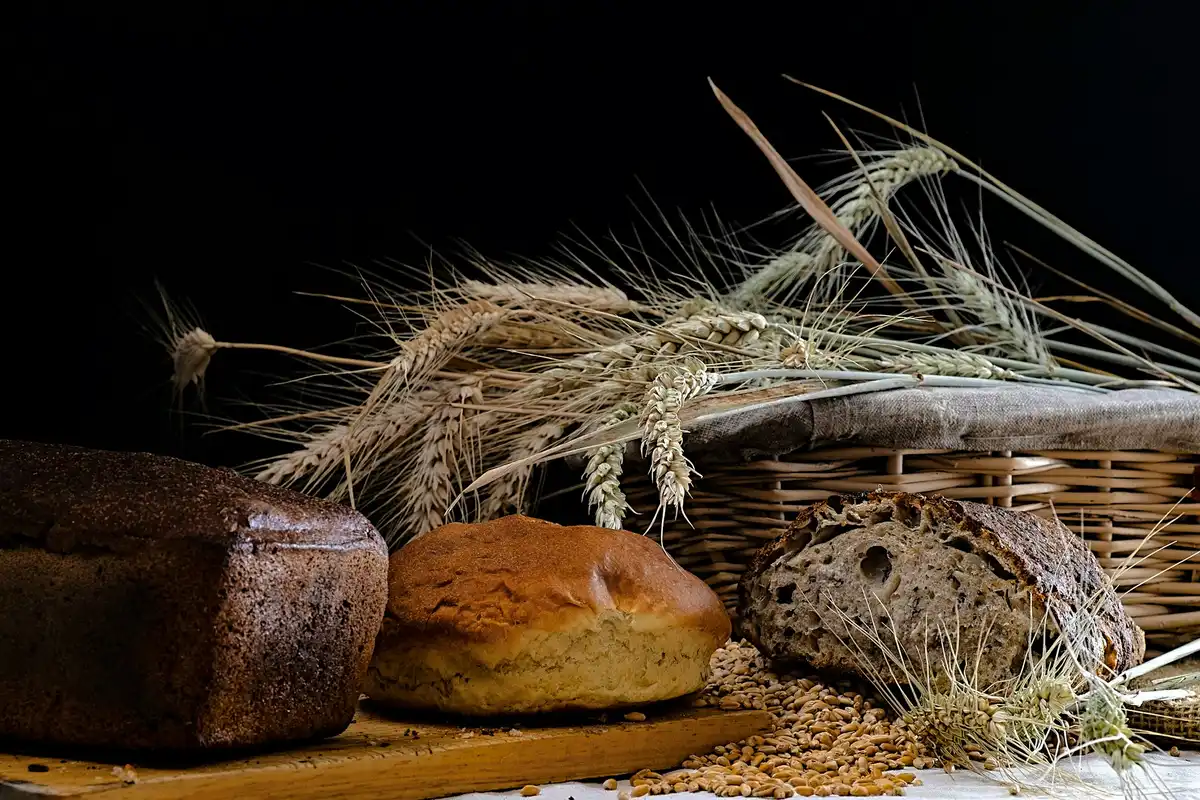
But my God shall supply all your need according to his riches in glory by Christ Jesus.
Philippians 4:19 (KJV)
Paul assures the generous Philippians that God will supply all their need according to His riches in glory by Christ Jesus.
Behold the fowls of the air: for they sow not, neither do they reap, nor gather into barns; yet your heavenly Father feedeth them. Are ye not much better than they?
Matthew 6:26 (KJV)
Jesus points to the birds, fed by the heavenly Father without sowing or reaping, to show how much more He values us.
Therefore take no thought, saying, What shall we eat? or, What shall we drink? or, Wherewithal shall we be clothed? (For after all these things do the Gentiles seek:) for your heavenly Father knoweth that ye have need of all these things. But seek ye first the kingdom of God, and his righteousness; and all these things shall be added unto you.
Matthew 6:31-33 (KJV)
Rather than anxiously asking what we will eat or wear, we seek God’s kingdom first, trusting He knows our needs.
The Lord is my shepherd; I shall not want.
Psalms 23:1 (KJV)
David’s confidence that with the Lord as shepherd he shall not want is the heart of biblical provision.
And Abraham called the name of that place Jehovah–jireh: as it is said to this day, In the mount of the Lord it shall be seen.
Genesis 22:14 (KJV)
After God provided a ram in Isaac’s place, Abraham named the place Jehovahjireh, the Lord will provide.
The eyes of all wait upon thee; and thou givest them their meat in due season. Thou openest thine hand, and satisfiest the desire of every living thing.
Psalms 145:15-16 (KJV)
The eyes of all creatures wait on God, who opens His hand and satisfies every living thing.
These wait all upon thee; that thou mayest give them their meat in due season. That thou givest them they gather: thou openest thine hand, they are filled with good.
Psalms 104:27-28 (KJV)
All creation looks to God for food in due season, and when He opens His hand they are filled with good.
Then said the Lord unto Moses, Behold, I will rain bread from heaven for you; and the people shall go out and gather a certain rate every day, that I may prove them, whether they will walk in my law, or no.
Exodus 16:4 (KJV)
God rained bread from heaven in the wilderness, providing daily and teaching His people to trust Him.
And he humbled thee, and suffered thee to hunger, and fed thee with manna, which thou knewest not, neither did thy fathers know; that he might make thee know that man doth not live by bread only, but by every word that proceedeth out of the mouth of the Lord doth man live.
Deuteronomy 8:3 (KJV)
The manna taught Israel that people do not live by bread alone but by every word from God’s mouth.
For thus saith the Lord God of Israel, The barrel of meal shall not waste, neither shall the cruse of oil fail, until the day that the Lord sendeth rain upon the earth. And she went and did according to the saying of Elijah: and she, and he, and her house, did eat many days. And the barrel of meal wasted not, neither did the cruse of oil fail, according to the word of the Lord, which he spake by Elijah.
1 Kings 17:14-16 (KJV)
During famine, God kept the widow’s barrel of meal and cruse of oil from running out, just as Elijah said.
And God is able to make all grace abound toward you; that ye, always having all sufficiency in all things, may abound to every good work:
2 Corinthians 9:8 (KJV)
God is able to make all grace abound so that we have sufficiency in all things for every good work.
I have been young, and now am old; yet have I not seen the righteous forsaken, nor his seed begging bread.
Psalms 37:25 (KJV)
In his old age David observed that he had not seen the righteous forsaken or their children begging bread.
Nevertheless he left not himself without witness, in that he did good, and gave us rain from heaven, and fruitful seasons, filling our hearts with food and gladness.
Acts 14:17 (KJV)
Paul says God has never left Himself without witness, giving rain and fruitful seasons that fill hearts with food and gladness.
Every good gift and every perfect gift is from above, and cometh down from the Father of lights, with whom is no variableness, neither shadow of turning.
James 1:17 (KJV)
Every good and perfect gift comes down from the Father of lights, who never changes.
Or what man is there of you, whom if his son ask bread, will he give him a stone? Or if he ask a fish, will he give him a serpent? If ye then, being evil, know how to give good gifts unto your children, how much more shall your Father which is in heaven give good things to them that ask him?
Matthew 7:9-11 (KJV)
If earthly fathers give good things to their children, how much more will the heavenly Father give to those who ask.
The young lions do lack, and suffer hunger: but they that seek the Lord shall not want any good thing.
Psalms 34:10 (KJV)
Young lions may lack and suffer hunger, but those who seek the Lord shall not want any good thing.
Charge them that are rich in this world, that they be not highminded, nor trust in uncertain riches, but in the living God, who giveth us richly all things to enjoy;
1 Timothy 6:17 (KJV)
The wealthy are told to trust not in uncertain riches but in the living God, who gives richly all things to enjoy.
Philippians 4:19’s promise that “my God shall supply all your need” ties provision directly to God’s own character and resources.
For a related angle, see Bible Verses For Work or Bible Verses For Courage and Faith.
Want the wider context? The complete King James Version is available at Blue Letter Bible.
Bible Verses About Powerful Prayer and Bible Verses About Faith and Courage are good companions to this page.
You might also turn to Bible Verses About Loving Your Neighbor and Bible Verses About Sadness.
Two nearby collections worth opening next are Bible Verses About Blessings and Bible Verses About Encouragement.
Bible Verses About Gratitude and Thankfulness and Bible Verses For Provision explore related themes.
Bible Gateway makes it easy to compare a verse across several English translations.
For word studies and cross-references, Bible Hub is a helpful next step.
Provision, biblically, is tied directly to God’s character as a reliable provider, not to circumstances alone.
Genesis 22:14 records Abraham naming a specific place Jehovah-jireh, meaning the LORD will provide, following a moment of genuine crisis resolved through unexpected provision. This is one of relatively few places in Scripture where provision becomes attached directly to a name for God, not simply an occasional action but treated as significant enough to memorialize permanently in how that place, and that aspect of Gods character, was remembered.
This naming is worth noticing specifically. Provision was not treated as incidental to who God is, but significant enough to become part of a name.
Several accounts of provision in Scripture involve provision made available before the person in need had even fully articulated what they required. This pattern is worth remembering if you are still working out exactly what you need — provision does not necessarily wait for a fully formed, precisely worded request before becoming available.
Provision and rescue are related but distinct concepts in Scripture. Rescue typically implies removal from a dangerous or difficult situation entirely. Provision more often means sustenance within a difficult situation that has not yet been removed — manna in the wilderness, not immediate arrival in the promised land. If your current situation has not been resolved or removed, but your genuine needs within it are being met, that pattern reflects provision more than rescue, and both are legitimate, biblically described experiences.
Provision in Scripture is described more often as an ongoing rhythm than a single settled transaction — daily bread requested repeatedly, not a lifetime supply delivered once. This ongoing nature can feel less secure than a single large provision would, but it also means provision is not a one-time test a person either passes or fails permanently. It is a continued relationship, renewed as genuinely needed.
Whatever your current need looks like, these verses are meant to be read as living promises about provision, not distant historical accounts with no bearing on your own specific circumstances today.
The same faithfulness described throughout these passages is still active now, in your own specific situation, not only in the ancient accounts recorded here.
These verses were never meant to sit on a page as decoration \u2014 they’re meant to shape how you actually respond the next time you don’t see where next month’s needs are going to come from.
You don’t need polished or formal language for it \u2014 an honest, plainly worded sentence is enough, something as simple as telling God directly to trust the God who provides one day at a time.
The book of Ruth shows provision arriving through ordinary people who obeyed God’s law. Ruth, a Moabite widow, returned to Bethlehem with her mother-in-law Naomi at the beginning of barley harvest. The two women had no land and no income. Ruth went out to glean, gathering the grain the reapers left behind, a practice God had built into Israel’s law so that the poor and the stranger would not go hungry (Leviticus 19:9-10).
She happened to come to the field of Boaz, a relative of Naomi’s late husband. Boaz noticed her, welcomed her, and told his young men, “let fall also some of the handfuls of purpose for her” (Ruth 2:16). That evening Ruth carried home about an ephah of barley, far more than a gleaner would expect.
Naomi’s journey matters as much as Ruth’s. When she arrived in Bethlehem she told the women, “Call me not Naomi, call me Mara,” and said, “I went out full, and the Lord hath brought me home again empty” (Ruth 1:20-21). She could not yet see how God would care for her. By the end of the book the same women praise the Lord for giving her a grandson who would be “a restorer of thy life” (Ruth 4:15). Her story is honest about the grief that often comes before provision is visible.
Many Bible verses about provision describe God acting directly, with manna or ravens. Ruth’s story shows another side: God often provides through the obedience and kindness of His people. Naomi saw the Lord’s hand in it, blessing Boaz as one who “hath not left off his kindness to the living and to the dead” (Ruth 2:20). The story ends with Ruth as the great-grandmother of David, showing that a harvest-time act of generosity became part of a much larger plan.
Among these Bible verses about provision, Ruth’s account is a quiet reminder that the believer can be both a receiver and a channel of God’s care.
John’s Gospel presents provision as a sign pointing to who Jesus is. His first miracle takes place at a wedding in Cana, where the wine runs out and Jesus turns six stone waterpots of water into good wine (John 2:1-11). A family’s embarrassment becomes an occasion for abundance, and John says His disciples believed on Him.
In John 6 a great crowd follows Jesus into the hills. Andrew points out “a lad here, which hath five barley loaves, and two small fishes: but what are they among so many?” (John 6:9). Jesus gives thanks, the food is distributed, and everyone eats as much as they want. Then He tells the disciples, “Gather up the fragments that remain, that nothing be lost” (John 6:12), and twelve baskets are filled.
The next day Jesus explains what the sign meant: “I am the bread of life: he that cometh to me shall never hunger” (John 6:35). The Bible verses about provision in John move from full stomachs to a full life. Physical bread matters to Jesus, but He points past it to Himself. Readers who know the Bible verses about provision from Exodus will hear the echo: the crowd even reminds Jesus that their fathers ate manna in the desert (John 6:31).
John links the manna of Exodus with Christ, calling Him the true bread from heaven (John 6:32-33). Reading Bible verses about provision through John helps us see that the deepest need God meets is our need for Jesus Himself.
Because provision touches money, food and security, it is easy to read these passages through our own hopes. A few common misreadings are worth naming, because a wrong expectation can make faithful Bible verses about provision feel like broken promises when they are not.
Another misunderstanding treats Bible verses about provision as a way to secure luxuries by quoting the right text. Scripture speaks of daily bread and real need, not of guaranteed wealth.
Finally, some read Bible verses about provision as promises to individuals alone. Much of the teaching is addressed to a community that shares, as the early church did when “neither was there any among them that lacked” (Acts 4:34). God often meets one believer’s need through another’s open hand.
These questions work well for a small group, a family devotion or personal study. Read one passage slowly before discussing each question.
John 6:9 is a fitting starting point, because Andrew asked the very question many of us ask: “what are they among so many?” Pair it with Philippians 4:19 and Psalm 23:1, and let the feeding of the crowd remind you that little in God’s hands is not little.
Groups who want to turn study into prayer can continue with Scripture passages for praying about provision, and those wrestling with uncertainty may find help in Bible verses about trusting God. Close by reading aloud a few Bible verses about provision and thanking God for specific ways He has already met your needs.
The widow in 1 Kings 17 was not a woman with options. A drought had dried up the brook, then the market, and she was gathering sticks at the town gate to bake one last small loaf for herself and her son. Into that scene walks Elijah, a hungry foreigner, and asks for water and a piece of bread. It is hard to imagine a more unreasonable request.
His word to her, in verse 14, is specific: “For thus saith the LORD God of Israel, The barrel of meal shall not waste, neither shall the cruse of oil fail, until the day that the LORD sendeth rain upon the earth.” Look at the limits of the promise. It does not give her a warehouse. It gives her enough meal for today and enough oil for today, renewed each morning until the drought breaks. She had to scrape the jar again every day and trust it had one more scoop.
Many families live in exactly that rhythm, paycheck to paycheck, and this story speaks to them honestly. Supply here arrived in small daily amounts, through an ordinary jar, and it came after she acted on a word she could not verify. If you are in a stretch like hers, nothing in the passage forbids calling a food pantry or a relative too. God used Elijah’s hands to answer her. He still tends to use other people’s.
Jesus’ question in Matthew 7:9 is almost comic in its plainness: “Or what man is there of you, whom if his son ask bread, will he give him a stone?” Picture the hungry boy at the table, hand out, and a father handing him a rock. No listener in the crowd would have imagined it. The image works because it is absurd.
Then he draws the line upward. If imperfect parents know how to feed their children, how much more will the Father in heaven give good things to those who ask him (verse 11)? Look closely at what the argument rests on. It does not rest on how well the child asks or how many times he has asked. It rests on who the father is. A toddler does not earn dinner by reciting a speech.
That is worth remembering on a night when the bills sit unopened and your prayer comes out as three clumsy words. You are not auditioning. Still, an honest teacher should add a caution. Good things in the verse is not a blank check for the exact thing we name. A parent sometimes gives vegetables when the child begged for candy, and a parent also sometimes says, not yet. What the passage promises is a Father who is not careless and not cruel, and that is enough to keep praying about real needs, in plain words, without dressing them up.
When Paul and Barnabas were mistaken for gods in Lystra and the crowd came out with garlands and oxen, Paul pointed instead to the ordinary world around them. Acts 14:17 records it: “Nevertheless he left not himself without witness, in that he did good, and gave us rain from heaven, and fruitful seasons, filling our hearts with food and gladness.” He was talking to farmers, people who lived by the weather, and they understood him immediately.
What stands out is who receives this supply. The audience were pagans, not believers. The rain fell on their fields as well. Psalm 104:27-28 sings a similar thing about every living creature waiting on God to give their food in due season, and when he opens his hand they are filled with good. The wide, daily generosity of creation is the first layer of provision, easy to overlook because it never stops.
This does not make hunger imaginary. Droughts, wars and unfair markets leave people empty, and the Bible knows that too. But Paul’s sentence invites a small habit: noticing. A meal on the table, a working tap, the neighbor who mows without being asked. Those small gifts do not erase a crisis, yet gratitude for them often steadies the heart enough to face the larger need with a clear head and, where needed, to ask for help.
Paul closes his first letter to Timothy with a sentence aimed at people who have plenty. In 1 Timothy 6:17 he writes, “Charge them that are rich in this world, that they be not highminded, nor trust in uncertain riches, but in the living God.” It seems an odd companion for a discussion of need, but it belongs here.
Provision can be misread in two directions. One person feels God has abandoned them because the account is empty. Another feels God is unnecessary because the account is full. Paul addresses the second, and the word he picks, uncertain, is exact. Savings can vanish in a bad market, a house can burn, an employer can fold. The Greek speaks of the unseen, unstable quality of wealth. Whatever you hold is held on loan.
Psalm 37:25 gives the other side, a testimony from an old man: “I have been young, and now am old; yet have I not seen the righteous forsaken, nor his seed begging bread.” Read it as one person’s long observation, not as a rule that no believer will ever suffer need, since Scripture itself records exceptions of hardship. Taken together, the two verses teach where the weight should rest. Use what you have gladly, share it, and keep your full trust on the living God rather than on the pile.
Keep exploring with these related pages: Bible Verses For Provision, Bible Verses For Prayer For Provision, Bible Verses About Prayer For Provision, Bible Verses About Faith and Bible Verses About Hope.
For deeper study, Bible Gateway, Bible Hub and Bible Study Tools are all free to use.
Philippians 4:19's promise that "my God shall supply all your need" ties provision directly to God's own character and resources.
This page brings together 18 King James Version references about provision, drawn from 10 different books of the Bible.
These provision verses are drawn from books including Philippians, Genesis, Leviticus, Ruth, John, among others.
Yes. The verses about provision gathered here include passages from both the Old Testament and the New Testament, such as Genesis 22:14 and Philippians 4:19.
Philippians 4:19 is one of the verses about provision referenced in this collection, alongside Genesis 22:14.