
These Bible Verses For Faith and Courage are for the moments when you have to walk into something that scares you: a hospital room, a difficult conversation, a new job or an unknown future. They are short enough to memorise and strong enough to lean on, and each one points away from our own nerves toward the God who promises to go with us.
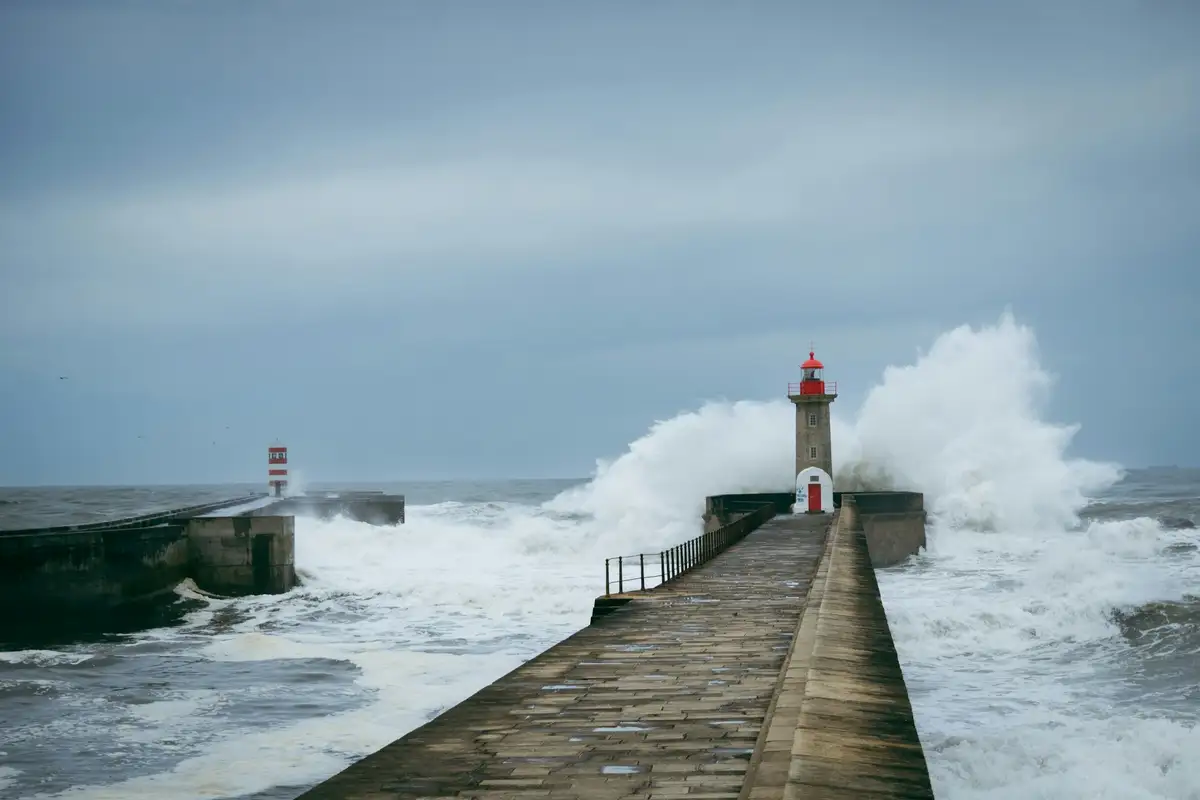
Fear thou not; for I am with thee: be not dismayed; for I am thy God: I will strengthen thee; yea, I will help thee; yea, I will uphold thee with the right hand of my righteousness.
Isaiah 41:10 (KJV)
Fear not, for I am with thee: God promises to strengthen and uphold you when you feel afraid.
But now thus saith the Lord that created thee, O Jacob, and he that formed thee, O Israel, Fear not: for I have redeemed thee, I have called thee by thy name; thou art mine. When thou passest through the waters, I will be with thee; and through the rivers, they shall not overflow thee: when thou walkest through the fire, thou shalt not be burned; neither shall the flame kindle upon thee.
Isaiah 43:1-2 (KJV)
When you pass through the waters and the fire, God says He will be with you, because you are His.
What time I am afraid, I will trust in thee.
Psalms 56:3 (KJV)
A short prayer for anxious moments: what time I am afraid, I will trust in thee.
Wait on the Lord: be of good courage, and he shall strengthen thine heart: wait, I say, on the Lord.
Psalms 27:14 (KJV)
Wait on the Lord and be of good courage, and He shall strengthen your heart.
Have not I commanded thee? Be strong and of a good courage; be not afraid, neither be thou dismayed: for the Lord thy God is with thee whithersoever thou goest.
Joshua 1:9 (KJV)
Carry this into any new or daunting task, because God is with you wherever you go.
And the Lord, he it is that doth go before thee; he will be with thee, he will not fail thee, neither forsake thee: fear not, neither be dismayed.
Deuteronomy 31:8 (KJV)
The Lord goes before you and will not fail you, so you need not fear or be dismayed.
Yea, though I walk through the valley of the shadow of death, I will fear no evil: for thou art with me; thy rod and thy staff they comfort me.
Psalms 23:4 (KJV)
Even in the valley of the shadow of death, the shepherd’s presence means we need fear no evil.
These things I have spoken unto you, that in me ye might have peace. In the world ye shall have tribulation: but be of good cheer; I have overcome the world.
John 16:33 (KJV)
Jesus admits we will face tribulation in the world, yet tells us to be of good cheer because He has overcome it.
I can do all things through Christ which strengtheneth me.
Philippians 4:13 (KJV)
Paul says he can do all things through Christ who strengthens him, a reminder that courage has a source.
God is our refuge and strength, a very present help in trouble. Therefore will not we fear, though the earth be removed, and though the mountains be carried into the midst of the sea; Though the waters thereof roar and be troubled, though the mountains shake with the swelling thereof. Selah.
Psalms 46:1-3 (KJV)
Even if the earth is removed and the mountains shake, we will not fear because God is our refuge.
For I the Lord thy God will hold thy right hand, saying unto thee, Fear not; I will help thee.
Isaiah 41:13 (KJV)
God holds your right hand and says, Fear not; I will help thee, a comforting image before a hard step.
In the day when I cried thou answeredst me, and strengthenedst me with strength in my soul.
Psalms 138:3 (KJV)
When David cried out, God answered and strengthened him with strength in his soul.
For God hath not given us the spirit of fear; but of power, and of love, and of a sound mind.
2 Timothy 1:7 (KJV)
Pray this over nervousness, since God gives power, love and a sound mind rather than fear.
As soon as Jesus heard the word that was spoken, he saith unto the ruler of the synagogue, Be not afraid, only believe.
Mark 5:36 (KJV)
Jesus tells a frightened father, Be not afraid, only believe, words to hold when news is bad.
I sought the Lord, and he heard me, and delivered me from all my fears.
Psalms 34:4 (KJV)
David sought the Lord, and God heard him and delivered him from all his fears.
And David said to Solomon his son, Be strong and of good courage, and do it: fear not, nor be dismayed: for the Lord God, even my God, will be with thee; he will not fail thee, nor forsake thee, until thou hast finished all the work for the service of the house of the Lord.
1 Chronicles 28:20 (KJV)
David encourages Solomon to be strong and do the work, because God will not fail him until it is finished.
What shall we then say to these things? If God be for us, who can be against us?
Romans 8:31 (KJV)
If God be for us, who can be against us, a steadying question for times of opposition.
Be of good courage, and he shall strengthen your heart, all ye that hope in the Lord.
Psalms 31:24 (KJV)
All who hope in the Lord are told to be of good courage, for He will strengthen their heart.
Fear usually arrives quickly, so it helps to have a verse ready before you need it. Choose one short passage, such as Psalms 56:3 or Isaiah 41:10, and memorise it this week. When your heart starts racing, say it quietly and slowly, then add a one-line prayer about what you are facing. Keeping it simple makes it easier to remember under pressure.
Before a daunting task, read Joshua 1:9 or Deuteronomy 31:8 and picture God going ahead of you into that meeting, appointment or conversation. After it is over, look back and thank Him, as David does in Psalms 34:4. Writing down these answered prayers in a notebook builds a record you can return to the next time courage feels scarce.
Courage also grows when we share our fears with others. Tell a trusted friend what you are facing and ask them to pray Mark 5:36 or Psalms 27:14 with you. If fear or anxiety is constant and affects your sleep, health or daily life, consider speaking with a doctor or counsellor too. God’s promises and wise care from others can work together to steady your heart.
Joshua 1:9 works well prayed by naming the specific situation requiring courage, grounding that courage in faith in God’s presence.
For a related angle, see Bible Verses About Family Unity or Bible Verses About Loving Others.
Scripture quotations follow the King James Version; Blue Letter Bible lets you read each one alongside its chapter.
Two nearby collections worth opening next are Bible Verses For Sadness and Bible Verses For Blessings.
Some of the same ground is covered in Bible Verses About Peace and Bible Verses For Gratitude and Thankfulness.
Bible Verses For Strength and Courage and Bible Verses For Prayer in Difficult Times are good companions to this page.
Bible Verses For Growing in Faith and Bible Verses About Growing in Faith explore related themes.
Bible Gateway makes it easy to compare a verse across several English translations.
To trace a verse through the rest of Scripture, the cross-references on Bible Hub are useful.
Return to this verse as you continue facing your situation in faith-filled courage.
These verses were never meant to sit on a page as decoration \u2014 they’re meant to shape how you actually respond the next time fear is louder than your faith right now.
You don’t need polished or formal language for it \u2014 an honest, plainly worded sentence is enough, something as simple as telling God directly for faith that’s louder than the fear, even if only slightly.
When twelve spies returned from scouting Canaan, ten reported giant inhabitants and fortified cities too strong to face, spreading fear through the whole camp. Caleb alone tried to quiet the people, insisting they were well able to take the land, and Joshua stood with him even as the crowd threatened to stone them both (Numbers 13:30, 14:6-10). Their faith in God’s earlier promise outweighed the discouraging report everyone else believed.
Among these Bible Verses For Faith and Courage, Caleb and Joshua’s stand shows that courage sometimes means disagreeing with nearly everyone around you. Their confidence rested entirely on what God had already said, not on the size of the obstacle in front of them, even when that obstacle was described in frightening detail by trusted eyewitnesses who had seen it firsthand.
Esther faced death by approaching the king uninvited, yet her cousin Mordecai reminded her that she may have come to her position for exactly this moment. She resolved to go anyway, saying, “if I perish, I perish” (Esther 4:16), after asking her people to fast for her first. Her courage saved an entire nation from a planned massacre.
Among these Bible Verses For Faith and Courage, Esther’s decision shows that courage is not the absence of real danger but the willingness to act despite it, especially when stepping back would leave others without any help at all.
Rahab hid two Israelite spies on her roof in Jericho, lied to soldiers searching for them, and helped them escape by a rope through her window, risking execution as a traitor to her own city (Joshua 2:1-16). She had heard of Israel’s God and staked her life on the belief that He was real and powerful enough to trust.
Among these Bible Verses For Faith and Courage, Rahab’s story is striking because her courage came from someone with no religious standing or family history with God, only a conviction she chose to act on immediately, before there was any proof it would end well for her.
Deborah, a prophetess judging Israel, told the military commander Barak that God had commanded him to gather troops against a powerful enemy army with iron chariots. When Barak hesitated and asked her to come with him, she agreed but told him the honor of the victory would then go to a woman instead (Judges 4:6-9). Israel won decisively that day.
Among these Bible Verses For Faith and Courage, Deborah’s steady leadership shows courage that did not wait for someone else to feel brave first. She moved forward with the assignment God had given her regardless of who else hesitated.
After healing a lame man, Peter and John were arrested and commanded by the ruling council never to speak or teach in Jesus’ name again. They answered plainly that they could not stop speaking about what they had seen and heard, whatever the consequences (Acts 4:18-20). The council, noting their boldness, recognized they had been with Jesus, though the two men had no formal training.
Among these Bible Verses For Faith and Courage, this account shows courage that continues quietly after the danger has already been named out loud, not only before it arrives. Their confidence came from direct experience they refused to pretend they had not had.
Lord, You gave Caleb and Joshua courage to stand against a fearful crowd, and You gave Esther the resolve to risk her life for her people. You gave Rahab the boldness to protect strangers at great cost, and You gave Deborah the steadiness to lead an army into battle. You gave Peter and John the nerve to keep speaking even after being warned to stop.
Give me that same kind of faith and courage for whatever I am facing today, even if I feel alone in it, even if the outcome is not guaranteed the way I would like it to be. Steady my heart the way You steadied theirs, one honest step at a time, and one ordinary day at a time. Amen.
Some assume courageous people in Scripture felt no fear at all, so any trembling before a hard moment must mean real faith is missing. Esther fasted for three days before she dared approach the king, a sign of real fear taken seriously rather than ignored. Bible Verses For Faith and Courage describe moving forward despite fear, not the absence of it.
Caleb and Joshua correct a second assumption, that courage requires majority agreement to be valid. They stood as only two voices against ten, and history proved their minority report right, while Peter and John show that courage can also mean quietly continuing an ordinary task after an explicit warning has already been given directly to their own faces by powerful, threatening men who could have had them killed.
Reading one passage each day, tied to these Bible Verses For Faith and Courage, connects these examples to their fuller context.
Answer honestly, naming a real situation rather than a general fear.
Name one situation where you have been quietly agreeing with a fearful majority report, and write down what a Caleb-style minority stand would look like in that exact case. If a decision keeps getting delayed by fear, set one honest deadline for yourself this week, the way Esther set three days before acting. For more encouragement, see Bible Verses About Faith and Courage and Bible Verses For Courage and Faith.
Consider also looking for one vulnerable person you could quietly help this week, the way Rahab helped two strangers at real risk to herself, or one honest conversation you have been avoiding after a warning, the way Peter and John kept speaking anyway. Small, deliberate acts of courage keep these Bible Verses For Faith and Courage rooted in ordinary daily choices rather than only in dramatic, once-in-a-lifetime moments that rarely come along for most people.
When Joshua 1:9 says, “Have not I commanded thee? Be strong and of a good courage; be not afraid, neither be thou dismayed: for the LORD thy God is with thee whithersoever thou goest,” most of us hear a pep talk. The Hebrew is more physical than that. The word behind “be strong” carries the idea of taking hold, the way a hand closes around a rope. The word behind “good courage” leans toward being firm, steady on your feet. So the command is less about producing a warm feeling and more about gripping something and standing still.
Notice what Joshua was gripping. Moses was dead. The river was in flood season. Thirty years of leadership belonged to someone else, and now an entire nation was looking at him. God did not say, ‘Stop feeling nervous.’ He gave him a reason to hold on, and the reason is a presence: the LORD thy God is with thee. Courage in this verse is anchored outside the person who needs it.
That is worth sitting with if you are tired of being told to be brave while nothing around you has changed. The verse never asks you to manufacture strength out of nothing. It asks you to take hold of a promise that was already spoken, and to keep your footing while you wait to see what it carries you through.
Some verses sound confident because the writer had no reason to be shaken. Psalm 56:3 is not one of them. “What time I am afraid, I will trust in thee.” The title over the psalm ties it to the day the Philistines seized David in Gath, the hometown of Goliath, whose sword David was carrying (1 Samuel 21:10-15). Picture it. The giant-killer walks into the giant’s city, recognizes that the soldiers recognize him, and ends up pretending to be insane, scratching on the doors and letting spit run down his beard.
Out of that humiliating afternoon comes a sentence that begins with fear and does not hide it. David does not write, ‘If I am afraid,’ as though it might not happen. He writes, “What time I am afraid,” which is closer to ‘whenever it hits me.’ Then he makes a decision about where to direct that moment. Fear is admitted first, trust is chosen second, and neither cancels the other.
I have watched people feel guilty because their hands still shake while they pray. David’s hands were probably shaking too. Two verses later he says, “In God have I put my trust, I will not fear what flesh can do unto me” (Psalm 56:4), and the whole psalm moves back and forth like that, honest and then settled, honest and then settled. If your faith feels uneven on a hard day, you are standing in the same place the psalm was written.
Mark 5 holds a short scene that is easy to skim past. Jairus, a synagogue leader, has begged Jesus to come heal his daughter. They are moving through a crowd, slowly, when messengers push through with the sentence every parent dreads: “Thy daughter is dead: why troublest thou the Master any further?” The matter, as far as they were concerned, was finished.
Jesus overhears it and answers before Jairus can respond. “Be not afraid, only believe” (Mark 5:36). Think about the timing. He does not wait for Jairus to collect himself, and he does not explain what he is about to do. He speaks to the fear while it is still fresh, in the middle of a street, with a crowd listening in. Then he keeps walking toward the house.
There is a quiet detail in that instruction. Believing here is not described as a feeling Jairus has to reach. It is something he does with his feet, by continuing to walk next to Jesus when every practical reason to turn around has just been delivered. Faith and courage nearly overlap in this passage, because staying on the road is the courageous act. If you have ever received a phone call that changed the shape of your week, this is a story to hold onto, and to read slowly.
Not every frightening assignment looks like a battlefield. In 1 Chronicles 28, an aging David stands before the leaders of Israel and gives his son Solomon the plans for the temple, down to the weight of the gold for each lampstand. Then he says, “Be strong and of good courage, and do it: fear not, nor be dismayed: for the LORD God, even my God, will be with thee; he will not fail thee, nor forsake thee, until thou hast finished all the work for the service of the house of the LORD” (1 Chronicles 28:20).
Solomon was young, the project was enormous, and his father had wanted to build it himself and been told no. Imagine inheriting someone else’s unfinished dream. The fear there is not about danger. It is about falling short, about being compared, about starting something you cannot see the end of. David’s answer is practical. The same God who walked with him will not leave the work half done, and the promise runs all the way until the finish.
Plenty of ordinary people live inside this verse. A new manager, a first-time foster parent, someone starting a business with borrowed money, a pastor taking over a church that loved the last pastor. The courage asked for is the kind that picks up the tools on Monday morning. The verse does not promise the project will be easy, only that the one who handed you the task is not going to abandon you in the middle of it.
A caution belongs here, because these verses get misused. Reading “God hath not given us the spirit of fear; but of power, and of love, and of a sound mind” (2 Timothy 1:7) is meant to steady a timid young pastor named Timothy. It is not a rebuke for anyone who struggles with anxiety or panic. Some fear is simply part of a nervous system that is overworked, ill, or carrying old injuries, and shaming yourself with a verse will not fix it.
If your heart races for weeks, if you cannot sleep, or if dread has settled over ordinary days, talking with a doctor or a licensed counselor is a wise step, and it does not contradict trust in God. Scripture itself shows people receiving help through other people. Moses had Aaron and Hur holding up his arms. Elijah was fed and allowed to sleep before he was given his next instruction. Even Jesus asked friends to stay awake with him in Gethsemane.
So let the verses do what they are good at, which is reminding you who is with you and what he has already said. Then let real people and real care do what they are good at. Courage that includes asking for help is still courage. In fact, it is often the harder kind, because it requires admitting that you cannot carry the whole load by yourself this week.
If you want to keep going with this theme, try Bible Verses About Faith and Courage, Bible Verses About Courage and Faith, Bible Verses For Courage and Faith, Bible Verses For Faith and Bible Verses About Faith and Hope.
For deeper study, Bible Gateway, Bible Hub and Bible Study Tools are all free to use.
Fear usually arrives quickly, so it helps to have a verse ready before you need it. Choose one short passage, such as Psalms 56:3 or Isaiah 41:10, and memorise it this week.
This page brings together 18 King James Version references about faith and Courage, drawn from 9 different books of the Bible.
Yes. The verses about faith and Courage gathered here include passages from both the Old Testament and the New Testament, such as Psalms 56:3 and Mark 5:36.
Psalms 56:3 is one of the verses about faith and Courage referenced in this collection, alongside Isaiah 41:10.
Yes, the verses referenced on this page, including Psalms 56:3, are quoted according to the King James Version (KJV), and are suitable for daily reading, memorization, or devotional use.