
If you feel far from God and short on strength, Bible verses for finding strength in God can help you draw near again. Many are prayers of longing and trust, written by people who sought the Lord in dry and difficult places. Pray them in the morning, return to them before sleep, and let them turn your attention from the problem to the One who helps.
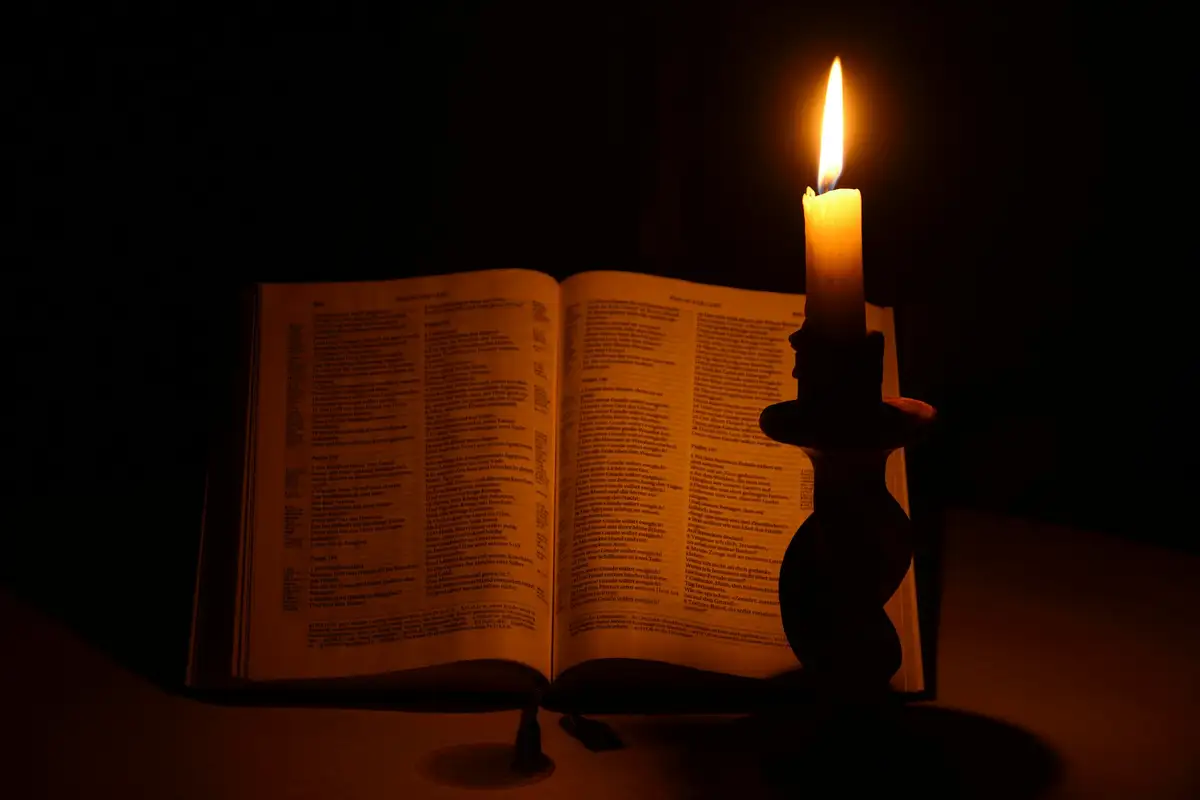
My flesh and my heart faileth: but God is the strength of my heart, and my portion for ever.
Psalms 73:26 (KJV)
Pray this when you feel your strength fading: my flesh and heart fail, but God is the strength of my heart.
I will lift up mine eyes unto the hills, from whence cometh my help. My help cometh from the Lord, which made heaven and earth.
Psalms 121:1-2 (KJV)
A good opening for prayer, reminding us our help comes from the Lord, maker of heaven and earth.
From the end of the earth will I cry unto thee, when my heart is overwhelmed: lead me to the rock that is higher than I. For thou hast been a shelter for me, and a strong tower from the enemy.
Psalms 61:2-3 (KJV)
From an overwhelmed heart, David asks to be led to the rock that is higher than he is.
O God, thou art my God; early will I seek thee: my soul thirsteth for thee, my flesh longeth for thee in a dry and thirsty land, where no water is;
Psalms 63:1 (KJV)
Written in a dry wilderness, David tells God that he seeks Him early and thirsts for Him.
As the hart panteth after the water brooks, so panteth my soul after thee, O God. My soul thirsteth for God, for the living God: when shall I come and appear before God?
Psalms 42:1-2 (KJV)
As the deer pants for water, the psalmist longs for the living God, a prayer for spiritually dry seasons.
Come unto me, all ye that labour and are heavy laden, and I will give you rest. Take my yoke upon you, and learn of me; for I am meek and lowly in heart: and ye shall find rest unto your souls.
Matthew 11:28-29 (KJV)
Jesus invites the weary to come to Him, learn of Him, and find rest for their souls.
Thou wilt keep him in perfect peace, whose mind is stayed on thee: because he trusteth in thee. Trust ye in the Lord for ever: for in the Lord Jehovah is everlasting strength:
Isaiah 26:3-4 (KJV)
Trusting the Lord brings perfect peace, for in the Lord Jehovah is everlasting strength.
The Lord is my light and my salvation; whom shall I fear? the Lord is the strength of my life; of whom shall I be afraid?
Psalms 27:1 (KJV)
Say this when fear rises: the Lord is my light and the strength of my life.
Seek the Lord, and his strength: seek his face evermore.
Psalms 105:4 (KJV)
Simple encouragement to keep seeking the Lord and His strength, and to seek His face evermore.
Cause me to hear thy lovingkindness in the morning; for in thee do I trust: cause me to know the way wherein I should walk; for I lift up my soul unto thee.
Psalms 143:8 (KJV)
David asks to hear God’s lovingkindness in the morning and to be shown the way he should walk.
For thou art my rock and my fortress; therefore for thy name’s sake lead me, and guide me.
Psalms 31:3 (KJV)
A prayer calling God rock and fortress and asking Him to lead and guide for His name’s sake.
Thou wilt shew me the path of life: in thy presence is fulness of joy; at thy right hand there are pleasures for evermore.
Psalms 16:11 (KJV)
In God’s presence is fulness of joy, and He shows us the path of life.
Truly my soul waiteth upon God: from him cometh my salvation. He only is my rock and my salvation; he is my defence; I shall not be greatly moved.
Psalms 62:1-2 (KJV)
A quiet prayer of waiting on God alone, who is the source of salvation, the rock and the defence that keeps us steady.
O Lord, my strength, and my fortress, and my refuge in the day of affliction, the Gentiles shall come unto thee from the ends of the earth, and shall say, Surely our fathers have inherited lies, vanity, and things wherein there is no profit.
Jeremiah 16:19 (KJV)
Jeremiah prays to the Lord as his strength, his fortress and his refuge in the day of affliction.
The Lord is good unto them that wait for him, to the soul that seeketh him. It is good that a man should both hope and quietly wait for the salvation of the Lord.
Lamentations 3:25-26 (KJV)
The Lord is good to those who wait for Him, so it is good to hope and quietly wait for His help.
But they that wait upon the Lord shall renew their strength; they shall mount up with wings as eagles; they shall run, and not be weary; and they shall walk, and not faint.
Isaiah 40:31 (KJV)
Waiting on the Lord renews strength, letting us run and not be weary, walk and not faint.
Be thou my strong habitation, whereunto I may continually resort: thou hast given commandment to save me; for thou art my rock and my fortress.
Psalms 71:3 (KJV)
The psalmist asks God to be his strong habitation, a place he can continually resort to.
Ephesians 6:10 works well prayed by naming the specific situation, deliberately looking to God as the source rather than personal resources.
Bible Verses About Strength During Hard Times and Bible Verses About Forgiveness and Love pick up threads that run through these verses.
Quotations follow the King James Version of 1611, now in the public domain. To read any verse within its full chapter, try Blue Letter Bible.
Some of the same ground is covered in Bible Verses For Faith Over Fear and Bible Verses For Dating.
You might also turn to Bible Verses For Healing and Strength and Bible Verses For Perseverance and Strength.
Bible Verses For Encouragement and Bible Verses For Calling explore related themes.
For a related angle, see Bible Verses For Protection and Safety or Bible Verses About Protection and Safety.
Comparing translations can help, and Bible Gateway does that for free.
For word studies and cross-references, Bible Hub is a helpful next step.
Return to this verse whenever personal resources feel insufficient, looking to God as the source instead.
2 Corinthians 12:9’s statement that strength is made perfect in weakness does not describe strength arriving once weakness is overcome, but strength located specifically within weakness itself. This is a meaningfully different claim than simply gritting through difficulty until it passes. If you feel genuinely weak right now, this verse suggests that weakness is not an obstacle to finding strength in God but potentially the very place it is found most clearly.
This reframing can be difficult to fully accept, especially in a culture that prizes visible strength and capability. But it is worth sitting with directly rather than rushing past toward only the more comfortable idea of eventual triumph over weakness.
Isaiah 40:31’s promise of renewed strength for those who wait uses language of ongoing renewal, not a single infusion of strength meant to last indefinitely. This matters practically — needing to return for renewed strength again and again is not evidence of spiritual failure or insufficient faith. It reflects the actual pattern Scripture describes, strength renewed repeatedly rather than granted once and expected to never run low again.
Finding strength in God does not necessarily mean feeling strong in the moment. Several psalms describe genuine strength being drawn on even while the psalmist feels genuinely weak, afraid, or exhausted — strength as a resource accessed despite the feeling, not a feeling itself that must be present first. If you do not feel strong right now, that absence of feeling does not mean the strength Scripture describes is unavailable to you.
If you are facing a specific task or difficulty right now that genuinely exceeds your own capacity, consider naming that exact situation directly in prayer, asking specifically for strength for that particular thing, rather than only praying in general terms about feeling strong overall. Specific requests for strength, tied to an actual need, tend to be answered in ways that are noticeable and concrete rather than remaining abstract.
Whatever is draining your strength right now, a specific task, an ongoing difficulty, sheer exhaustion, these verses are meant to be prayed directly over that actual depletion, not read only as general encouragement.
Return to this list the next time your own strength genuinely runs out, trusting that running out is not the end of the story but the starting point this promise was written for.
A week of short, focused reading can steady a tired heart better than one long session. This plan pairs the Bible verses for finding strength in God already listed here with a longer passage each day. Read the passage in the morning, choose one line to carry with you, and read it again before sleep.
If a day is missed, simply pick up where you left off. The plan is a support, not a test, and these verses will still be there tomorrow. Repeating the week in a later month often shows how much the Lord has carried you in between.
Mornings often set the tone of a hard day. Psalm 143:8 asks God to “cause me to hear thy lovingkindness in the morning,” and Psalm 63:1 says “early will I seek thee.” You do not need a long quiet time to follow that example. Five honest minutes with the Bible verses for finding strength in God can be enough to turn your attention upward before the phone, the news or the worry list claims it first.
Among these verses, Lamentations 3:22-23 fits this habit especially well: the Lord’s compassions “are new every morning: great is thy faithfulness.” Yesterday’s strength does not have to stretch into today; fresh mercy is waiting each morning. Parents with small children or people on early shifts can do the same routine in the car, at the sink or on a short walk.
On mornings when even five minutes feels impossible, make it smaller still. Read one line, such as “the Lord is the strength of my life” from Psalm 27:1, while the kettle boils. Faithfulness in a small habit is still faithfulness, and God is not measuring the length of your devotions.
Some of the heaviest moments are conversations: confronting a friend, asking forgiveness, telling family difficult news or speaking up at work. Nehemiah gives a practical model. When the Persian king asked what he wanted, Nehemiah wrote, “So I prayed to the God of heaven,” and then answered the king (Nehemiah 2:4-5). His prayer was silent and brief, yet it came before his words. That is how Bible verses for finding strength in God can work in a tense moment: a quick look upward before speaking.
Choose verses that shape both your courage and your tone. James 1:19 asks us to be “swift to hear, slow to speak, slow to wrath.” Proverbs 15:1 reminds us that “A soft answer turneth away wrath.” Colossians 4:6 asks that our speech be “alway with grace, seasoned with salt.” Paired with Psalm 27:1 from the list above, these lines help you walk in unafraid yet gentle.
Sometimes a conversation goes badly despite prayer. Psalm 55:22, “Cast thy burden upon the LORD, and he shall sustain thee,” fits that evening. Bring the disappointment to God, ask whether any apology is owed, and resist replaying every sentence. Strength for the next day can include letting the matter rest with Him.
If a situation involves abuse, danger or serious conflict, it is wise to bring in a pastor, counsellor or other trusted person rather than facing it alone. Relying on Scripture never means ignoring the help of wise people He places nearby.
Several verses on this list, such as Psalm 42:1-2 and Psalm 63:1, were written from dry places. Writing your own responses to them can help you see God’s faithfulness over time, especially when feelings lag behind. A plain notebook is enough.
Some entries will be only a line or two, and that is fine. On especially low days, write out a verse and then one sentence that begins “Today I need…”. On better days, add a line that begins “Today I noticed…” and record any small help you received: a kind word, a good night’s sleep, a task finished. Over time these notes become a personal record of the Lord’s care, much like the stones of remembrance Israel set up beside the Jordan (Joshua 4:6-7).
Date each entry. After a month, read back through the pages. Many people discover that prayers written in weakness were answered in ways they missed at the time, and that the same verses they once copied through tears now read like old friends.
If you want more passages to journal with, try Bible verses for prayer and strength or this collection of verses for strength in difficult times. Keep a short list of your favourite Bible verses for finding strength in God on the inside cover so they are ready when the next dry stretch comes.
Asaph, a musician who served in the temple, wrote Psalm 73 from a place many of us know. He watched people who cared nothing for God grow comfortable, healthy and admired, while he kept his own hands clean and still woke up to trouble each morning (Psalm 73:3, 13-14). He says outright that his feet were almost gone and his steps had well nigh slipped (Psalm 73:2). That kind of honesty is probably why the psalm ended up in Israel’s songbook.
The turning point is small and easy to miss. “When I thought to know this, it was too painful for me; Until I went into the sanctuary of God; then understood I their end” (Psalm 73:16-17). Nothing about his questions was answered on the spot. What changed was where he stood while he asked them. He even admits he had been as a beast before God (Psalm 73:22), and he does not tidy himself up before coming near. Then comes the line many people underline: “My flesh and my heart faileth: but God is the strength of my heart, and my portion for ever” (Psalm 73:26).
Read that verse slowly. It does not say the heart stops failing. It says God is the strength of a heart that is failing. Among the Bible verses for finding strength in God, this is the one for the person who has been quietly comparing, resenting and wearing out. Go where God is worshipped, even before your thinking is tidy: a Sunday service, a hymn on a long walk, a friend who will pray with you. Asaph found his footing there, not in a better argument.
Psalm 121 belongs to the Songs of Degrees, the set of psalms Israelite pilgrims sang as they climbed toward Jerusalem for the festivals. The roads through the hill country were hot and narrow, and travelers worried about bandits, sunstroke and a twisted ankle far from home. So when the singer says, “I will lift up mine eyes unto the hills, from whence cometh my help?” (Psalm 121:1), the hills are partly a threat. The answer comes straight back: “My help cometh from the LORD, which made heaven and earth” (Psalm 121:2).
The details that follow are tuned to a weary walker. “He will not suffer thy foot to be moved: he that keepeth thee will not slumber” (Psalm 121:3). “The LORD is thy shade upon thy right hand. The sun shall not smite thee by day, nor the moon by night” (Psalm 121:5-6). Think of a nurse finishing a night shift, or a parent in a hospital corridor at three in the morning, running on nothing. The comfort here is not that you will never get tired. It is that the One keeping watch over you never does.
A caution belongs here. Pilgrims on that road still met hardship, and the psalm does not promise a life free of it. Verse 8 speaks of going out and coming in, which is ordinary life with God keeping company in it. If you are climbing something steep this month, say the first two verses aloud at the bottom of each hill, whether that is a literal staircase to a hospital ward or a long week of work.
“Come unto me, all ye that labour and are heavy laden, and I will give you rest” (Matthew 11:28). People hear this verse as a soft invitation to lie down, and it is. But the next sentence is surprising: “Take my yoke upon you, and learn of me; for I am meek and lowly in heart: and ye shall find rest unto your souls” (Matthew 11:29). Rest arrives through a yoke, which is a piece of farm equipment.
A yoke was a wooden frame that joined two oxen at the shoulders so they could pull together. Farmers often paired a young or unsteady animal with a seasoned one, and the older ox took most of the weight while the younger learned the rhythm. Jesus is not offering to unhitch us from every responsibility. He is offering to be yoked beside us, and He says His yoke is easy and His burden light (Matthew 11:30). The crowds listening had been loaded with rules and expectations by teachers who, as He put it elsewhere, bound heavy burdens and grievous to be borne (Matthew 23:4).
So ask a plain question. What am I pulling alone that I was never meant to pull alone? Some of it may be a job, a sick relative or a debt. Some of it may be a standard someone else set for me and I never questioned. Bring the list to Him in specifics, and then notice who else He has placed beside you: a spouse, a pastor, a neighbor who keeps offering help. Strength from God often arrives as company in the harness, learned one steady step at a time.
The book of Lamentations was written after Jerusalem fell, when the temple lay in ruins and survivors were burying neighbors. Few of the Bible verses for finding strength in God were composed in worse conditions. The poet does not hurry past the pain. He says he has been filled with bitterness, that his strength has perished, and that he has forgotten what good looks like (Lamentations 3:15-18). Only after that does he write, “This I recall to my mind, therefore have I hope” (Lamentations 3:21).
Then the poem slows down even more. “The LORD is good unto them that wait for him, to the soul that seeketh him. It is good that a man should both hope and quietly wait for the salvation of the LORD” (Lamentations 3:25-26). A few lines later he pictures a person who sits alone and keeps silence, and who “putteth his mouth in the dust; if so be there may be hope” (Lamentations 3:28-29). That last clause is not triumphant. It is a hope held with the face to the ground, and God did not rebuke him for it.
If you are standing at a funeral home, or sitting in a quiet house after a loss, this chapter gives you permission to wait without performing. Waiting is not laziness here. It is a way of staying turned toward God while there is nothing to fix. Grief that lasts for months, or that makes it hard to eat, sleep or function, deserves the care of a counselor or doctor alongside prayer. Reading a few lines of this chapter each evening, and letting someone sit with you, is a gentle way to keep hoping.
If you want to keep going with this theme, try Bible Verses About Finding Strength in God, Bible Verses About Finding Rest In God, Bible Verses About God Giving Strength, Bible Verses For God Giving Strength and Bible Verses For Finding Rest In God.
For deeper study, Bible Gateway, Bible Hub and Bible Study Tools are all free to use.
Ephesians 6:10 works well prayed by naming the specific situation, deliberately looking to God as the source rather than personal resources.
This page brings together 19 King James Version references about finding Strength in God, drawn from 12 different books of the Bible.
Yes, the verses referenced on this page, including Ephesians 6:10, are quoted according to the King James Version (KJV), and are suitable for daily reading, memorization, or devotional use.
Beyond the references highlighted on this page, finding Strength in God appears throughout Scripture in books such as Ephesians, 2 Corinthians, Isaiah, Mark, Romans; this collection focuses on some of the clearest examples.
These finding Strength in God verses are drawn from books including Ephesians, 2 Corinthians, Isaiah, Mark, Romans, among others.