
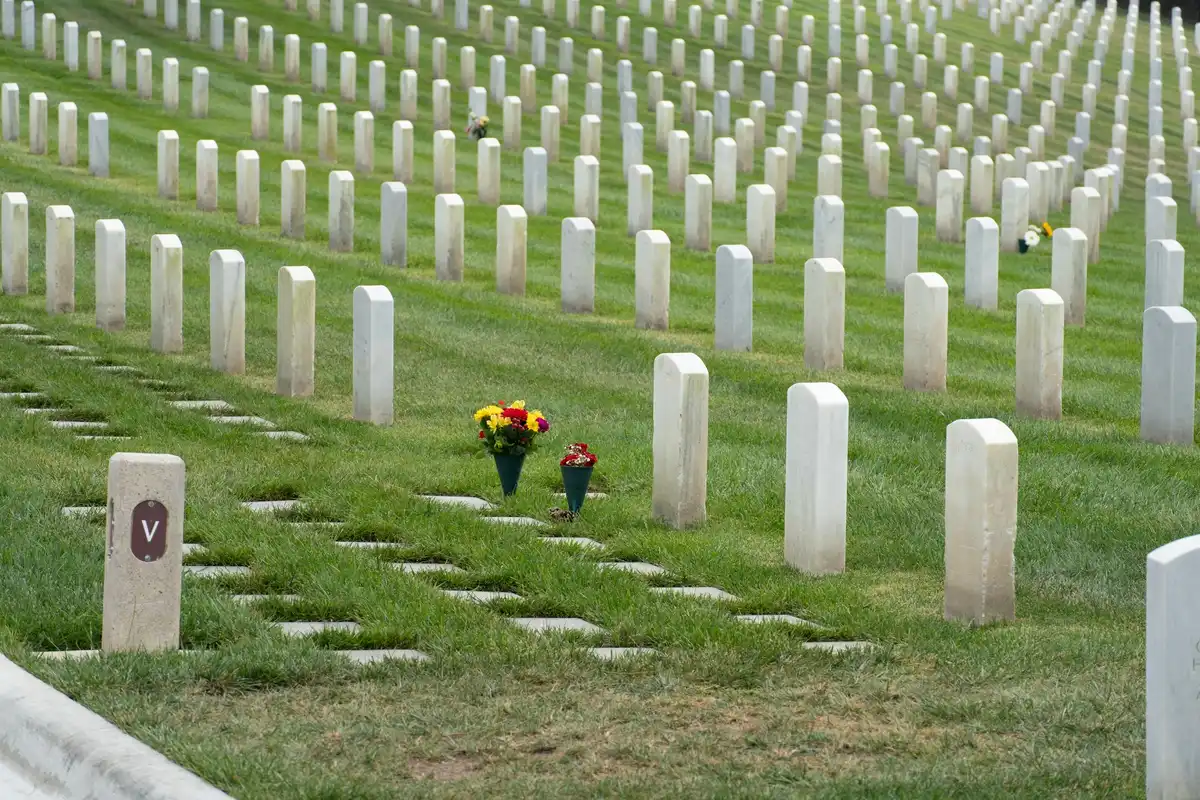
Every verse below is quoted word for word from the King James Version, with the reference under each passage.
For I know that my redeemer liveth, and that he shall stand at the latter day upon the earth: And though after my skin worms destroy this body, yet in my flesh shall I see God: Whom I shall see for myself, and mine eyes shall behold, and not another; though my reins be consumed within me.
Job 19:25-27 (KJV)
Job’s own confession of a living Redeemer, one of the oldest graveside declarations in Scripture.
O death, where is thy sting? O grave, where is thy victory?
1 Corinthians 15:55 (KJV)
The direct challenge to death and the grave, often read aloud at a burial.
So when this corruptible shall have put on incorruption, and this mortal shall have put on immortality, then shall be brought to pass the saying that is written, Death is swallowed up in victory.
1 Corinthians 15:54 (KJV)
The promise that mortality itself will be swallowed up in final victory.
Jesus said unto her, I am the resurrection, and the life: he that believeth in me, though he were dead, yet shall he live: And whosoever liveth and believeth in me shall never die. Believest thou this?
John 11:25-26 (KJV)
Jesus’ own words at another grave, naming himself the resurrection and the life.
Yea, though I walk through the valley of the shadow of death, I will fear no evil: for thou art with me; thy rod and thy staff they comfort me.
Psalms 23:4 (KJV)
The valley of the shadow of death, read for comfort while standing at a grave.
Precious in the sight of the Lord is the death of his saints.
Psalms 116:15 (KJV)
A verse that reframes the death of a believer as precious rather than only sorrowful.
And God shall wipe away all tears from their eyes; and there shall be no more death, neither sorrow, nor crying, neither shall there be any more pain: for the former things are passed away.
Revelation 21:4 (KJV)
The promise of no more death or sorrow, often chosen for a headstone.
But I would not have you to be ignorant, brethren, concerning them which are asleep, that ye sorrow not, even as others which have no hope. For if we believe that Jesus died and rose again, even so them also which sleep in Jesus will God bring with him.
1 Thessalonians 4:13-14 (KJV)
Paul’s instruction not to grieve as those without hope.
For we know that if our earthly house of this tabernacle were dissolved, we have a building of God, an house not made with hands, eternal in the heavens.
2 Corinthians 5:1 (KJV)
An eternal house not made with hands, contrasted with an earthly grave.
For to me to live is Christ, and to die is gain.
Philippians 1:21 (KJV)
Paul’s own short verse on what death means for a believer.
To every thing there is a season, and a time to every purpose under the heaven: A time to be born, and a time to die; a time to plant, and a time to pluck up that which is planted;
Ecclesiastes 3:1-2 (KJV)
A time to be born and a time to die, often read at a funeral.
He will swallow up death in victory; and the Lord God will wipe away tears from off all faces; and the rebuke of his people shall he take away from off all the earth: for the Lord hath spoken it.
Isaiah 25:8 (KJV)
A prophecy that death itself will be swallowed up in victory.
Marvel not at this: for the hour is coming, in the which all that are in the graves shall hear his voice, And shall come forth; they that have done good, unto the resurrection of life; and they that have done evil, unto the resurrection of damnation.
John 5:28-29 (KJV)
Jesus’ teaching that all in the graves will one day hear his voice.
I will ransom them from the power of the grave; I will redeem them from death: O death, I will be thy plagues; O grave, I will be thy destruction: repentance shall be hid from mine eyes.
Hosea 13:14 (KJV)
God’s own promise to ransom from the power of the grave.
Selecting a verse for a headstone is one of the most permanent decisions a grieving family makes, and it helps to choose something short enough to fit and clear enough to comfort a stranger reading it years later. 1 Corinthians 15:55, with its direct challenge to death and the grave, is one of the most commonly chosen inscriptions precisely because it is brief and unmistakably hopeful. Philippians 1:21 works the same way, a single sentence that says everything a longer passage might try to say, which is exactly why these verses keep getting chosen for short inscriptions.
Revelation 21:4 is another frequent choice, especially for a family that wants the inscription to point forward rather than only backward. This passage were selected in part because each one is short enough to carve into stone while still carrying real theological weight, rather than reading like a generic sentiment.
A graveside service is often shorter and more intimate than a funeral, sometimes just family standing at the site itself. Psalm 23:4 is one of the most frequently read passages at this exact moment, since its language of walking through the valley of the shadow of death speaks directly to what everyone present is physically doing. Reading it slowly, pausing after “I will fear no evil,” gives the words room to land rather than rushing past them, a pacing that suits this collection whenever they’re read aloud.
Job 19:25-27 pairs well as a second reading, since Job speaks his confession of a living Redeemer while surrounded by loss, much like the family standing at the grave. These Scriptures were chosen partly because several of them, like Job’s, come from people who spoke them in genuine grief rather than in comfortable distance from it.
Writing a card for someone who just buried a loved one can feel impossible, especially if you want to mention the grave itself without sounding cold. Pairing 1 Thessalonians 4:13-14 with a short personal line acknowledges real grief while pointing toward the hope Paul describes, rather than pretending sorrow isn’t present. The verse’s own wording, “sorrow not, even as others which have no hope,” gives permission to grieve honestly, which is part of why this theme get quoted so often in sympathy notes.
2 Corinthians 5:1 fits a card meant for someone who has visited the grave often and needs a reminder that it isn’t the end of the story. Including one of these passages in a card, rather than only a generic condolence, gives the recipient something to return to long after the funeral flowers are gone.
Anniversaries of a death, birthdays, and holidays often bring people back to a grave they haven’t visited in months. Ecclesiastes 3:1-2, with its reminder that there is a time to be born and a time to die, can help frame a visit that otherwise feels aimless or overwhelming. Reading it at the grave itself, rather than only remembering it, gives the visit a specific shape, one more reason this topic work well for a planned return visit.
Isaiah 25:8 works well for a visit that falls on a particularly hard day, since its promise that death will be swallowed up in victory looks past the immediate grief toward something larger. These verses were gathered with these repeat visits in mind, not only the first funeral, since grief tends to return on its own schedule long after the burial itself.
Some families want a full sentence carved into stone, while others prefer only a phrase or a single reference. This passage work in both directions: 1 Corinthians 15:54’s full promise about corruption putting on incorruption suits a larger headstone with more room, while a bare reference like “1 Corinthians 15:55” beneath a name leaves the verse itself to memory for anyone who already knows it.
Cemeteries and monument companies often have character limits that make the decision for you before you even choose a favorite passage. Testing a verse’s length against the actual stone dimensions, rather than assuming a favorite passage will fit, avoids the disappointment of discovering a beloved verse has to be cut short after the order is already placed.
Many families ask a pastor, friend, or family member to read Scripture before the actual burial begins, rather than only during a formal service beforehand. Choosing one or two of this collection in advance, rather than deciding in the moment, takes one decision off an already overwhelming day. John 11:25-26, spoken by Jesus at another grave entirely, is often chosen for this exact moment because it names the person doing the speaking as the source of the hope being offered.
Practicing the reading once beforehand, even quietly to yourself, can steady a voice that might otherwise break partway through. Nothing about reading these Scriptures requires polish or performance; a shaking voice reading Scripture at a graveside is not a failure, it is simply grief being honest in front of the people who understand it best.
Selecting Scripture for a child’s headstone carries its own particular weight, and not every verse in this collection fits that specific grief in the same way. Revelation 21:4’s promise of no more tears or sorrow is one of the more frequently chosen options for a young child’s grave, since it speaks directly to a pain that resists most other language. This theme were gathered broadly enough that a family can find something that fits their exact loss rather than settling for whatever feels generically appropriate.
Psalm 116:15, describing the death of a believer as precious rather than only sorrowful, is sometimes chosen even for very young children, particularly by families who found comfort in a baptism or dedication earlier in the child’s short life. There is no single correct verse for this kind of loss, only the ones that speak most honestly to the specific family choosing them, which is the real test for any of these passages.
It’s common for siblings or extended family to disagree about which of this topic should go on a shared headstone or be read at a joint service. Sometimes the disagreement is really about differing views of what the deceased believed, and sometimes it’s simply that grief makes every decision feel higher-stakes than it would otherwise.
One workable solution is choosing two shorter verses rather than forcing a single choice, or reading one at the service while inscribing a different one on the stone itself. Ecclesiastes 3:1-2’s reminder that there is a season for everything can even become part of the conversation, a way of acknowledging that different family members are simply in different seasons of processing the same loss when choosing these verses.
Not every visit to a grave involves speaking aloud or reading a passage from a printed page. Many people simply stand quietly, reciting a verse from memory or praying without any specific words at all. Philippians 1:21, only twelve words long in the King James text, is easy enough to hold in memory for exactly this kind of silent visit, without needing a Bible or phone in hand, which is why this passage are worth memorizing ahead of time.
2 Corinthians 5:1 works similarly, a short enough passage to recall on the spot even years after first reading it. This collection were chosen partly for their memorability, since grief doesn’t always arrive with a Bible nearby, and a verse held in memory can meet a person exactly where an unplanned visit finds them.
The first anniversary of a death often hits harder than people expect, even when later years feel more manageable. Isaiah 25:8’s prophecy that death will be swallowed up in victory can anchor a visit on that specific, difficult date, giving the day a focal point beyond simply marking time since the loss. Some families make a small tradition of reading the same passage every year on that date, turning a hard anniversary into a recognizable, almost steadying ritual built around these Scriptures.
Hosea 13:14’s promise of ransom from the power of the grave pairs well with an anniversary visit specifically because Paul later quotes this exact verse in his resurrection chapter, connecting an Old Testament promise to a New Testament fulfillment. Reading both passages together on an anniversary visit, one after the other, can trace that connection out loud rather than leaving it as background theology, showing how this theme connect across both Testaments.
Bringing children along to visit a grave, whether for a burial itself or a later anniversary, raises its own questions about which of these passages to explain and how. Psalm 23:4’s language of a valley and a shepherd’s rod and staff gives children a concrete image to hold onto, something more tangible than abstract talk about heaven or eternity.
John 5:28-29 can be harder for a young child to process without guidance, since its description of graves and voices is more vivid than comforting on its own. Reading the simpler passages first and saving the more complex ones for when a child asks follow-up questions tends to work better than trying to explain every verse in a single visit, especially with younger children hearing this topic for the first time.
These Bible Verses for Grave are meant to comfort and to point toward resurrection hope, not to rush anyone past grief that needs time. Quoting 1 Thessalonians 4:13-14’s instruction not to sorrow as those without hope is not meant to suggest sorrow itself is wrong; the same passage assumes grief will happen and simply frames what surrounds it.
Using these verses well usually means offering them gently rather than reciting them as a correction to someone’s visible sadness. A grieving person standing at a grave rarely needs to be told what to feel; they more often need someone willing to stand there with them while these Bible Verses for Grave are read slowly, without pressure to feel better immediately.
Some people keep a small printed card with one of these Bible Verses for Grave in a car glovebox or a wallet, ready for an unplanned visit or a sudden wave of grief that catches them somewhere unexpected. Job 19:25-27’s declaration of a living Redeemer is a common choice for this kind of card, since it carries enough weight to sit with for a while even outside a formal visit.
A card like this also helps when accompanying someone else who wasn’t planning to stop at a grave that day. Having one of these Bible Verses for Grave ready to hand over or read aloud means you don’t have to search for the right words while also trying to support a friend or family member in an unplanned, emotional moment.
Not every grave belongs to someone whose faith was clear or well-known, and choosing Scripture in that situation calls for care rather than assumption. Some families choose a verse that speaks to God’s character rather than making a claim about the deceased’s specific eternal state, letting these Bible Verses for Grave comfort the living without overstating what can’t be known.
Ecclesiastes 3:1-2’s broader reflection on times and seasons can work well here, since it doesn’t require a specific theological claim about the person buried to still offer genuine comfort. Choosing gentleness over certainty in these situations tends to serve grieving families better than forcing a verse to say more than anyone can honestly know.
Some families find that the King James wording of a favorite verse fits a headstone’s tone better than a more modern translation, even if they read a different version day to day. “O death, where is thy sting?” from 1 Corinthians 15:55 carries a different weight in stone than a paraphrased modern rendering of the same idea, which is part of why so many of these Bible Verses for Grave are still requested in their older, more formal wording.
There’s no requirement to match whatever translation a family normally reads at home; a monument company can typically engrave whichever wording is chosen, regardless of which Bible sits on the family’s own shelf. Choosing the version that feels most permanent, rather than merely most familiar, is a reasonable way to decide when two translations of the same verse are both on the table.
Funeral directors have usually seen dozens of families choose from these Bible Verses for Grave or similar passages, and many keep a printed list on hand for exactly this purpose. Asking directly whether they have examples of commonly chosen verses can shortcut a search that otherwise happens under time pressure during an already difficult week.
It’s worth clarifying early whether the funeral home, the cemetery, or the monument company handles the actual engraving request, since each may have its own character limits or formatting rules. Bringing a verse reference in writing, rather than trying to recall exact wording from memory during a meeting, reduces the chance of an error making it onto a permanent stone.
Visiting a grave alone often calls for a different pace than visiting with a group of family or friends. Alone, there’s room to sit with 2 Corinthians 5:1 slowly, repeating it a few times without worrying about anyone else’s timeline for the visit. With others present, reading one of these Bible Verses for Grave aloud together can turn a quiet moment into a shared one, letting several people hold the same words at once rather than each person grieving in isolation.
Neither way of visiting is more correct than the other, and the same person may want each approach at different times. Choosing which of these Bible Verses for Grave to bring often depends less on the verse itself and more on whether the visit calls for shared reading or private reflection that day.
None of these Bible Verses for Grave remove the weight of standing at a headstone or reading a name carved into permanent stone. What they offer instead is a way to stand at that specific, hard place with real words rather than silence alone, words that have carried other grieving people through the same kind of loss for centuries before now.
Whether chosen for an inscription, read at a graveside service, or simply remembered during a quiet visit years later, these Bible Verses for Grave give language for a place that otherwise resists language entirely. They point past the stone itself toward a promise that the grave does not get the final say.
To study these verses in more depth, try Bible Gateway, Bible Hub and Bible Study Tools.
Philippians 1:21, at only twelve words, is one of the shortest options here and still carries a complete thought. 1 Corinthians 15:55 is similarly brief and is one of the most commonly chosen headstone inscriptions in English-speaking churches.
Many families read a short passage like Psalm 23:4 even at services that aren’t otherwise religious, since its language of comfort in difficulty resonates broadly. If the family or the person who died wasn’t a believer, a shorter, less doctrinally specific verse may fit the moment better than a longer theological passage.
The passage describes a future resurrection in which everyone in the graves responds to Christ’s voice, some rising to life and some to judgment. It is often read as a companion to John 11:25-26, extending the promise of resurrection beyond one individual grave to a universal future event.
These particular Bible Verses for Grave were written with human death and resurrection theology in mind, so most churches would not recommend using them directly for a pet’s burial. A general verse about God’s care for creation may fit that situation better than a passage built around bodily resurrection.
Hosea 13:14 is delivered as God’s own promise to ransom people from the power of the grave, spoken centuries before the resurrection accounts in the Gospels. Paul later echoes this exact verse in 1 Corinthians 15:55, connecting the Old Testament promise directly to the New Testament fulfillment.