
Bible verses for quiet time help you settle your heart before God and listen before you speak. Many of these passages come from the Psalms and the Gospels, where believers rose early, waited in stillness and found strength in God’s word. Read one slowly, pray it back to the Lord, and let it shape the rest of your day.
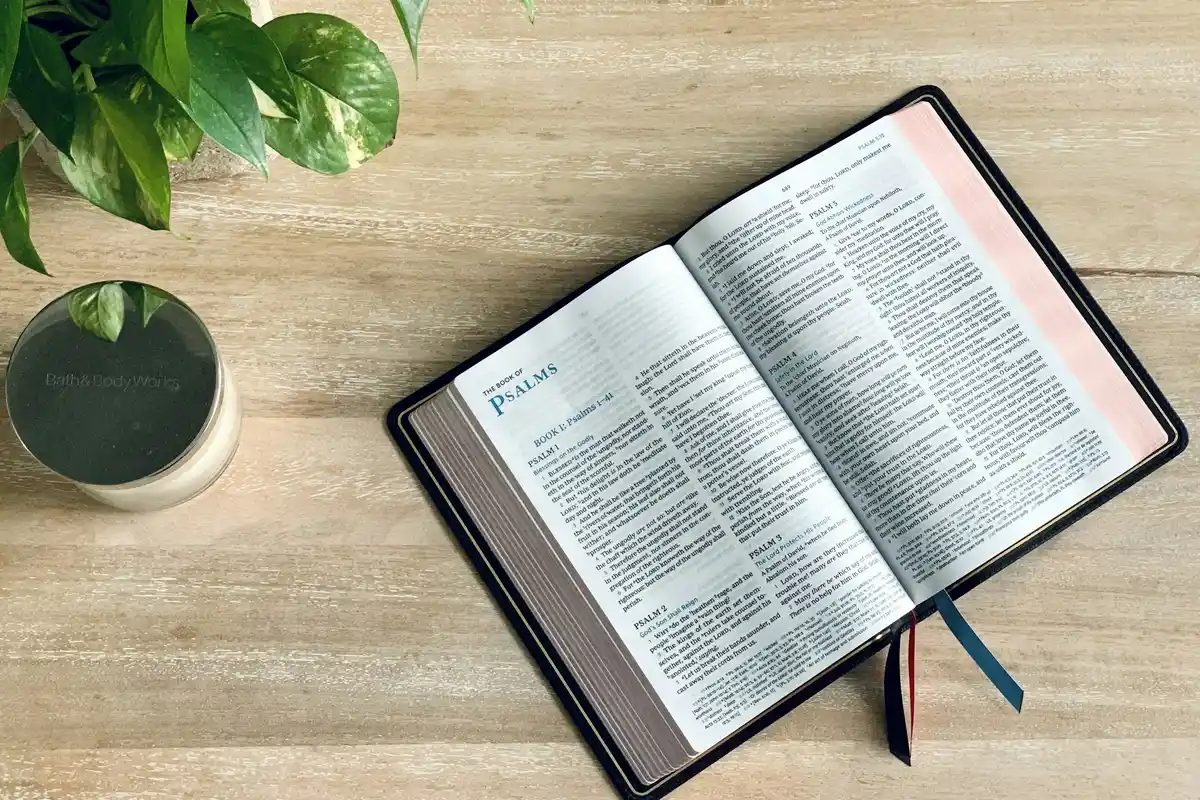
Be still, and know that I am God: I will be exalted among the heathen, I will be exalted in the earth.
Psalms 46:10 (KJV)
God invites us to be still and know that he is God, which is the heart of any quiet time.
And in the morning, rising up a great while before day, he went out, and departed into a solitary place, and there prayed.
Mark 1:35 (KJV)
Jesus rose long before daylight and went to a solitary place to pray, giving a simple pattern to follow.
But thou, when thou prayest, enter into thy closet, and when thou hast shut thy door, pray to thy Father which is in secret; and thy Father which seeth in secret shall reward thee openly.
Matthew 6:6 (KJV)
Here Jesus tells us to pray behind a closed door, where the Father who sees in secret meets us.
My voice shalt thou hear in the morning, O Lord; in the morning will I direct my prayer unto thee, and will look up.
Psalms 5:3 (KJV)
David directed his prayer to God in the morning and then looked up expectantly for an answer.
It is of the Lord’s mercies that we are not consumed, because his compassions fail not. They are new every morning: great is thy faithfulness.
Lamentations 3:22-23 (KJV)
Each morning brings fresh mercies from a faithful God, a good truth to start a quiet time with.
Thy word is a lamp unto my feet, and a light unto my path.
Psalms 119:105 (KJV)
God’s word is pictured as a lamp and light, guiding each step when we read it quietly.
My soul, wait thou only upon God; for my expectation is from him.
Psalms 62:5 (KJV)
The psalmist tells his own soul to wait silently on God alone, since his hope comes from him.
For thus saith the Lord God, the Holy One of Israel; In returning and rest shall ye be saved; in quietness and in confidence shall be your strength: and ye would not.
Isaiah 30:15 (KJV)
Strength, the Lord says, is found in quietness and confidence rather than in rushing ahead.
Cause me to hear thy lovingkindness in the morning; for in thee do I trust: cause me to know the way wherein I should walk; for I lift up my soul unto thee.
Psalms 143:8 (KJV)
A morning prayer asking to hear God’s lovingkindness and to be shown the way to walk.
Search me, O God, and know my heart: try me, and know my thoughts: And see if there be any wicked way in me, and lead me in the way everlasting.
Psalms 139:23-24 (KJV)
These lines invite God to search our hearts and lead us, a fitting prayer at the close of quiet time.
And she had a sister called Mary, which also sat at Jesus’ feet, and heard his word. But Martha was cumbered about much serving, and came to him, and said, Lord, dost thou not care that my sister hath left me to serve alone? bid her therefore that she help me. And Jesus answered and said unto her, Martha, Martha, thou art careful and troubled about many things: But one thing is needful: and Mary hath chosen that good part, which shall not be taken away from her.
Luke 10:39-42 (KJV)
Mary sat at Jesus’ feet listening while Martha was busy, and Jesus said she chose the good part.
This book of the law shall not depart out of thy mouth; but thou shalt meditate therein day and night, that thou mayest observe to do according to all that is written therein: for then thou shalt make thy way prosperous, and then thou shalt have good success.
Joshua 1:8 (KJV)
Meditating on God’s word day and night is linked here with living faithfully and wisely.
Blessed is the man that walketh not in the counsel of the ungodly, nor standeth in the way of sinners, nor sitteth in the seat of the scornful. But his delight is in the law of the Lord; and in his law doth he meditate day and night. And he shall be like a tree planted by the rivers of water, that bringeth forth his fruit in his season; his leaf also shall not wither; and whatsoever he doeth shall prosper.
Psalms 1:1-3 (KJV)
The one who delights in God’s law and meditates on it is compared to a fruitful tree by water.
Let the words of my mouth, and the meditation of my heart, be acceptable in thy sight, O Lord, my strength, and my redeemer.
Psalms 19:14 (KJV)
A short prayer that both our words and the quiet meditations of our hearts please the Lord.
Thou wilt keep him in perfect peace, whose mind is stayed on thee: because he trusteth in thee.
Isaiah 26:3 (KJV)
Perfect peace is promised to the person whose mind is stayed on God in trust.
Draw nigh to God, and he will draw nigh to you. Cleanse your hands, ye sinners; and purify your hearts, ye double minded.
James 4:8 (KJV)
As we draw near to God in a quiet moment, he promises to draw near to us.
O God, thou art my God; early will I seek thee: my soul thirsteth for thee, my flesh longeth for thee in a dry and thirsty land, where no water is;
Psalms 63:1 (KJV)
Written in a dry wilderness, this verse expresses an early, thirsty longing to seek God.
Come unto me, all ye that labour and are heavy laden, and I will give you rest. Take my yoke upon you, and learn of me; for I am meek and lowly in heart: and ye shall find rest unto your souls.
Matthew 11:28-29 (KJV)
Jesus welcomes the weary to come to him and learn from him, finding rest for their souls.
Start small. Choose one verse rather than trying to read the whole list at once. Find a place with few distractions, as Jesus did when he went out to a solitary place to pray in Mark 1:35. Read the verse slowly two or three times, notice which words stand out, and then tell God honestly what is on your mind.
A simple pattern many believers use is read, reflect, respond. Read the passage, reflect on what it shows about God, and respond in prayer, thanks or confession. Psalm 139:23-24 makes a helpful closing prayer because it invites God to search your heart and lead you in the way everlasting. Keeping a notebook of verses and short prayers lets you look back and see how God has answered.
If mornings are hard, meet with God at another time. Consistency matters more than length, and even ten quiet minutes with Scripture can steady a busy day. Psalm 46:10 reminds us that stillness itself is a way of knowing that he is God.
The best plan for a quiet hour is the one you will still be following in March. Most people who give up on a daily habit gave themselves an impossible schedule in January. So before picking any of the Bible verses for quiet time listed above, settle two practical things: where and when.
Where means a spot with a place to sit and few reasons to get up. A chair by a window works. So does a parked car, a porch step, or the edge of the bed. When means a slot that survives a bad day. For some people that is before the house wakes up. For a night-shift nurse it might be mid-afternoon, and that is fine, because Scripture never says the sun has to be rising. Psalm 119:164 mentions praising God seven times a day, and Daniel prayed three times daily (Daniel 6:10), so there is plenty of precedent for more than one pattern.
Keep your Bible, a pen, and a small notebook in the same spot so the setup takes ten seconds. Silence your phone, and put it face down across the room if you can. Those small decisions do more than good intentions ever will.
David writes in Psalm 5:3, My voice shalt thou hear in the morning, O LORD; in the morning will I direct my prayer unto thee, and will look up. Two verbs deserve a second look. Direct is a word used for laying out the pieces of a sacrifice on the altar in order. David is arranging his prayer, not just blurting it. And look up carries the sense of keeping watch, like a sentry on a wall waiting for something to come into view.
That is a useful picture for the first ten minutes of a quiet hour. Lay out what is on your mind in order: thanks, worries, people, decisions. Then pause and actually watch for what God does with it, which might be a verse that surfaces later in the day or a settled feeling about a choice.
A lot of us pray as though we are filing a complaint and leaving the office. David prays like a man who expects a reply. You can try that tomorrow with one concern. Say it plainly, then sit for a minute before moving to the next thing.
Among the Bible verses for quiet time, Lamentations 3:22-23 is easy to sing and hard to understand until you see where it was written. Jerusalem has fallen. The writer has described hunger, burned buildings, and grief that will not let him sleep. Right in the middle he says that it is of the Lord’s mercies that we are not consumed, because His compassions fail not. They are new every morning, and great is thy faithfulness.
Notice that he does not skip the pain to get there. He remembers, and the remembering gives him something to stand on. That is exactly how a morning quiet time can work after a rough night. You are not asked to pretend yesterday went well. You are asked to notice that you woke up and that God’s kindness did not run out while you slept.
If you keep a notebook, try writing one specific mercy each morning, however small. A paid bill. A text from a friend. A child who laughed. After a month you will have a record that argues against your worst mornings.
Psalm 143 is a hard prayer. David is being chased, his spirit is overwhelmed, and he says his soul thirsts after God like a dry land. Then, in verse 8, he asks for something very specific: Cause me to hear thy lovingkindness in the morning; for in thee do I trust: cause me to know the way wherein I should walk; for I lift up my soul unto thee.
Two requests, lined up in order. First, let me hear Your steady love. Second, show me the road. He does not ask for the road first. Hearing about God’s covenant love comes before hearing about decisions, and I think many believers reverse that and wonder why the guidance feels thin.
When you use this verse in your quiet time, try praying it line by line. Hear first. Say what you are trusting God for today. Then name the actual decision in front of you, whether that is a conversation you are dreading or a job offer. Lifting up the soul is a physical image, like holding something up with both hands. It is an honest way to end the prayer: here it is, Lord, I am handing this to You.
Psalm 119:105 says, Thy word is a lamp unto my feet, and a light unto my path. In the ancient world a hand lamp threw light across maybe two or three steps. That is the whole promise. It does not light the highway to the horizon. It lights the next few feet.
Plenty of people read the Bible like a textbook and then feel frustrated that nothing stuck. A slower pattern fits the Bible verses for quiet time much better. Start by reading the verse aloud, because hearing it engages a different part of the mind than skimming. Read it again and ask who is speaking and to whom. Read it a third time and underline the word that holds your attention. Then ask one question: what is one thing this verse shows me about God, and one thing it asks of me today?
Write the answers in a sentence or two. Don’t aim for brilliance. A line like, ‘God is patient with people who wander,’ is enough. Over weeks the notebook becomes a quiet record of what Scripture has actually been teaching you, which beats memory every time.
Isaiah 26:3 reads, Thou wilt keep him in perfect peace, whose mind is stayed on thee: because he trusteth in thee. The Hebrew behind perfect peace repeats the word shalom, so a fair reading is peace upon peace, a wholeness that covers everything. Stayed means propped up, leaned on, like a wall braced by a beam.
The verse sits inside a song the people of Judah will sing after deliverance. It is not written from a spa. It comes from people who have known invasion. That detail keeps us from treating the verse like a quick tool for calming down. What it describes is a settled habit of leaning the mind toward God, which a regular quiet time builds in small increments.
Here is something practical. When your thoughts start racing in the middle of your reading, try naming the worry out loud and then handing it back with a short sentence, such as, Lord, I am leaning this on You. Do it as many times as needed. A wandering mind is not a failed quiet time. It is the very thing the verse is about, a mind being brought back again and again to rest on God.
The heading of Psalm 63 says it was written when David was in the wilderness of Judah. That is real desert, dry limestone hills with almost no water. David is probably on the run from Absalom, and he writes, O God, thou art my God; early will I seek thee: my soul thirsteth for thee, my flesh longeth for thee in a dry and thirsty land, where no water is.
He uses physical language on purpose. Thirst is not a thought. It is a body demand. David compares his desire for God to that, and then remembers in the next verses seeing God’s power and glory in the sanctuary. Memory feeds the thirst and the thirst feeds the seeking.
If your quiet time feels flat, this psalm gives you permission to start with honest dryness. You don’t have to feel spiritual before you begin. Say, ‘I am empty and I came anyway,’ and read on. Many of the Bible verses for quiet time sound peaceful, but this one sounds like a person gasping. Both belong, and God receives both. Later in the same psalm David says his soul follows hard after God, and that God’s right hand holds him up.
Jesus says in Matthew 11:28-29, Come unto me, all ye that labour and are heavy laden, and I will give you rest. Take my yoke upon you, and learn of me; for I am meek and lowly in heart: and ye shall find rest unto your souls. Three commands sit in that short passage: come, take, learn.
Come is simple enough. Bring the tiredness as it is. Take my yoke is more interesting. A yoke is a wooden frame that joins two animals so they pull together. A trained ox often wore the yoke beside a stronger partner. Jesus is not removing work from His followers. He is offering to share the load and set the pace. Learn is the quiet time itself. We sit and watch how He handles people, pressure, and prayer, especially in the Gospels.
That makes this a good verse to use at the start of a week. Read it, and then read a short story from Mark or Luke. Ask how Jesus moves through the scene, who He stops for, and when He walks away. Learning from Him is slow, but the rest He promises is attached to that learning, not to a hurried reading of the passage.
The last verse of Psalm 19 is a prayer many pastors use before preaching: Let the words of my mouth, and the meditation of my heart, be acceptable in thy sight, O LORD, my strength, and my redeemer. It is also a good way to finish a quiet time.
Look at what David asks God to examine. Words, first, the things we say to a spouse, a boss, a child, a stranger in traffic. Then meditation of the heart, the half-formed thoughts that run underneath. Few of us would want either one played back in public. David invites God to look anyway. He calls God both strength and redeemer, which is a quiet confession that he cannot manage either set of words alone.
Try ending your time this way for a month. After you read and pray, take thirty seconds and picture the first conversation of your day. Ask God to guide what you will say there. People who do this often report that the moment feels different when it arrives, a little slower, a little kinder. That is a modest result, and it counts. The Bible verses for quiet time were never meant only for the quiet hour itself, but for what walks out of it.
Not every reader has a calm corner. Some of you have three kids under six. Some share a bedroom, or work a split shift, or live beside a street that never sleeps. It is worth saying plainly that the Bible does not tie a quiet time to a certain level of decibels.
Susanna Wesley, mother of nineteen children (with John and Charles among them), is often remembered for pulling her apron over her head to pray, which signaled to her children that she was not to be interrupted. Whether or not every detail of that story is precise, it shows a mother carving out private prayer in a loud house. Jesus Himself went to quiet places because crowds pressed so hard around Him, so the pattern includes interruptions.
If noise is the main obstacle, shorten the goal. Read one verse at the breakfast table and say it again at bedtime. Pray in the shower. Listen to a Psalm during your commute and talk with God when you park. Use earbuds and a spoken Bible while folding laundry. These are less ideal than a silent room, and they are still real attention. Psalm 62:5 says my soul, wait thou only upon God, and the word only does not demand a perfect room.
Nobody changes dramatically after one week of Bible verses for quiet time. What tends to happen is slower and harder to photograph. Prayer gets less performative. A passage you read in February comes back in May when a friend needs it. You notice anger a half second sooner. These are small, honest results, and Scripture seems fine with small results. Jesus compared the kingdom to a mustard seed (Matthew 13:31-32) for a reason.
Keep a few simple guardrails in place. Don’t treat missed days as proof that you failed. Pick up the next morning without a speech. Don’t turn the notebook into a scorecard. Don’t compare your pace with someone who has been at it for thirty years, because they started with missed days too.
Joshua 1:8 and Psalm 1:1-3 both connect steady meditation on God’s word with fruit that comes in its season. The tree in Psalm 1 does not strain to produce. It sits by the water. That image takes the pressure off a bit, since roots grow where nobody sees them. If you stay near the stream, the fruit is God’s business.
Here is a prayer you are welcome to borrow, or break apart and make your own.
Father, I am sitting down because You asked me to come, not because I have anything impressive to bring. You know how scattered I feel. Quiet the loud corners of my head. Let me hear Your mercy before I hear my to-do list. Show me one true thing from Your word, and then give me the nerve to live it before supper. Search me where I would rather not look, and teach me where I do not yet see. Keep me steady when the day gets noisy, and let tomorrow find me here again. In Jesus’ name, amen.
When you finish, open to Psalm 5, Psalm 63, or Mark 1 and start reading slowly. Take a single sentence with you when you leave. If you can, tell one person what you found, because saying it out loud fixes it in memory. Then do it again tomorrow, in the same spot, at about the same hour. Over time the place itself starts to feel like an invitation.
Readers interested in quiet time often continue with Bible Verses For Relationship Problems, Bible Verses For God's Peace, Bible Verses About Faith in Hard Times, Bible Verses For Hard Times, Bible Verses For Protection from Evil, Bible Verses For Faith and Hope, Bible Verses For Overcoming Anxiety, Bible Verses For Self-Control, Bible Verses About Fathers, Bible Verses About Peace of Mind and Bible Verses About God's Healing.
If you want to dig further, Blue Letter Bible, Bible Gateway, Bible Hub and Bible Study Tools are good places to start.
Start small. Choose one verse rather than trying to read the whole list at once. Find a place with few distractions, as Jesus did when he went out to a solitary place to pray in Mark 1:35.
This page brings together 3 King James Version references about quiet Time, drawn from 2 different books of the Bible.
Yes. The verses about quiet Time gathered here include passages from both the Old Testament and the New Testament, such as Psalm 139:23 and Mark 1:35.
Mark 1:35 is one of the verses about quiet Time referenced in this collection, alongside Psalm 139:23.
Yes, the verses referenced on this page, including Mark 1:35, are quoted according to the King James Version (KJV), and are suitable for daily reading, memorization, or devotional use.