
Bible verses for righteousness are a help when you want to live rightly before God but feel weak or pulled in other directions. Jesus promised that those who hunger and thirst after righteousness shall be filled. These verses give you words to pray for guidance, courage to choose what is right, and assurance that the Lord watches over the righteous.
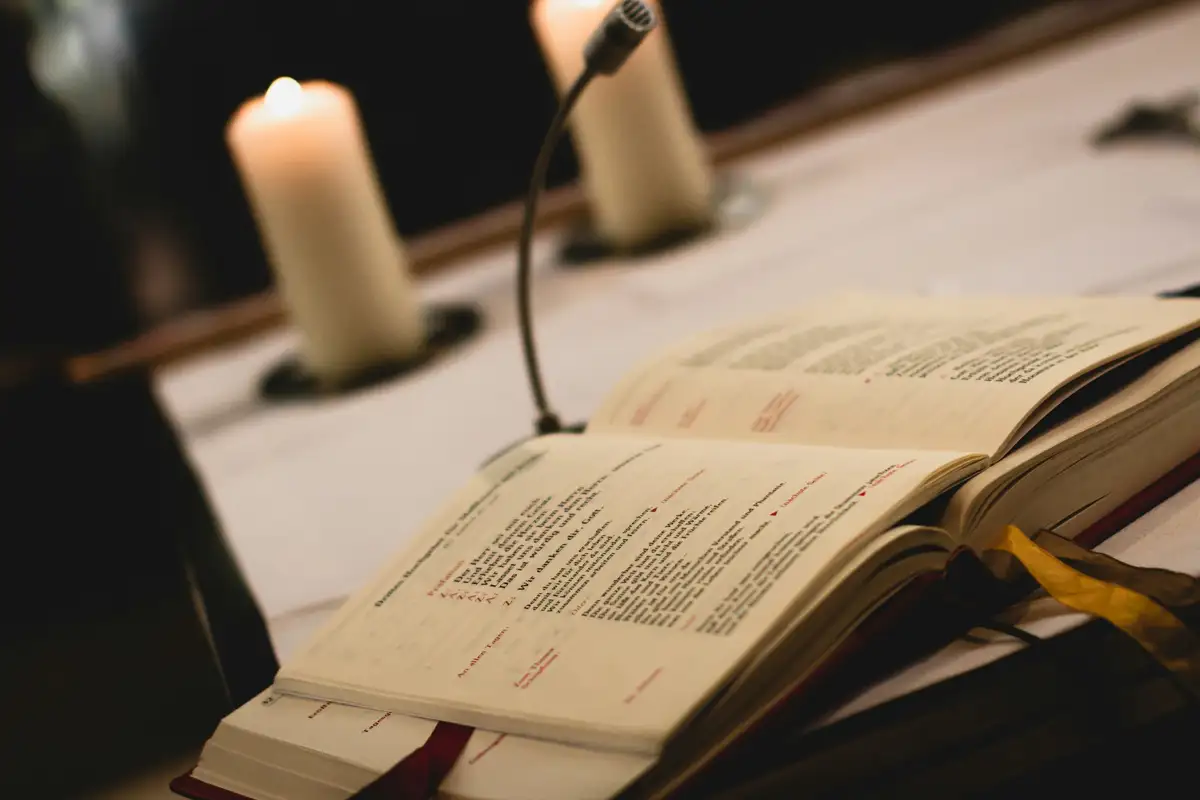
Blessed are they which do hunger and thirst after righteousness: for they shall be filled.
Matthew 5:6 (KJV)
Jesus promises that those who hunger and thirst after righteousness shall be filled.
But seek ye first the kingdom of God, and his righteousness; and all these things shall be added unto you.
Matthew 6:33 (KJV)
When priorities feel tangled, seek first God’s kingdom and his righteousness and trust him with the rest.
He restoreth my soul: he leadeth me in the paths of righteousness for his name’s sake.
Psalms 23:3 (KJV)
The Shepherd restores the soul and leads in paths of righteousness for his name’s sake.
Lead me, O Lord, in thy righteousness because of mine enemies; make thy way straight before my face.
Psalms 5:8 (KJV)
David prays to be led in God’s righteousness and asks for a straight path before him.
He that followeth after righteousness and mercy findeth life, righteousness, and honour.
Proverbs 21:21 (KJV)
Whoever follows after righteousness and mercy finds life, righteousness and honour.
But thou, O man of God, flee these things; and follow after righteousness, godliness, faith, love, patience, meekness.
1 Timothy 6:11 (KJV)
Paul tells Timothy to flee what is harmful and follow after righteousness, godliness, faith, love, patience and meekness.
Flee also youthful lusts: but follow righteousness, faith, charity, peace, with them that call on the Lord out of a pure heart.
2 Timothy 2:22 (KJV)
Pursue righteousness, faith, charity and peace alongside others who call on the Lord from a pure heart.
Sow to yourselves in righteousness, reap in mercy; break up your fallow ground: for it is time to seek the Lord, till he come and rain righteousness upon you.
Hosea 10:12 (KJV)
Sow in righteousness, break up the fallow ground, and seek the Lord until he rains righteousness on you.
And the work of righteousness shall be peace; and the effect of righteousness quietness and assurance for ever.
Isaiah 32:17 (KJV)
The work of righteousness brings peace, and its effect is quietness and assurance for ever.
But the path of the just is as the shining light, that shineth more and more unto the perfect day.
Proverbs 4:18 (KJV)
The path of the just is pictured as a light that shines brighter and brighter.
And this I pray, that your love may abound yet more and more in knowledge and in all judgment; That ye may approve things that are excellent; that ye may be sincere and without offence till the day of Christ; Being filled with the fruits of righteousness, which are by Jesus Christ, unto the glory and praise of God.
Philippians 1:9-11 (KJV)
Paul prays that believers be filled with the fruits of righteousness which come through Jesus Christ.
The eyes of the Lord are upon the righteous, and his ears are open unto their cry.
Psalms 34:15 (KJV)
Take comfort that the Lord’s eyes are on the righteous and his ears are open to their cry.
I have been young, and now am old; yet have I not seen the righteous forsaken, nor his seed begging bread.
Psalms 37:25 (KJV)
An older David testifies that he has not seen the righteous forsaken.
Surely he shall not be moved for ever: the righteous shall be in everlasting remembrance. He shall not be afraid of evil tidings: his heart is fixed, trusting in the Lord.
Psalms 112:6-7 (KJV)
The righteous need not fear evil tidings, because their heart is fixed, trusting in the Lord.
Confess your faults one to another, and pray one for another, that ye may be healed. The effectual fervent prayer of a righteous man availeth much.
James 5:16 (KJV)
Confess faults, pray for one another, and remember that a righteous person’s fervent prayer avails much.
I will greatly rejoice in the Lord, my soul shall be joyful in my God; for he hath clothed me with the garments of salvation, he hath covered me with the robe of righteousness, as a bridegroom decketh himself with ornaments, and as a bride adorneth herself with her jewels.
Isaiah 61:10 (KJV)
Rejoice that God has clothed you with garments of salvation and covered you with a robe of righteousness.
Now no chastening for the present seemeth to be joyous, but grievous: nevertheless afterward it yieldeth the peaceable fruit of righteousness unto them which are exercised thereby.
Hebrews 12:11 (KJV)
Discipline hurts for a while, but afterward it yields the peaceable fruit of righteousness.
For he hath made him to be sin for us, who knew no sin; that we might be made the righteousness of God in him.
2 Corinthians 5:21 (KJV)
Your standing rests on Christ, who became sin for us so we might be made the righteousness of God.
Begin by asking God to lead you. Psalm 5:8 and Psalm 23:3 both picture the Lord guiding his people in paths of righteousness. Praying these verses before a decision, a difficult conversation or a day of temptation turns the desire to do right into dependence on him.
Scripture uses active words for this pursuit: follow after righteousness (1 Timothy 6:11; 2 Timothy 2:22) and sow in righteousness (Hosea 10:12). Pick one area of life, such as honesty at work or kindness at home, and set a verse beside it as a daily reminder. Small, faithful choices add up over time, just as Proverbs 4:18 describes a path that shines brighter and brighter.
Keep grace at the center. Your standing with God rests on Christ, who became sin for us so that we might be made the righteousness of God in him (2 Corinthians 5:21). Isaiah 61:10 celebrates being clothed with a robe of righteousness. Right living grows best from that security, not from fear of failure.
These Bible Verses For Righteousness note that scripture actually describes two related but distinct things when it talks about righteousness, and confusing them is where a lot of frustration starts. The first is a righteousness given, not earned: 2 Corinthians 5:21 says God made Christ, who knew no sin, “to be sin for us; that we might be made the righteousness of God in him.” Isaiah 61:10 pictures this as clothing – “he hath clothed me with the garments of salvation, he hath covered me with the robe of righteousness” – something put on a person from outside themselves, not something they sewed together on their own. This is the righteousness Paul has in mind in Philippians 1:9-11 when he prays for “the fruits of righteousness, which are by Jesus Christ,” language that locates the source outside the person praying.
The second is a righteousness lived out day by day, and this is where most of the “verses for righteousness” people search for actually apply. Proverbs 4:18 pictures it as a path: “the path of the just is as the shining light, that shineth more and more unto the perfect day.” That single image corrects a common misunderstanding right away – righteous living, in Proverbs, is not a finished state a person either has or doesn’t; it is a direction, a path that gets brighter with time, which means slow progress and honest stumbling both belong inside it, not outside it.
Hosea 10:12 ties the two ideas together with a farming picture: “sow to yourselves in righteousness, reap in mercy; break up your fallow ground: for it is time to seek the LORD.” Sowing takes effort and patience; the ground has to be broken up before anything useful can grow in it. That is a very different picture from a righteousness that arrives instantly and stays effortless, and it matches ordinary experience better than a flatter, all-or-nothing idea of holiness would.
Among these Bible Verses For Righteousness, the Psalms are specific about what this looks like in an actual life, not just in theory. Psalms 112:6-7 describes someone who is not afraid of evil tidings because their heart is fixed, trusting in the Lord – righteousness here shows up as a kind of steadiness under bad news, not the absence of bad news. Psalms 37:25 adds a long view: “I have been young, and now am old; yet have I not seen the righteous forsaken, nor his seed begging bread,” a statement built on decades of watching, not a promise of instant comfort. Psalms 34:15 puts it simply: “the eyes of the LORD are upon the righteous, and his ears are open unto their cry,” which means the pursuit of righteousness is never a solitary project; it is watched over and answered.
1 Timothy 6:11 and 2 Timothy 2:22 both use active verbs – “follow after righteousness,” “flee also youthful lusts, but follow righteousness” – treating it as something pursued on purpose, in a particular direction, away from specific temptations named right alongside it. Proverbs 21:21 promises that whoever “followeth after righteousness and mercy findeth life, righteousness, and honour,” pairing the pursuit of righteousness with mercy rather than with harsh self-judgment, which is an important corrective for anyone who reads these verses as a call to perfectionism instead of a call to a direction of life.
Another of these Bible Verses For Righteousness, Matthew 5:6, promises that those who “hunger and thirst after righteousness” will be filled – language that assumes the hunger itself is real and sometimes painful, not that righteousness comes easily to people who want it badly enough. Matthew 6:33 tells the reader to seek “first the kingdom of God, and his righteousness,” putting it ahead of the anxious list of needs that comes right before it in the same passage, which suggests that righteousness is meant to reorder priorities rather than simply add one more item to an already long list. Hebrews 12:11 is honest about the cost involved: “no chastening for the present seemeth to be joyous, but grievous: nevertheless afterward it yieldeth the peaceable fruit of righteousness unto them which are exercised thereby.” The verse does not promise that the process feels good while it is happening; it promises fruit afterward, to those who are trained by it, which is a much more patient and realistic picture than instant transformation.
James 5:16 adds one more practical piece often missed: “the effectual fervent prayer of a righteous man availeth much,” followed immediately by the instruction to confess faults to one another – placing honest confession, not flawless behavior, right beside the definition of a righteous person praying. Isaiah 32:17 closes the loop by describing the fruit of all this: “the work of righteousness shall be peace; and the effect of righteousness quietness and assurance for ever,” tying righteous living not to anxious striving but, eventually, to rest.
Reading through these Bible Verses For Righteousness, it is worth saying plainly that these verses were never meant to produce anxious self-monitoring. Psalms 34:15’s promise that God’s “eyes” and “ears” are open toward the righteous is written as comfort, not as surveillance — the same attention that notices failure also notices the cry for help that follows it. Hosea 10:12’s command to “break up your fallow ground” assumes hard, unworked soil as the starting point, not a disqualification; fallow ground is simply ground that has not yet been prepared, and the verse treats that as the normal, expected condition to begin from, not a sign that the effort has already failed.
Proverbs 4:18’s image of a path that shines “more and more unto the perfect day” works the same way. The path does not start bright; it starts as a path, however dim, and gets brighter the further along it a person walks. Read alongside 1 Timothy 6:11’s instruction to “follow after” righteousness — a verb aimed at ongoing pursuit rather than a finish line already reached — the whole set of passages describes something closer to a lifelong direction than a test that can be failed once and never recovered from.
One of these Bible Verses For Righteousness, Isaiah 64:6, delivers one of Scripture’s harshest verdicts on human effort at righteousness: “all our righteousnesses are as filthy rags.” It’s a jarring line specifically because it comes from someone trying to describe his own best moral efforts, not someone else’s obvious failures. The verse pushes against the idea that enough personal discipline could ever fully produce this on its own.
Philippians 3:9 offers the contrast Paul eventually landed on: seeking “not having mine own righteousness, which is of the law, but that which is through the faith of Christ.” The distinction matters practically — righteousness pursued as self-improvement tends to produce either pride or exhaustion, while righteousness received changes where the effort is actually aimed.
Another of these Bible Verses For Righteousness, Micah 6:8, keeps the concept from staying abstract: “to do justly, and to love mercy, and to walk humbly with thy God.” None of the three are complicated to understand, even if they’re difficult to sustain — righteousness here isn’t a mystical state achieved once, it’s a daily posture toward fairness, kindness, and humility.
Matthew 5:6, “Blessed are they which do hunger and thirst after righteousness: for they shall be filled,” frames the pursuit itself, not just the arrival, as something blessed. The hunger for it is treated as evidence something real is already happening, not a sign of falling short.
Among these Bible Verses For Righteousness, Psalm 37:1, “Fret not thyself because of evildoers, neither be thou envious against the workers of iniquity,” addresses a specific frustration that comes with pursuing righteousness seriously — watching people who don’t bother with any of it seem to do just fine anyway. The psalm doesn’t pretend that frustration is illegitimate; it simply insists it not become the deciding factor in how a person lives.
The last of these Bible Verses For Righteousness notes that righteousness pursued this way tends to look, from the outside, less like moral achievement and more like ordinary faithfulness repeated for a very long time.
Timothy was probably in his thirties when Paul wrote him the letters that carry his name, and he was leading a church in Ephesus that did not always take him seriously. Paul’s advice is blunt. In the first letter he says, “But thou, O man of God, flee these things; and follow after righteousness, godliness, faith, love, patience, meekness” (1 Timothy 6:11). In the second he repeats the idea: “Flee also youthful lusts: but follow righteousness, faith, charity, peace, with them that call on the Lord out of a pure heart” (2 Timothy 2:22).
Look at the two verbs side by side. Flee and follow. A person who only flees ends up running in circles, because the old temptation is still in the room and nothing has replaced it. A person who only follows, with no willingness to leave the bad company, gets pulled backward by the same old crowd. Paul gives Timothy both movements in a single breath, and that pairing is worth copying.
Notice also the company Timothy is told to keep. He is to pursue right living alongside others who call on the Lord from a pure heart. Nobody holds a steady course alone for decades. Among these Bible Verses For Righteousness, Timothy’s case is the one most likely to fit a young person starting a job, a first apartment or a first leadership role. Pick a friend who is a little further down the road than you, and ask that person to tell you the truth when your choices start drifting.
Hosea spoke to a northern kingdom that had settled into a comfortable religion with nothing underneath it. His line to them is a farmer’s line: “Sow to yourselves in righteousness, reap in mercy; break up your fallow ground: for it is time to seek the LORD, till he come and rain righteousness upon you” (Hosea 10:12). Fallow ground is a field that was plowed once and then left alone. The crust hardens, weeds take it, and a seed thrown on top just sits there until the birds find it.
The picture is uncomfortable because plowing hurts the field. The blade tears up what had been lying quiet. A heart that has gone fallow is much the same. Maybe you stopped praying about money years ago and just made your own rules. Maybe there is a relationship where you stopped trying to be fair. Breaking that ground up feels like a disturbance, and many people decide they would rather leave it as it is.
The promise at the end of the verse is where hope lives. God says he will come and rain righteousness on those who seek him. Rain is not something a farmer produces. The farmer plows, plants and waits, then depends on weather that arrives from somewhere else. That balance runs through the whole subject. You prepare the soil by honest effort, and the growth that follows is received as a gift. Try picking one neglected area this week and give it thirty minutes of real attention, even if all you do is turn over the first few inches.
“He restoreth my soul: he leadeth me in the paths of righteousness for his name’s sake” (Psalms 23:3). Most of us read the phrase paths of righteousness as a moral road, a straight line from bad to good. The shepherd image suggests something more down to earth. In the hills of Judea a flock follows the trails the shepherd knows lead to water and grass, and a wandering sheep who strikes out on its own can end up on a ledge with no way back.
Right paths, in that setting, are the ones that actually go somewhere safe. The sheep did not map them and could not have. What the sheep did was keep its eye on the man ahead and stay close. Read this way, the verse is less about performance and more about trust. David is saying that being led is the way a righteous life gets lived.
The final clause, for his name’s sake, deserves a second look. The shepherd leads rightly because his own character is at stake, not because the sheep have earned careful treatment. That should settle a worry many people carry, the fear that God will give up on them the first time they take a wrong turn. Psalm 5:8 keeps the same mood: “Lead me, O LORD, in thy righteousness because of mine enemies; make thy way straight before my face.” David asks to be led because he knows his own sense of direction is unreliable. If you are unsure which way to go this week, that same request is a good place to start.
James closes his letter with a line that people quote often and rarely finish: “The effectual fervent prayer of a righteous man availeth much” (James 5:16). He then gives an example, and it is not a saint on a pedestal. “Elias was a man subject to like passions as we are, and he prayed earnestly that it might not rain: and it rained not on the earth by the space of three years and six months” (James 5:17). The man who stood against the prophets of Baal was also the man who ran into the wilderness afraid for his life not long after.
That detail matters because it keeps righteous from meaning flawless. James picks Elijah deliberately. He wants his readers to see a person with the same moods, fatigue and frustrations they have, whose prayers still carried weight with God. The word effectual points to prayer that is working, producing something, rather than merely polite.
Think about what that does to the way we pray. If only perfect people got a hearing, most of us would give up before breakfast. Yet the verse sits directly after an instruction to confess faults to one another, which means honesty is part of the setup. Some of the most effective praying happens at a kitchen table where two people admit what they have been getting wrong and then ask God for help. If you have avoided prayer because you feel unworthy, let Elijah’s ordinary humanity talk you back to it.
“But the path of the just is as the shining light, that shineth more and more unto the perfect day” (Proverbs 4:18). Picture a hillside before sunrise. The first gray is almost nothing, and then the sky warms, and eventually everything stands in plain view. Solomon is describing a life that brightens gradually rather than switching on all at once. It fits what most believers actually experience, where understanding and conduct improve across years in small increments.
Psalm 112 draws a related portrait. The righteous man “shall not be afraid of evil tidings: his heart is fixed, trusting in the LORD” (Psalms 112:7). A fixed heart is not one that never feels fear. It is one that has already decided where it will stand, so a bad phone call does not knock it flat.
Now the caution. Psalm 37:25 says, “I have been young, and now am old; yet have I not seen the righteous forsaken, nor his seed begging bread.” It is a real observation from David’s own life, not a guarantee written for every case. Good people do suffer hardship, and plenty of faithful families have gone through lean years. Treating the verse as a contract can leave a person wondering what they did wrong when a job disappears or a diagnosis comes. Read it the way David meant it, as testimony that God did not abandon those who trusted him, and bring your own struggles to a pastor or a counselor rather than assuming they signal a spiritual failure.
Nearby topics worth a look: Bible Verses For Mercy, Bible Verses About Worry, Bible Verses About Gratitude and Thankfulness, Bible Verses About Love, Bible Verses For Love and Friendship, Bible Verses About Faith, Bible Verses For Knowing God, Bible Verses For Trusting God, Bible Verses For Staying Strong, Bible Verses For Love and Bible Verses For Peace During Difficult Times.
Helpful free resources for further study include Bible Gateway, Bible Hub and Bible Study Tools.
Begin by asking God to lead you. Psalm 5:8 and Psalm 23:3 both picture the Lord guiding his people in paths of righteousness.
This page brings together 8 King James Version references about righteousness, drawn from 7 different books of the Bible.
These righteousness verses are drawn from books including Psalm, 1 Timothy, 2 Timothy, Hosea, Proverbs, among others.
Yes. The verses about righteousness gathered here include passages from both the Old Testament and the New Testament, such as Psalm 5:8 and 1 Timothy 6:11.
Psalm 5:8 is one of the verses about righteousness referenced in this collection, alongside Psalm 23:3.