
Bible verses for sunset fit the quiet moment when the light fades and the day is handed back to God. Scripture speaks of praising the Lord from the rising of the sun to its going down, of evening prayer, and of peaceful sleep under his care. Read these passages as the sky changes colour, and let them turn the close of the day into thanksgiving.
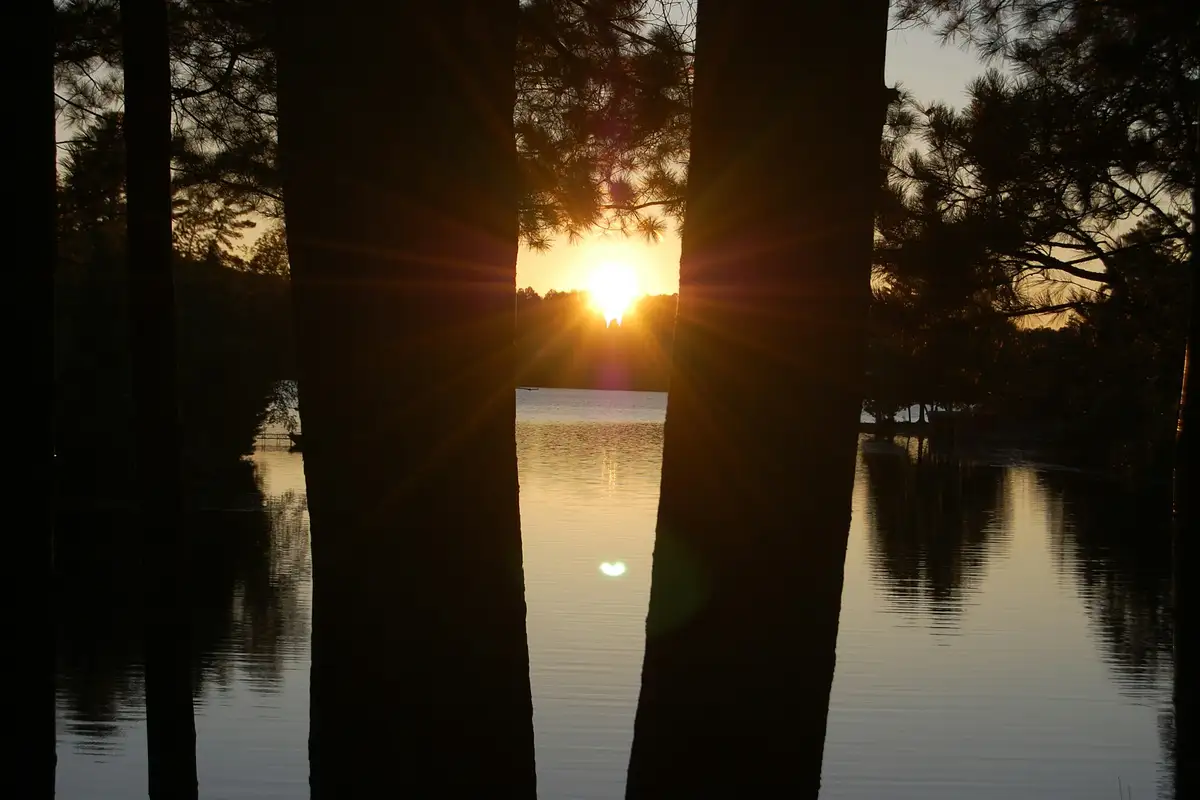
From the rising of the sun unto the going down of the same the Lord’s name is to be praised.
Psalms 113:3 (KJV)
From sunrise to sunset the Lord’s name is worthy of praise, which makes the fading light a natural moment for worship.
I will both lay me down in peace, and sleep: for thou, Lord, only makest me dwell in safety.
Psalms 4:8 (KJV)
David ends his day lying down in peace, trusting that the Lord alone keeps him safe through the night.
Let my prayer be set forth before thee as incense; and the lifting up of my hands as the evening sacrifice.
Psalms 141:2 (KJV)
The psalmist asks that his lifted hands be received like the evening sacrifice, a model for prayer as the day closes.
Evening, and morning, and at noon, will I pray, and cry aloud: and he shall hear my voice.
Psalms 55:17 (KJV)
Evening is named first among the times David prays, showing that sunset can be a set hour for calling on God.
The heavens declare the glory of God; and the firmament sheweth his handywork. Day unto day uttereth speech, and night unto night sheweth knowledge.
Psalms 19:1-2 (KJV)
Day and night keep speaking of God’s glory, so a glowing western sky can be read as creation’s own sermon.
He appointed the moon for seasons: the sun knoweth his going down.
Psalms 104:19 (KJV)
God appointed the moon for seasons, and the sun knows its going down, so every sunset follows his order.
It is of the Lord’s mercies that we are not consumed, because his compassions fail not. They are new every morning: great is thy faithfulness.
Lamentations 3:22-23 (KJV)
Whatever the day held, the Lord’s mercies do not fail and will be new again when morning comes.
For his anger endureth but a moment; in his favour is life: weeping may endure for a night, but joy cometh in the morning.
Psalms 30:5 (KJV)
Sorrow may last through the night, yet this verse promises that joy arrives with the morning.
Be ye angry, and sin not: let not the sun go down upon your wrath:
Ephesians 4:26 (KJV)
Paul warns us not to let the sun go down on our anger, a practical reason to forgive before evening.
The mighty God, even the Lord, hath spoken, and called the earth from the rising of the sun unto the going down thereof.
Psalms 50:1 (KJV)
The mighty God calls the whole earth from the rising of the sun to its setting, reminding us who rules each day.
And God called the light Day, and the darkness he called Night. And the evening and the morning were the first day.
Genesis 1:5 (KJV)
From the first day of creation, evening and morning mark time under God’s hand, so every sunset belongs to his design.
They also that dwell in the uttermost parts are afraid at thy tokens: thou makest the outgoings of the morning and evening to rejoice.
Psalms 65:8 (KJV)
God makes the outgoings of morning and evening rejoice, a lovely picture of a colourful sky at dusk.
But they constrained him, saying, Abide with us: for it is toward evening, and the day is far spent. And he went in to tarry with them.
Luke 24:29 (KJV)
As evening fell, the disciples urged the risen Jesus to stay with them, a simple prayer for his presence at nightfall.
He will not suffer thy foot to be moved: he that keepeth thee will not slumber. Behold, he that keepeth Israel shall neither slumber nor sleep.
Psalms 121:3-4 (KJV)
The One who keeps Israel neither slumbers nor sleeps, so we can rest while he keeps watch.
It is a good thing to give thanks unto the Lord, and to sing praises unto thy name, O most High: To shew forth thy lovingkindness in the morning, and thy faithfulness every night,
Psalms 92:1-2 (KJV)
Here we are told to show God’s lovingkindness in the morning and his faithfulness every night.
But it shall be one day which shall be known to the Lord, not day, nor night: but it shall come to pass, that at evening time it shall be light.
Zechariah 14:7 (KJV)
The prophet promises a day when at evening time it shall be light, a hope that outshines any sunset.
The day is thine, the night also is thine: thou hast prepared the light and the sun.
Psalms 74:16 (KJV)
Both day and night are God’s, and he prepared the light and the sun that set each evening.
Sunset is a natural pause. Many believers have used it as a set time for prayer, following the psalmist who said he would pray evening, morning and at noon (Psalms 55:17). One simple way is to pick a verse from this list, read it slowly while the light fades, and then thank God for one specific thing from the day.
Evening is also a good time to settle accounts. Ephesians 4:26 asks us not to let the sun go down on our anger, so sunset can be a reminder to forgive, to send a message of apology, or to lay a worry before God. Psalms 4:8 then gives words for lying down in peace.
Families can read one short verse together at dinner or bedtime, and those who photograph sunsets might pair a picture with Psalms 113:3 or Psalms 19:1. Writing a verse on a card by the window or bedside helps it stay in mind until morning, when Lamentations 3:22-23 reminds us that his mercies are new again.
Not every entry among these Bible Verses For Sunset is a good example, and 2 Samuel 11 opens with David remaining in Jerusalem while his army is at war, and one evening he walks on the roof of his house and sees Bathsheba bathing nearby. Rather than looking away, he sends for her, and the encounter sets off a chain of sin that includes adultery, deception, and eventually the arranged death of her husband Uriah. The chapter is sobering precisely because nothing about the evening itself was wrong, it was David’s idle presence and the choices that followed that turned an ordinary evening into the setting for the gravest failure of his reign.
The most sacred of these Bible Verses For Sunset center on this meal, and Matthew 26 describes Jesus and his disciples gathering for the Passover meal as evening falls, reclining together at the table in a scene full of both tradition and tension. During the meal, Jesus identifies his betrayer, institutes the bread and cup as a new remembrance of his body and blood, and predicts Peter’s denial before the night is over. It is an evening thick with meaning, closing out the ordinary rhythm of the Passover while quietly opening into the most consequential night in human history, all framed by Matthew’s simple note that it took place when the even was come.
These Bible Verses For Sunset also include a hesitant seeker, and John 3 introduces Nicodemus, a respected Pharisee and member of the Jewish ruling council, who comes to Jesus under cover of darkness, likely to avoid being seen associating with him. Despite the secrecy, his questions are sincere, and the conversation that follows includes Jesus’ well-known teaching about being born again and God’s love for the world. Nicodemus does not fully understand everything Jesus says that night, but the seed planted in that quiet, nighttime conversation appears to grow, since he later speaks up cautiously on Jesus’ behalf and helps with his burial. The evening meeting shows that sincere seeking, even when it starts hesitantly after dark, matters to Jesus.
Among these Bible Verses For Sunset, one call begins in hiding, and Judges 6 finds Gideon threshing wheat by the winepress, hiding his work from raiding Midianites, when the angel of the Lord appears and greets him as a mighty man of valor, a title that seems almost sarcastic given Gideon’s fearful circumstances. Gideon questions why, if God is with Israel, things have gone so badly, and the angel commissions him to deliver Israel from Midian’s oppression. Gideon asks for a sign, and fire consumes the offering he prepares, confirming the messenger’s identity. What begins as an ordinary evening task hiding from enemies becomes the starting point of one of Israel’s most memorable deliverances.
These Bible Verses For Sunset stretch into an urgent all-night meeting here, and Acts 20 describes Paul gathering with believers at Troas on the first day of the week, teaching at length since he plans to leave the next day. The meeting stretches long into the night, and a young man named Eutychus, sitting in a window, falls asleep and tumbles three stories to the ground, apparently dying from the fall. Paul goes down, embraces him, and declares that life remains in him, then returns upstairs to break bread and continue talking until daybreak. The all-night gathering, interrupted by tragedy and restoration, shows the urgency Paul placed on teaching believers before his departure.
The quietest of these Bible Verses For Sunset unfolds in the dark temple, and 1 Samuel 3 describes young Samuel sleeping in the temple near the ark, in the hours before the lamp of God typically went out, when he hears a voice calling his name. Mistaking it for Eli the priest, he runs to him three times before Eli realizes God himself is speaking to the boy and instructs him how to respond. When the voice calls a fourth time, Samuel answers, and God delivers a difficult message about judgment on Eli’s household. That quiet overnight exchange in the dark temple marks the beginning of Samuel’s long prophetic calling.
These Bible Verses For Sunset show the evening hours holding both great failure and great faithfulness, a rooftop temptation, a sacred meal, a hesitant seeker, a surprising call, an urgent all-night gathering, a child hearing God’s voice. Evening in Scripture is rarely empty time. It is often exactly when the most important things happen.
Lord, like Nicodemus, give me courage to keep seeking you even when I start out hesitant or afraid of being seen. Like Samuel, make me quick to answer when you call, even if I do not recognize your voice at first. Guard my evenings from the kind of idle drift that caught David off guard, and use this quiet hour for whatever you want to begin in me. Amen.
Read the Last Supper account some evening this week and let it reframe an ordinary meal with your own family. Ask yourself honestly whether your evenings tend toward David’s idle rooftop or Samuel’s listening ear. Keep one evening verse nearby for the nights you find it hard to settle down. Talk with someone about a conversation, like Nicodemus’s, that started hesitant after dark but ended up mattering more than you expected.
Which evening story here feels closest to your own pattern, a vulnerable idle hour, a sincere but hesitant search, or a sudden call you did not expect? What usually fills your evenings, and does it leave room for God to speak the way he did with Samuel? If tonight became the start of something, the way it did for Gideon and Samuel, would you be ready to answer?
Jacob did not plan to meet God that night. He was running from a brother who wanted him dead, and Genesis 28:11 says he lighted upon a certain place, and tarried there all night, because the sun was set; and he took of the stones of that place, and put them for his pillows, and lay down in that place to sleep. Read that again. He stopped there only because darkness forced him to. No altar, no prayer, no plan, just a tired man and a rock.
Then came the dream of a stairway set on the earth with its top reaching to heaven, and the promise of land and family and presence. Jacob woke and said, Surely the LORD is in this place; and I knew it not (Genesis 28:16). Of all the Bible Verses For Sunset, this is the one for people who ended the day in a place they never chose. Some of the most important meetings with God happen at the spot where daylight ran out on us.
If you are camped tonight in an unplanned place, a hospital chair, a rented room after a move, a car outside a house you can no longer enter, the story says the location is not too ordinary for him. Jacob’s pillow was a stone. The sunset caught him mid-flight, and God arrived while he was still running.
Exodus 17 gives a battle scene that turns on the clock. Israel was fighting Amalek at Rephidim while Moses stood on a hilltop with the rod of God. As long as his hands stayed raised, Israel prevailed. When they dropped, Amalek gained ground. Moses was an old man, and the text says it plainly: Moses’ hands were heavy; and they took a stone, and put it under him, and he sat thereon; and Aaron and Hur stayed up his hands, the one on the one side, and the other on the other side; and his hands were steady until the going down of the sun (Exodus 17:12).
Sunset is the finish line of that story. Nobody finished the day alone. Aaron and Hur did not fight the battle below, yet without their shoulders under his wrists the fight would have been lost. A seat was found for the leader, and strength was borrowed from friends.
At the end of a hard day, many of us wish we had held on a little longer by ourselves. The scene says to let people help you hold up what you cannot hold alone: a parent caring for a child, a caregiver, a pastor, a friend who sits with you until the light is gone. Asking for that is not weakness. It is how the battle in Exodus was won.
The heavens declare the glory of God; and the firmament sheweth his handywork. Day unto day uttereth speech, and night unto night sheweth knowledge (Psalm 19:1-2). Notice the verb uttereth. The psalmist hears the sky as a speaker, and he assigns different speeches to different hours. Each day hands the message to the next like a relay runner, and each night does the same.
For someone standing outside as the light turns orange and then violet, that gives the sunset a job. It is not decoration. It is one more sentence in a conversation that has been going on since Genesis 1. The next two verses add something remarkable: There is no speech nor language, where their voice is not heard. A fisherman in Galilee and a shepherd in Peru, neither able to read a page of Scripture, can both receive the same wordless sermon.
The psalm then moves from the sky to the written law, which shows where David thought the greater clarity was. The sunset tells you that God is glorious; the Scriptures tell you who he is. Use the first to turn your eyes up, and the second to know what you are looking at. Ten silent minutes on a porch with a verse open is a fine way to put the two together.
Psalm 121 was sung by pilgrims climbing toward Jerusalem, and evening was the dangerous hour for them. Roads were rough, the hills hid robbers, and a twisted ankle after dark could end a journey. He will not suffer thy foot to be moved: he that keepeth thee will not slumber, they sang. Behold, he that keepeth Israel shall neither slumber nor sleep (Psalm 121:3-4).
The repetition is the comfort. The singer says it twice, as if repeating it quietly to himself in the dusk. Where a human guard might nod off at the third watch, the Keeper of Israel does not. Many parents who lie awake over a teenager who has not come home yet have prayed those lines, and they are fitting for that hour.
Psalm 74:16 gives the other side of the picture: The day is thine, the night also is thine: thou hast prepared the light and the sun. The sunset is not a handover between a God who rules daylight and a darkness that belongs to something else. Both halves are his. You are not leaving his territory when the light goes; you are walking across the lawn to another room of the same house.
It is a good thing to give thanks unto the LORD, and to sing praises unto thy name, O most High: to shew forth thy lovingkindness in the morning, and thy faithfulness every night (Psalm 92:1-2). The psalm carries a heading for the Sabbath day, so the first singers were people stopping their work. Look at how the verse splits the day. Lovingkindness is for the morning, faithfulness for the night. In the morning you trust that God will be kind; at night you look back and see that he was.
This is the sunset exercise hidden in the text. Evening is the one hour when we have enough of the day behind us to count the evidence. A father can recall the phone call that arrived just when he needed it. A student can remember the unexpected friend at the lunch table. Faithfulness is hard to see at nine in the morning because it hasn’t happened yet.
The best of the Bible Verses For Sunset invite this kind of looking back. Try keeping a short written note for a week, two or three lines, of what God was faithful in before the lamp went off. It need not be dramatic. A parking space or a kind word at the counter is still evidence, and on rough weeks the list will be short and honest, which suits this psalm perfectly well.
Deuteronomy 16:6 sets a specific hour for Israel’s most important meal: there thou shalt sacrifice the passover at even, at the going down of the sun, at the season that thou camest forth out of Egypt. The timing was not arbitrary. The original night in Egypt had unfolded in the evening, with families inside their homes and the lamb eaten in haste. Each year at sunset the whole nation was asked to step back into that evening.
That gives the hour a double meaning. Sunset marked the day’s end, but it also marked the night they were set free. For a nation that spent four centuries making bricks, dusk was once the sign of a rescue still to come. Parents were told to explain it to their children when asked, which means the meal worked as a story told while the light died.
Families can borrow the pattern in a small way. A shared meal at day’s end, even a quick one, becomes a place where children hear stories of times God has brought the household through. It does not need a special menu or a script. A few honest sentences about what you remember, said while the dishes still sit on the table, can carry more than a lecture does.
Nehemiah 13:19 is an unusual sunset verse because it is about doors. It came to pass, that when the gates of Jerusalem began to be dark before the sabbath, I commanded that the gates should be shut, and charged that they should not be opened till after the sabbath. Traders were bringing goods into the city and selling them on the rest day, and Nehemiah decided that the line between ordinary work and rest would be drawn at a gate, at an exact hour, when the shadows lengthened.
He did not ask the merchants to feel differently. He shut the gates. I find that practical. Rest rarely arrives by good intentions alone. It usually needs something that physically closes, a laptop lid, a phone parked in a drawer, a work bag left in the car. The hour he picked was dusk, because dusk is when people naturally begin to turn toward home.
A caution is in order. The context here is a community under the law of that day, and it would be wrong to use the verse to shame people whose jobs run through evenings. Nurses, drivers and cooks serve others in the dark. But for anyone who could stop and does not, Nehemiah’s gate is a reminder that some boundaries have to be built, not wished into existence.
If you would like to read further, try Bible Verses For Courage and Strength, Bible Verses For Prayer for Healing, Bible Verses For Protection, Bible Verses About Safety, Bible Verses For God's Love, Bible Verses About Broken Relationships, Bible Verses For Perseverance and Strength, Bible Verses About Faith and Hope, Bible Verses For Following God, Bible Verses For Grace and Forgiveness and Bible Verses About Praying for Others.
To study these verses in more depth, try Blue Letter Bible, Bible Gateway, Bible Hub and Bible Study Tools.
Sunset is a natural pause. Many believers have used it as a set time for prayer, following the psalmist who said he would pray evening, morning and at noon (Psalms 55:17).
This page brings together 6 King James Version references about sunset, drawn from 3 different books of the Bible.
Psalms 55:17 is one of the verses about sunset referenced in this collection, alongside Ephesians 4:26.
Yes, the verses referenced on this page, including Psalms 55:17, are quoted according to the King James Version (KJV), and are suitable for daily reading, memorization, or devotional use.
Beyond the references highlighted on this page, sunset appears throughout Scripture in books such as Psalms, Ephesians, Lamentations; this collection focuses on some of the clearest examples.