
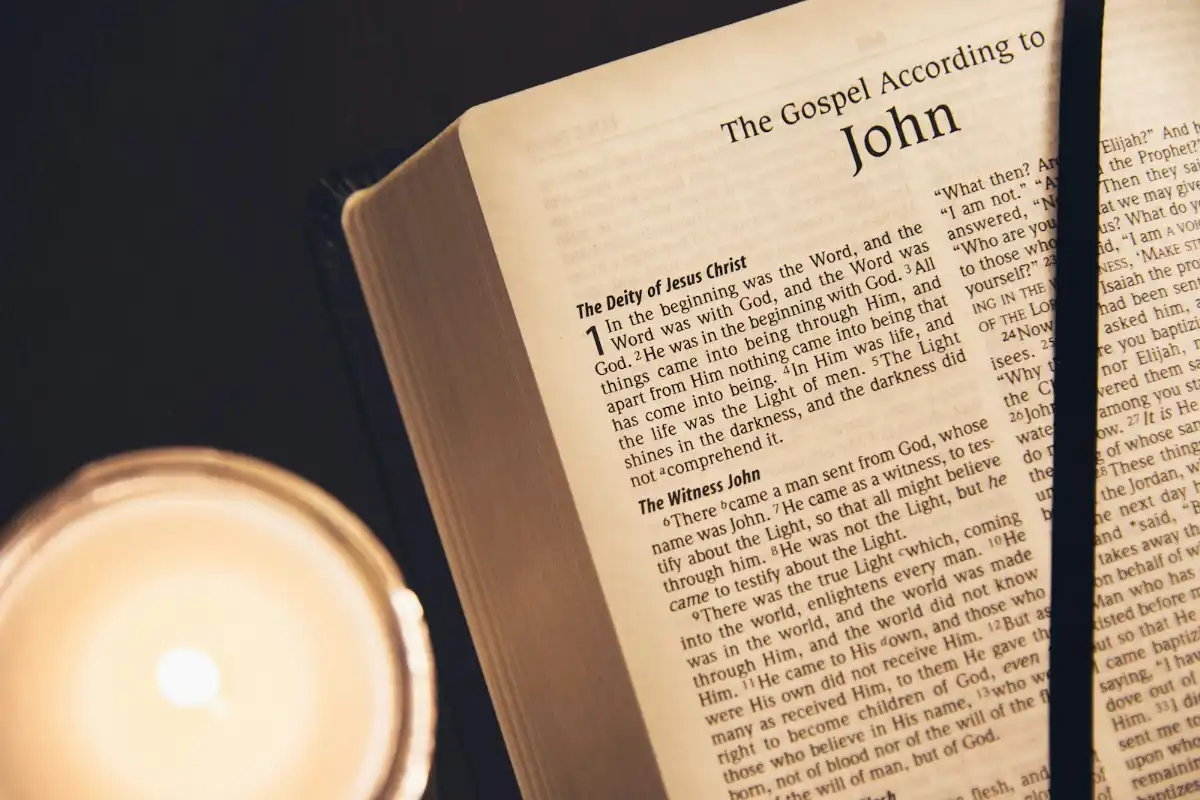
Each verse below is quoted from the King James Version and helps explain the don’t argue with a fool bible verse teaching.
Answer not a fool according to his folly, lest thou also be like unto him.
Proverbs 26:4 (KJV)
The first half of the famous pair behind the don’t argue with a fool bible verse. Matching a foolish person’s tone, volume or tactics drags you down to the same level. The warning is less about silence and more about refusing to adopt the other person’s manner of arguing.
Answer a fool according to his folly, lest he be wise in his own conceit.
Proverbs 26:5 (KJV)
The second half completes the thought, and it shows the don’t argue with a fool bible verse is not the whole story. Sometimes a foolish claim needs a calm, fitting reply so that it does not stand unchallenged and puff up the speaker. Wisdom decides which verse the moment calls for.
He that reproveth a scorner getteth to himself shame: and he that rebuketh a wicked man getteth himself a blot.
Proverbs 9:7 (KJV)
Correction offered to someone who mocks every correction often returns as insult. The don’t argue with a fool bible verse teaching does not forbid honesty; it warns that a hardened scorner may turn your good intention into a fresh wound for you.
Reprove not a scorner, lest he hate thee: rebuke a wise man, and he will love thee.
Proverbs 9:8 (KJV)
A useful test, for any don’t argue with a fool bible verse, of who you are speaking to. The wise person welcomes correction and grows closer to the one who gave it, while the scorner reacts with resentment. Knowing the difference saves a great deal of wasted effort.
Go from the presence of a foolish man, when thou perceivest not in him the lips of knowledge.
Proverbs 14:7 (KJV)
In the don’t argue with a fool bible verse teaching, the wise move is simply to leave. If a conversation offers no listening, no learning and no knowledge, stepping away is not defeat; it is a sensible use of the time and strength God has given you.
The beginning of strife is as when one letteth out water: therefore leave off contention, before it be meddled with.
Proverbs 17:14 (KJV)
The don’t argue with a fool bible verse teaching pictures it: a small crack in a dam becomes a flood. Quarrels grow the same way, so stopping early is far easier than repairing the damage later. Walk away while the argument is still small enough to stop.
If a wise man contendeth with a foolish man, whether he rage or laugh, there is no rest.
Proverbs 29:9 (KJV)
Whether the other person explodes or shrugs it off with a joke, the wise person finds no peace in the exchange. The don’t argue with a fool bible verse teaching honestly admits that some debates simply cannot be won or settled by cleverness.
But foolish and unlearned questions avoid, knowing that they do gender strifes.
2 Timothy 2:23 (KJV)
In the don’t argue with a fool bible verse teaching, Paul tells Timothy to steer clear of questions asked only to provoke. They do not seek truth, they only breed quarrels. Discerning the motive behind a question is part of ministering well.
And the servant of the Lord must not strive; but be gentle unto all men, apt to teach, patient,
2 Timothy 2:24 (KJV)
The positive side of the don’t argue with a fool bible verse comes from Paul’s instruction. A believer is not meant to be silent or weak, but gentle, ready to teach and patient. Strength shows up as calm persistence rather than as winning an argument.
But avoid foolish questions, and genealogies, and contentions, and strivings about the law; for they are unprofitable and vain.
Titus 3:9 (KJV)
In the don’t argue with a fool bible verse teaching, Paul lists several kinds of fruitless debate and calls them unprofitable and vain. The test is usefulness: does this conversation build faith, truth and love, or only feed pride and endless dispute?
A soft answer turneth away wrath: but grievous words stir up anger.
Proverbs 15:1 (KJV)
Gentleness is a practical tool in the don’t argue with a fool bible verse, not mere politeness. A calm reply lowers the temperature of a heated exchange, while harsh words pour fuel on it. Many arguments end the moment one side softens its tone.
A fool hath no delight in understanding, but that his heart may discover itself.
Proverbs 18:2 (KJV)
Here is why the don’t argue with a fool bible verse matters, since some arguments never move forward: the foolish person wants to be heard, not to learn. When someone only wants to display opinions, no amount of reasoning will satisfy them.
The way of a fool is right in his own eyes: but he that hearkeneth unto counsel is wise.
Proverbs 12:15 (KJV)
The don’t argue with a fool bible verse teaching says certainty without counsel is the mark of foolishness. The wise listen, weigh advice and stay teachable. It is also a mirror, reminding every reader to ask whether they listen as well as they speak.
Speak not in the ears of a fool: for he will despise the wisdom of thy words.
Proverbs 23:9 (KJV)
Not every audience is ready for wisdom. The don’t argue with a fool bible verse teaching gives you permission to stop pouring good words into a closed ear, and to keep your best counsel for people who are willing to receive it.
It is an honour for a man to cease from strife: but every fool will be meddling.
Proverbs 20:3 (KJV)
The don’t argue with a fool bible verse teaching redefines honour. Backing out of a fight is not cowardice but dignity, while the urge to keep meddling and stirring things up reveals immaturity. Peace is a mark of strength.
He that passeth by, and meddleth with strife belonging not to him, is like one that taketh a dog by the ears.
Proverbs 26:17 (KJV)
The don’t argue with a fool bible verse teaching warns that stepping into a quarrel that is not yours is as risky as grabbing a dog by the ears. Before joining any online or family dispute, ask whether it truly concerns you or whether it is better left alone.
If it be possible, as much as lieth in you, live peaceably with all men.
Romans 12:18 (KJV)
Paul is realistic: peace takes two people, so you are responsible only for your side of it. The don’t argue with a fool bible verse teaching gives a healthy limit, doing everything in your power without carrying what only the other person can do.
Even a fool, when he holdeth his peace, is counted wise: and he that shutteth his lips is esteemed a man of understanding.
Proverbs 17:28 (KJV)
Silence can cover a lot. The don’t argue with a fool bible verse teaching shows how restraint earns respect, and it quietly reminds the reader that holding the tongue is one of the simplest ways to avoid being drawn into needless disputes.
Wherefore, my beloved brethren, let every man be swift to hear, slow to speak, slow to wrath:
James 1:19 (KJV)
A short rule from the don’t argue with a fool bible verse for every conversation. Listening first sets the stage for wise answers, and slowing down before speaking or reacting keeps anger from steering. It applies equally to the wise and the foolish.
A wrathful man stirreth up strife: but he that is slow to anger appeaseth strife.
Proverbs 15:18 (KJV)
Temperament matters in conflict. An angry person creates strife wherever he goes, while a patient person settles it. Becoming slow to anger is one of the surest ways to live out the don’t argue with a fool bible verse.
When people search for the don’t argue with a fool bible verse, they are usually thinking of Proverbs 26:4, which says in the King James Version, Answer not a fool according to his folly, lest thou also be like unto him. The instruction sounds simple: do not wade into a pointless fight, because you will end up behaving as badly as the person you are arguing with.
Yet the Bible does not rest on that single line. The very next verse, Proverbs 26:5, says to answer a fool according to his folly. Readers rightly ask how both can be true, and the answer is part of what makes the don’t argue with a fool bible verse so rewarding to study. It shows that Scripture treats wisdom as discernment, not as a rule you apply mechanically.
This page looks at the whole picture: the paired proverbs, the supporting verses in Proverbs 9, 14, 17 and 29, and the New Testament advice in 2 Timothy and Titus. By the end you should have a clear, kind and practical approach to quarrels, one that protects your peace without turning you into a person who never speaks the truth.
Proverbs 26 opens a long run of sayings about fools, sluggards and troublemakers. The chapter is full of vivid images: snow in summer, a dog returning to what it has thrown up, a person who grabs a stray dog by the ears. Verses 4 and 5, the heart of the don’t argue with a fool bible verse, sit near the start of that section and set the tone, because they introduce the problem of how to respond to someone who refuses wisdom.
Proverbs is a collection of short sayings, not a single legal code. Each proverb captures one truth about life and is meant to be read alongside others. A saying about silence can stand next to one about speaking up, because real life asks for both at different times, and the writer expects the reader to grow wise enough to choose.
Seeing that setting helps with the don’t argue with a fool bible verse. The two lines are not a contradiction that slipped past an editor. They are deliberately placed side by side, one right after the other, so that the reader has to stop and think rather than apply a slogan.
Read quickly, the two verses look like opposites. Verse 4 says do not answer a fool according to his folly, and verse 5 says to do exactly that. Skeptics sometimes point to the don’t argue with a fool bible verse as an error, while many believers simply skip over the puzzle without trying to solve it.
A closer look shows the verses give different reasons. Verse 4 warns of a danger to you: if you answer in kind, you become like him. Verse 5 warns of a danger to him: if nobody ever answers, he may grow wise in his own conceit. Each verse protects something different, so both can be true in different moments.
That is the heart of the don’t argue with a fool bible verse puzzle. The Bible is not handing you a single instruction, it is teaching you to ask two questions before you reply. Will my answer make me worse? Will silence make him worse? Wisdom weighs both and then picks the response that does the most good.
One helpful way to read the pair is that the phrase according to his folly carries two meanings. In verse 4 it means in the same spirit, with the same insults, tricks and rage. In verse 5 it means in a way that fits the foolish claim, exposing its weakness with a calm, well-aimed reply. The wording is the same, but the manner differs.
Seen this way, the verses behind the don’t argue with a fool bible verse can work together rather than cancel out. Refuse to copy a foolish person’s style, yet be willing to answer the substance when the claim is dangerous or misleading. You can correct a false statement without shouting, mocking or hitting back with sarcasm, and that approach honors both verses at once.
Another reading treats them as situation-based advice: stay quiet when engagement would only escalate, speak when silence would allow harm to spread. Either way, the don’t argue with a fool bible verse is training you to look at the person, the setting and the stakes before you decide. That is precisely what the book of Proverbs says wisdom is for.
Biblical foolishness is not about low intelligence. In Proverbs a fool is someone who rejects instruction, trusts only his own judgment and does not fear the Lord. Proverbs 12:15 says the way of a fool is right in his own eyes, and Proverbs 18:2 says he takes no delight in understanding but only in airing his own heart.
That definition matters because it protects us from misusing the don’t argue with a fool bible verse. We should not label someone a fool just because they disagree with us, hold a different view or ask honest questions. The word describes a settled pattern of refusing correction, not a single disagreement or an unpopular opinion.
It also reminds us to apply the verse with humility. The Bible never uses the word to give us a way to dismiss people we find annoying. Anyone can act foolishly on a given day, including the reader, so the don’t argue with a fool bible verse is better used as a mirror for ourselves first and as a guide for hard conversations second.
Proverbs 9:7 says that whoever reproves a scorner gets shame for himself, and whoever rebukes a wicked man gets a blot. Verse 8 adds, Reprove not a scorner, lest he hate thee: rebuke a wise man, and he will love thee. These verses add another layer to the don’t argue with a fool bible verse because they describe what happens when you correct someone who does not want to be corrected.
The scorner, a key figure in the don’t argue with a fool bible verse, treats every correction as an attack. Instead of weighing your words, he turns them into a grievance and turns on you. That does not mean the correction was wrong; it means the listener was not ready, and your effort cost you more than it gained.
The second half of verse 8 is a gift, though. A wise person loves the one who corrects him. So if you are unsure whether a conversation is worth having, watch how the other person responds to gentle honesty. A warm response says keep talking, and a hostile one may say it is time to stop.
Proverbs 14:7 says, Go from the presence of a foolish man, when thou perceivest not in him the lips of knowledge. It is one of the plainest commands in the whole don’t argue with a fool bible verse discussion. When you notice that someone offers no knowledge and no willingness to learn, the wise thing to do is simply leave.
Walking away is often misunderstood as weakness. In practice it takes more self-control to leave a fruitless debate than to stay and win the last word. Leaving signals that your peace is not for sale and that you will not hand your attention to a conversation that cannot bear fruit.
This is the most practical application of the don’t argue with a fool bible verse. You can step out of a heated comment thread, change the subject at a family meal, or politely end a phone call. The verse does not ask for rudeness, only for the quiet courage to say, I will leave this here, and then actually do so.
Proverbs 17:14 says the beginning of strife is as when one letteth out water, and so we should leave off contention before it be meddled with. Picture a small leak in a wall of earth. At the start a single hand could stop it, but a few minutes later the whole thing is rushing out and nothing can hold it back.
Arguments follow the same path, which is why the don’t argue with a fool bible verse stresses stopping early. One sharp comment, one unkind reply, one sarcastic remark, and suddenly two people are reciting old grievances. The proverb teaches that the best time to end a quarrel is at the very beginning, before pride and emotion take over and make peace much harder to reach.
For anyone applying the don’t argue with a fool bible verse, this is a very kind rule. You do not need to wait until you are exhausted or hurt. Notice the first sign of heat, take a breath, and stop. A single decision to pause may save a friendship, a marriage or a working relationship from days of regret.
Proverbs 29:9 reads, If a wise man contendeth with a foolish man, whether he rage or laugh, there is no rest. The writer admits something many of us have felt: some conversations leave you more tired than when you started, no matter how well you argue.
Notice that the don’t argue with a fool bible verse teaching names two reactions. The fool may rage, which makes the exchange stormy, or he may laugh, which makes it feel pointless. Either way the wise person gets no resolution. Your calm explanation does not land, your evidence is brushed aside, and you walk away with nothing settled.
That honesty is comforting. If you have ever felt guilty for failing to convince a stubborn person, this verse says the failure may not be yours. The don’t argue with a fool bible verse is partly a permission slip to stop carrying a burden that God never asked you to carry, and to rest instead.
In 2 Timothy 2:23-24 Paul writes, But foolish and unlearned questions avoid, knowing that they do gender strifes. And the servant of the Lord must not strive; but be gentle unto all men, apt to teach, patient. The New Testament thus echoes the Old Testament teaching about avoiding fruitless arguments.
In the don’t argue with a fool bible verse teaching, Paul does not tell Timothy to stop teaching. He tells him to be apt to teach, which means ready and skillful. What Timothy must avoid is the kind of question that is asked only to start a fight, because those questions give birth to strife rather than understanding.
This gives the don’t argue with a fool bible verse a gentle New Testament shape. A Christian’s calling is to be gentle to everyone, patient with opponents and ready to share the truth. You can read more about this spirit in our collection of Bible verses about gentleness.
Titus 3:9 says to avoid foolish questions, genealogies, contentions and strivings about the law, for they are unprofitable and vain. Paul gives a very practical test: is this conversation profitable? If an argument cannot build faith, truth or love, then it is a distraction, no matter how clever it feels.
Many believers who ignore the don’t argue with a fool bible verse have spent years in debates that never changed a single mind. The word vain means empty, and the verse invites us to measure our time. We are allowed to ask whether a particular conversation is likely to help anyone, and to decline the ones that clearly will not.
This is not an excuse to avoid every hard topic. Some doctrinal questions matter greatly, and Paul himself debated them. The point of the don’t argue with a fool bible verse and of Titus 3:9 is to separate the discussions that serve people from the ones that serve only pride. You can pair this with our page on Bible verses about wisdom.
Few places test the don’t argue with a fool bible verse like social media. Comment sections reward quick replies, sharp lines and public victories, all things the don’t argue with a fool bible verse cautions against. People can say things they would never say face to face, and strangers can pull you into disputes within seconds.
The Bible’s counsel is surprisingly modern here. Proverbs 26:17 compares meddling in a quarrel that is not yours to grabbing a dog by the ears. Proverbs 17:14 says to stop before strife spreads. Both verses suggest that you do not have to answer every post, correct every error or defend every opinion in public.
A good habit is to wait before you reply. Ask whether the person is likely to listen, whether your answer will help anyone reading, and whether you can speak without contempt. If not, closing the app is a faithful response. Our page on the power of the tongue pairs well with this thought, since typed words carry the same weight as spoken ones.
Silence is not always the answer in the don’t argue with a fool bible verse, and the second half of the pair in Proverbs 26:5 makes that clear. If a foolish claim could mislead others, harm someone or leave the speaker believing he has won, a short, calm correction may be the loving thing to do. Silence in front of real harm can become cowardice.
On the other hand, silence is often the better choice when the person is angry, when the audience is only there to watch a fight, or when you are tempted to answer out of wounded pride. Proverbs 17:28 notes that even a fool, when he holdeth his peace, is counted wise, which shows how much good quiet can do.
A simple test can help with the don’t argue with a fool bible verse: am I answering for their good, for the good of others, or for my own ego? If the honest answer is the last one, stop. If the first two are true, speak briefly, kindly and clearly, and then let the matter rest without needing the final word.
If you decide to respond, the goal is to follow Proverbs 26:5 without breaking Proverbs 26:4. To follow the don’t argue with a fool bible verse well, keep your reply short and calm. Address the claim rather than the person. Avoid sarcasm, name-calling and exaggeration, because those are exactly the habits that make you like the person you are answering.
Proverbs 15:1 gives the method: a soft answer turneth away wrath. You can state your view plainly, such as saying that you see it differently and explaining why in a sentence or two, without raising the temperature. If the other person escalates, you can stop and say you will leave it there, which keeps your dignity intact.
This approach honors the don’t argue with a fool bible verse in both directions. You are not silent when truth is needed, and you are not drawn into a screaming match. People who watch you may not agree with you, but they will see a steadiness that is far more persuasive than a clever comeback.
The hardest arguments are the ones we cannot simply leave: with a parent, a spouse, a coworker or a fellow church member. Walking out of a relationship is not realistic, so the don’t argue with a fool bible verse must be applied with more care. Here the aim of the don’t argue with a fool bible verse is to avoid the specific fight, not the person.
You can set limits kindly. Say that you would like to talk about it later when you both feel calmer, change the subject to something shared, or agree to disagree on one issue while staying close on others. Romans 12:18 gives the guiding principle, which is to live peaceably with all men as much as lieth in you.
For disputes that truly need solving, such as money, parenting or conflict in a congregation, Scripture also asks for honest reconciliation in good time. Our page on Bible verses about conflict resolution offers steps for that harder, patient work.
Following the don’t argue with a fool bible verse and leaving an argument does not automatically leave it behind. Many of us walk away and then replay the conversation for hours, rehearsing better replies and feeling the sting again. The don’t argue with a fool bible verse is only half-lived if the quarrel keeps arguing inside your head.
Take the unfinished conversation to God. Pray briefly about what was said, ask for peace and then choose a small, concrete activity such as a walk, a chore or a few verses of a psalm. Proverbs 29:9 says there is no rest in this kind of contention, and prayer is where rest is found again.
It also helps to guard against bitterness. You may feel you were treated unfairly, and perhaps you were. Forgiveness does not mean the other person was right, only that you will not carry the offense. Our collection of Bible verses about anger offers further help with that struggle.
The Bible never ends its advice about fools, including the don’t argue with a fool bible verse, with a simple instruction to withdraw. It also describes the character we should bring into every difficult exchange. Proverbs 15:1 praises the soft answer, and 2 Timothy 2:24 calls the servant of the Lord gentle, apt to teach and patient. These are the qualities that make any dispute healthier.
Gentleness is sometimes mistaken for weakness, but it takes real strength to stay calm when provoked. Jesus himself answered some questions, remained silent at others and spoke plainly when it mattered. His example shows that gentleness is compatible with truth and that both belong in the don’t argue with a fool bible verse.
Practice small acts of gentleness each day: lowering your voice, pausing before you reply, using kind words with strangers. Over time these habits make it much easier to avoid the argument that would have pulled you down, because your heart is already accustomed to peace.
A sincere reader of the don’t argue with a fool bible verse eventually has to turn the question around. Proverbs 12:15 says the fool considers his way right, and that description may sometimes fit us. If everyone around you seems to be wrong and you cannot hear any criticism, it may be wise to ask whether the pattern starts with you.
A good test is how you receive correction. Proverbs 9:8 says the wise man loves the one who rebukes him. Can you thank a friend who points out a flaw? Do you listen to counsel before making a decision? These habits show whether you are more teachable than defensive.
Humility turns the don’t argue with a fool bible verse from a weapon into a tool for growth. When you notice the same conflict following you from place to place, treat it as a reason to pray, listen and ask a trusted believer for honest feedback. Our page on Bible verses about humility is a good place to begin.
Applying the don’t argue with a fool bible verse and walking away from an argument does not mean giving up on the person. Some people will not change because of anything we say, but God can reach them in ways we cannot. Prayer is how we release the burden of persuading them and place it in hands far more capable than ours.
You can pray simply: ask that God would give them understanding, soften their heart, and send someone else who may be better placed to speak. Ask also for patience and love for yourself. Jesus taught his followers to pray for those who treat them unkindly, and that teaching fits naturally with the don’t argue with a fool bible verse.
Over time this changes your attitude. Instead of seeing the person as an opponent to be defeated, you see someone God loves who is still on a journey. That shift in perspective keeps you free from contempt, which is the real danger lurking behind every careful use of the word fool.
Putting the don’t argue with a fool bible verse into practice begins with small decisions. Before replying to a heated message, wait ten minutes. Before correcting someone, ask whether they want to hear it. Before joining a dispute, ask whether it concerns you at all. Each pause is a quiet act of obedience to Proverbs 17:14 and Proverbs 20:3.
Build a simple routine: be swift to hear and slow to speak, as James 1:19 says, answer with a soft voice, choose your moments carefully and let go of conversations that bear no fruit. When you must speak, do so briefly and clearly, then leave the results to God.
The don’t argue with a fool bible verse ultimately points to a peaceful life. It teaches us that wisdom is not about winning every debate but about guarding our hearts, loving people and knowing when words help. Keep these verses close, and you will find that many conflicts lose their grip on you long before they begin.
If this page on the don’t argue with a fool bible verse was helpful, these related collections make a good next step: Bible verses about wisdom, Bible verses for wisdom, Bible verses about conflict resolution, Bible verses about patience, Bible verses about gentleness, Bible verses about anger, Bible verses about humility, Bible verses about peace, Bible verses from Proverbs, Blessed are the peacemakers Bible verse, Bible verses about wisdom and understanding.
To study these verses in more depth, try Bible Gateway, Bible Hub, Bible Study Tools, Blue Letter Bible.
The best-known text behind the don’t argue with a fool bible verse is Proverbs 26:4, which says Answer not a fool according to his folly, lest thou also be like unto him. Related teaching appears in Proverbs 14:7, 17:14 and 29:9, as well as 2 Timothy 2:23-24 and Titus 3:9, all of which advise avoiding fruitless quarrels.
Verse 5 gives the other side of the don’t argue with a fool bible verse: answer a fool according to his folly, lest he be wise in his own conceit. The two verses protect different things. One protects you from stooping to his level, and the other protects him from believing his folly is unchallenged. Wisdom decides which applies.
No. In the don’t argue with a fool bible verse, the Bible defines a fool as someone who rejects instruction and trusts only his own judgment, not simply someone with a different opinion. Honest disagreement and sincere questions deserve patient, gentle answers. The verses apply to settled patterns of scorn and quarrelling, and we should use them carefully.
In the don’t argue with a fool bible verse tradition, Paul tells Timothy to avoid foolish and unlearned questions that breed strife and says the Lord’s servant must not strive but be gentle, apt to teach and patient. The focus is on motive: refuse questions asked to provoke, and meet everyone with calm, teachable kindness.
To apply the don’t argue with a fool bible verse, treat the first sign of heat in a conversation as a signal to stop. Pause, lower your voice, change the subject or step away before strife spreads like released water. Ending a quarrel early is far easier than repairing the damage later, and it protects your relationships and your peace.
Not according to the don’t argue with a fool bible verse or the wider Scripture. Proverbs 20:3 says it is an honour for a man to cease from strife, and Proverbs 14:7 advises leaving the presence of a foolish man. Leaving takes self-control, and it can be an act of wisdom, humility and care for your own spiritual health.