
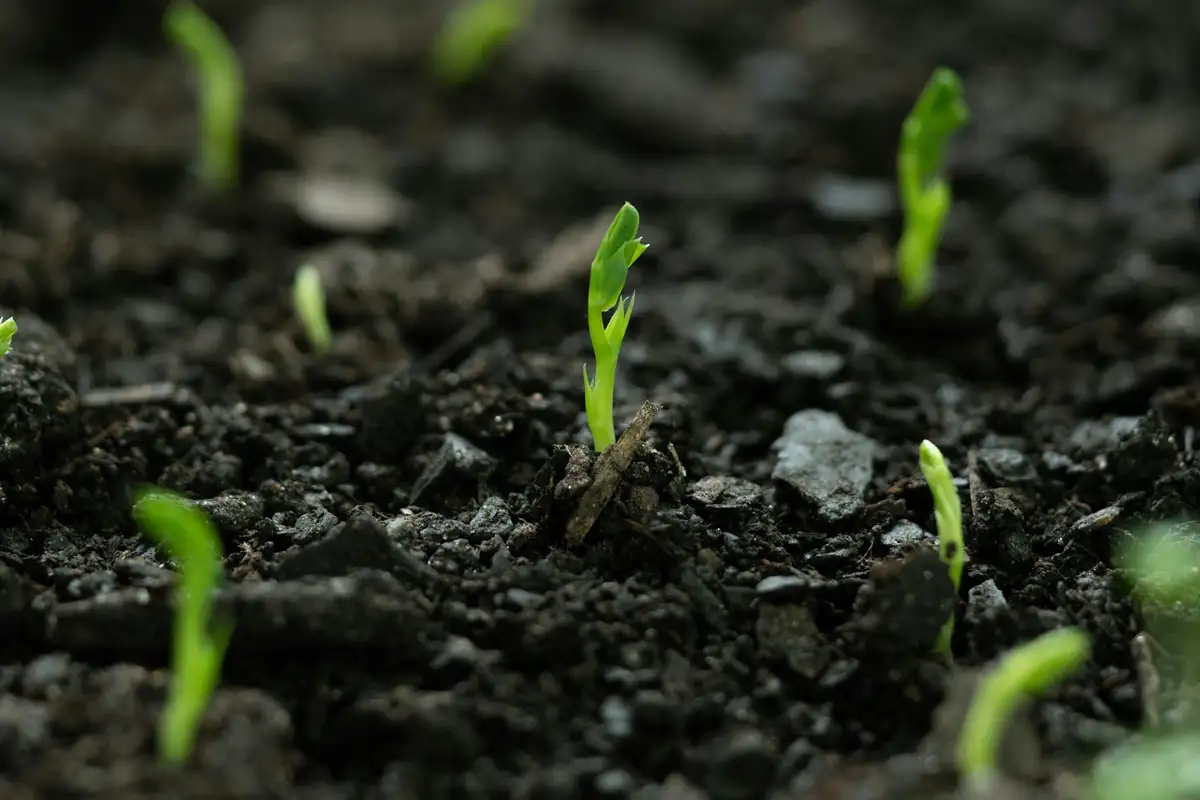
Every grow in grace Bible verse below is quoted word for word from the King James Version, with the book, chapter and verse beneath it.
But grow in grace, and in the knowledge of our Lord and Saviour Jesus Christ. To him be glory both now and for ever. Amen.
2 Peter 3:18 (KJV)
This is the grow in grace Bible verse itself, and it comes as Peter’s closing line. He pairs grace with knowledge of Christ, which means growth is a relationship deepening, not a skill being collected.
For by grace are ye saved through faith; and that not of yourselves: it is the gift of God:
Ephesians 2:8 (KJV)
Before asking anyone to grow, Scripture says where the starting point lies. Growth that follows this grow in grace Bible verse begins from a gift already received, so there is nothing to earn.
And he said unto me, My grace is sufficient for thee: for my strength is made perfect in weakness. Most gladly therefore will I rather glory in my infirmities, that the power of Christ may rest upon me.
2 Corinthians 12:9 (KJV)
Paul had prayed three times for a thorn to be removed. The answer was grace instead, and he learned that weakness is often exactly where growth in grace is clearest.
And of his fulness have all we received, and grace for grace.
John 1:16 (KJV)
Grace for grace carries the sense of one wave replacing another on a shore. It is a grow in grace Bible verse that says there is always more coming, and what we receive today does not use up tomorrow’s supply.
Let us therefore come boldly unto the throne of grace, that we may obtain mercy, and find grace to help in time of need.
Hebrews 4:16 (KJV)
Growth needs a place to go when we fail, and this verse names it. The throne of grace is where struggling people are welcomed boldly, not where they are scolded.
Moreover the law entered, that the offence might abound. But where sin abounded, grace did much more abound:
Romans 5:20 (KJV)
Paul is not praising sin but marveling at grace. The picture is of a flood met by a bigger ocean, which is why this grow in grace Bible verse comforts those who feel their failures are too large.
Let your speech be alway with grace, seasoned with salt, that ye may know how ye ought to answer every man.
Colossians 4:6 (KJV)
Grace is not only a belief but a tone of voice. Seasoned with salt suggests speech that is both kind and flavorful, honest without being harsh, and it is a very practical place to grow.
But speaking the truth in love, may grow up into him in all things, which is the head, even Christ:
Ephesians 4:15 (KJV)
Growing up in Christ includes learning to tell the truth lovingly. This grow in grace Bible verse shows that maturity is relational, and that we grow best in the company of others.
As newborn babes, desire the sincere milk of the word, that ye may grow thereby:
1 Peter 2:2 (KJV)
Peter uses the picture of a hungry baby. A baby does not decide to grow; it simply feeds, and growth follows. Regular, hungry reading of Scripture is the simplest form of growing in grace.
And Jesus increased in wisdom and stature, and in favour with God and man.
Luke 2:52 (KJV)
Even Jesus grew, according to Luke. This quiet line gives dignity to every ordinary stage of life and reminds us that steady, unremarkable progress is part of God’s design.
Being confident of this very thing, that he which hath begun a good work in you will perform it until the day of Jesus Christ:
Philippians 1:6 (KJV)
A promise for those discouraged by slow progress. The one who began the work is the one who finishes it, and that turns the grow in grace Bible verse from a demand into a confidence.
That ye might walk worthy of the Lord unto all pleasing, being fruitful in every good work, and increasing in the knowledge of God;
Colossians 1:10 (KJV)
Paul prays that fruitfulness and knowledge increase together. The grow in grace Bible verse here is not about effort alone; it joins good work to a deepening knowledge of God.
I am the vine, ye are the branches: He that abideth in me, and I in him, the same bringeth forth much fruit: for without me ye can do nothing.
John 15:5 (KJV)
Branches do not strain to produce grapes; they stay attached. Jesus teaches that growth is mostly a matter of abiding, and everything else flows from staying connected to him.
But the fruit of the Spirit is love, joy, peace, longsuffering, gentleness, goodness, faith,
Galatians 5:22 (KJV)
The list is called fruit, singular, not a collection of achievements. Each quality grows from the Spirit’s work, and a grow in grace Bible verse like this describes what that growth looks like in daily life.
And be not conformed to this world: but be ye transformed by the renewing of your mind, that ye may prove what is that good, and acceptable, and perfect, will of God.
Romans 12:2 (KJV)
Transformation is a slow reshaping of thought. Growing in grace includes learning to see things differently, one renewed habit of mind at a time.
For the grace of God that bringeth salvation hath appeared to all men,
Titus 2:11 (KJV)
Grace is described as having appeared, like a sunrise. The grow in grace Bible verse of Peter rests on this fact: grace is not hidden or rationed, but visible to everyone.
Thou therefore, my son, be strong in the grace that is in Christ Jesus.
2 Timothy 2:1 (KJV)
Timothy was young and perhaps timid, and Paul tells him to be strong in grace, not in himself. The strength is borrowed from Christ, which makes this a tender grow in grace Bible verse for anyone who feels too weak for the task.
Second Peter is the last letter we have from a man who once sank in the waves, denied his friend three times and later led thousands. He wrote it knowing, as he says in chapter one, that his time in the body was nearly over. The grow in grace Bible verse is his final line, and last lines are chosen with care.
Think about what a person says when they have only a little time left. They do not repeat trivia. They give the thing that matters most. For Peter, that meant a short instruction to keep growing, and a blessing: to him be glory both now and for ever.
That context gives the grow in grace Bible verse a gentle weight. It is not a pressure from a stern teacher but the parting counsel of an older friend who has fallen, been forgiven, and grown slowly himself. He knows exactly how long that road is.
The word grace in the New Testament means favour that is not earned. It is the Greek charis, related to the word for gift. Before the grow in grace Bible verse asks for anything, it assumes you already stand in this favour, and the reason is Christ, not your record.
This matters because many sincere people misread the grow in grace Bible verse. They hear grow and picture a scoreboard of better behavior. Peter has something else in mind: living more deeply in what has already been given, the way a person grows into a house that has been left to them.
If you are unsure where you stand, Ephesians 2:8 is the foundation: saved by grace through faith, the gift of God. Everything else on this page sits on top of that sentence. Without it, growth turns to striving, and striving turns to exhaustion.
Peter does not say grow in grace alone. He adds and in the knowledge of our Lord and Saviour Jesus Christ. The two go hand in hand. A grow in grace Bible verse that left out knowledge could drift into sentiment, and knowledge without grace could harden into pride.
Knowing Christ here is personal, not only informational. It is the kind of knowing a person has of a friend, built through time spent together, stories shared and trust tested. The Gospels are the place to meet him again and again, and prayer is the conversation that follows.
When the two are balanced, something quiet happens. The more you know of Jesus, the more his kindness shapes you, and the more you taste that kindness, the more you want to know him. It becomes a loop that gently draws a person upward over the years.
Growth is a word from gardens and nurseries, not factories. You cannot force a seed to sprout by shouting at it. You can only provide water, light and soil, and wait. The grow in grace Bible verse is picking this image on purpose, and it changes how we think about the Christian life.
It means progress under the grow in grace Bible verse will often be slow, hidden and uneven. A tree adds rings in secret, season after season, and only later do we notice that it has become tall. Peter wants his readers to be patient with this process, in themselves and in others.
It also means the grow in grace Bible verse describes something natural to a healthy believer. A living thing that does not grow is a sign that something is wrong. The question is not whether to grow, but what may be blocking the light or the water, and that is a gentler place to start.
John 15 gives the best commentary on Peter’s instruction. Jesus calls himself the vine and his followers the branches, and says that the branch cannot bear fruit unless it abides. The grow in grace Bible verse and the vine passage together say that growth is mostly staying attached.
A branch does not strain or compete. It stays connected and the life of the vine flows into it. In practice, abiding looks like regular prayer, time in Scripture, honest confession and the company of other believers, none of them dramatic but all of them life-bearing.
Jesus also mentions pruning, which hurts. Some seasons of growth feel like loss as God removes things that were taking resources from the real fruit. If you are in such a season, the vine passage is a reminder that the gardener knows what he is doing.
Peter used another picture earlier in his first letter: newborn babes desiring milk. A baby does not read about nutrition; it simply wants to be fed. Appetite is the sign of health, and a lack of appetite is the first sign that something needs attention.
Applying this to the grow in grace Bible verse, we can ask a simple question: do I want to hear from God? If the honest answer is not much, that is not a cause for shame but an invitation to ask for hunger. A prayer as small as God, make me want you more is often answered.
Then give your hunger for the grow in grace Bible verse something to eat. A short passage each morning, repeated through the day, can feed a person for years. Many readers find that reading one Gospel slowly, a paragraph at a time, produces more growth than racing through many books.
Paul’s experience in 2 Corinthians 12 turns our assumptions upside down. He asks God three times to remove a painful thorn, and the answer is, my grace is sufficient for thee. The thorn stays, and Paul reports that he came to boast in his weaknesses.
Here a grow in grace Bible verse comes into focus from the opposite direction. Growth is not escaping weakness but discovering that grace meets us in it. People who have walked through illness, failure or grief often describe this: the harder season taught them things the easy years could not.
Reading this as a grow in grace Bible verse does not make pain good, and it does not call for cheerfulness on demand. It simply says that God does not waste what we carry, and that his strength finds room in our limits. For many, that is the first time grace feels real rather than theoretical.
John 1:16 says that of his fulness have all we received, and grace for grace. Scholars have noted that the phrase suggests one gift replacing another, like waves arriving without end. Growing in grace means joining that flow and trusting that new supply will come.
This grow in grace Bible verse is good news for the person who fears running out of patience, forgiveness or strength. The grow in grace Bible verse implies that the source is not your own storehouse. You draw from a fullness that is not diminished by drawing, and that frees you from the anxious rationing of your own resources.
Practically, when you live the grow in grace Bible verse, ask for grace for the specific task in front of you. Grace for the difficult conversation, grace for the long commute, grace for the child who tests you. The prayer need not be elaborate, but it should be specific, because the answer usually arrives in the same shape.
Hebrews 4:16 may be the most practical companion to the grow in grace Bible verse on this page for the days you stumble. It invites us to come boldly to the throne of grace, to obtain mercy and find grace to help in time of need. The word boldly is surprising, given that we have usually just failed.
The grow in grace Bible verse works best alongside this invitation. A person who hides after failure stops growing, while a person who returns quickly keeps growing. The speed of your return matters more than the size of your mistake.
So when you have lost your temper, said something you regret or ignored a prompting, go directly to prayer. Tell the truth, ask for mercy, and take the grace offered. Then take the next small step, whether that is an apology to someone or simply a fresh start tomorrow morning.
Romans 5:20 can sound like a riddle: the law entered that the offence might abound, but where sin abounded, grace did much more abound. Paul is not saying sin is good. He is saying that no pile of failure is bigger than the mercy of God.
For people who carry deep regret, this is where the grow in grace Bible verse becomes almost unbearably hopeful. Your past is not the ceiling of your future. Peter himself knew that: he failed publicly on the night of the arrest and was restored privately on a beach in Galilee.
That restoration is why his grow in grace Bible verse carries such weight. He is not writing from a position of unbroken success but from a place of having been lifted up. If grace could grow a man like Peter, it can grow you, however long you have been stuck.
Colossians 4:6 says to let your speech be alway with grace, seasoned with salt. It shows that growth in grace is not hidden in the heart but audible in the kitchen, the office and the group chat. Others can often tell where you are growing by how you speak.
A grow in grace Bible verse like this gives a real-world test. Do I answer a difficult person with patience? Do I pass along gossip or stop it? Do I give a straight answer with kindness? These small choices, repeated, shape a character far more than occasional big gestures.
Salt both preserves and flavors. Speech seasoned with salt is honest enough to be useful and kind enough to be heard. Growing in this takes a lifetime, and most of us are still learning, so there is room for patience with ourselves as we practice.
Ephesians 4:15 ties growth to community. We grow up into Christ by speaking the truth in love, which means we need other people who are close enough to say true things and loving enough to say them gently. Growth is rarely a solo project.
This is a challenge from the grow in grace Bible verse to believers who attend church but keep everyone at arm’s length. The grow in grace Bible verse invites us to find a few friends, a small group or a mentor with whom we can be honest. In these relationships, grace becomes visible and concrete.
It also asks us to offer the same. To grow in grace is to become someone who can receive correction without defensiveness, and give it without superiority. Those two skills, learned slowly, make a person a safe place for others.
Paul’s list in Galatians 5 is called the fruit of the Spirit, not the achievements of the believer. Love, joy, peace, longsuffering, gentleness, goodness and faith appear as results of the Spirit’s work. We cooperate, but we cannot manufacture them by willpower alone.
This is a freeing way to read the grow in grace Bible verse. If you are impatient, you do not need to grit your teeth harder; you need to ask for the Spirit’s work and place yourself in the soil where such fruit grows. Prayer, Scripture and fellowship are the soil.
Over years, people living the grow in grace Bible verse often notice these qualities appearing in places they did not plan. A man known for his temper finds he can wait. A worrier finds some peace. These changes are rarely sudden, but they are real, and they are what Peter hopes for.
Romans 12:2 speaks of transformation by the renewing of the mind. Much of the growth Peter describes happens here, in the quiet retraining of how we think about money, success, enemies and ourselves. This grow in grace Bible verse works on the inner map.
Renewal is slow, and so is any grow in grace Bible verse lived honestly, because habits of thought are old. A person who has believed for years that they are worthless does not shed the belief in a week. But each time they replace it with the truth that they are loved by God, the old path grows a little fainter.
One helpful practice is to write down a recurring negative thought and place beside it a verse that answers it. Read both aloud at the same time each day. Over several months, the second voice often becomes the louder.
Many sincere believers wonder whether they are making any progress at all. Philippians 1:6 meets them with a promise: he which hath begun a good work in you will perform it until the day of Jesus Christ. The work is God’s, and he finishes his projects.
The grow in grace Bible verse should be read in this light. It is not a pressure to perform, but an invitation to cooperate with a work already underway. Your task is to stay available, not to be flawless.
When discouragement comes, hold the grow in grace Bible verse and look back rather than forward. Compare who you are today with who you were five years ago. Often the changes are more significant than they seemed in the moment, and that gives courage to continue.
Practical habits are the garden tools of the grow in grace Bible verse. Start with a regular time of prayer and reading, even if only ten minutes. Add a short evening review in which you thank God for what went well and confess what did not.
To live the grow in grace Bible verse, join a community of believers where you are known, and serve in some small way. Giving time and attention to others turns grace outward and keeps it from becoming a private comfort. Include a sabbath rest each week, because growth needs rest as much as effort.
If you want more material for study, the pages on spiritual growth and God’s grace give additional verses on both themes. Together with this page they make a good starting library for a year of steady reading.
Children learn grace by experiencing it. A parent who forgives quickly, apologizes sincerely and shows patience teaches more than any lesson. The grow in grace Bible verse becomes believable when children see it lived in the house.
Read stories together, especially the Gospels, to make the grow in grace Bible verse concrete, and talk about what Jesus was like with people who got things wrong. Ask them what they think he would say. These conversations let children form their own picture of a gracious God.
Encourage small steps of growth rather than demanding perfection, and celebrate effort. A child who knows that mistakes are met with kindness will be more willing to try again, and that is the same pattern that Hebrews 4:16 offers to us.
One misunderstanding is that growth in grace means becoming less honest about sin. In fact, the grow in grace Bible verse deepens honesty, because a person who feels safe in grace can look at failure without terror. Confession becomes easier, not harder.
Another is that grace is a license to stay the same. Titus 2:11-12 explains that the grace of God teaches us to deny ungodliness. Grace is not a cover for apathy but the power that actually changes people from the inside.
A third misunderstanding is that everyone grows at the same pace. Scripture shows great variety: some bear thirty fold, some sixty, some a hundred. Comparing yourself to others is a distraction, and the Gardener is patient with each plant.
Some seasons look empty from the outside: a job search, a long illness, a stretch of unanswered prayer. The grow in grace Bible verse still applies, because roots grow in winter. Much of what God does in waiting is invisible until spring.
Use these times to deepen the habits behind the grow in grace Bible verse rather than chase results. Read slowly, pray honestly, and practice gratitude for small things. Many believers look back on such periods as the most formative of their lives, even though they felt like a delay.
Be kind to yourself. Waiting is hard, and growth in grace includes permission to be weak. As 2 Timothy 2:1 says, be strong in the grace that is in Christ Jesus, which means the strength is not your own to produce.
Luke gives a single line to the childhood of Jesus: he increased in wisdom and stature, and in favour with God and man. It is easy to skim past, yet it contains a quiet revelation. The Son of God did not arrive finished in every human sense; he lived through the slow stages of a life.
For anyone who reads the grow in grace Bible verse with a sense of falling behind, this matters. Growth is not a sign of defect. It is how human life works, and Jesus honored it by living it. Wisdom, body and relationships all expanded together, in the ordinary setting of a carpenter’s home.
It also gives dignity to the unremarkable years. Most of Jesus’ life, as far as we know, passed in small-town obscurity. If those years were part of God’s design, then our own quiet seasons of learning and working are not wasted either.
Paul prays for the Colossians that they might walk worthy of the Lord, being fruitful in every good work and increasing in the knowledge of God. It reads like a close cousin of the grow in grace Bible verse in Peter, and the pairing of work with knowledge is the same.
Fruitful does not mean busy. A person can be endlessly active and still produce little that nourishes anyone. Paul’s picture is of work that comes out of a growing relationship, so that deeds carry the character of the one they are done for.
A simple check is to ask whether your service leaves you more connected to God or more drained of him. If it is the latter, the issue may be not too little effort but too little abiding. Adjust the rhythm until the work and the knowing grow together.
Paul’s note to Timothy, be strong in the grace that is in Christ Jesus, is aimed at a young man prone to fear. Notice that Paul does not tell him to be strong in himself, or in his training, or in his mentor. The strength he is asked to find is located in grace.
The grow in grace Bible verse and this one together shape a healthy attitude toward our own limits. We are not asked to pretend we are strong. We are asked to lean on a strength that is available to the weak, and to let it do its quiet work.
If you are starting something frightening, such as a new role, a hard conversation or a calling you feel unready for, keep this line close. Say it before you begin, and then take one step at a time, trusting that the grace you need arrives with the step.
Peter’s last instruction is simple enough for a child and deep enough for a lifetime. Grow in grace, and in the knowledge of Christ. Seventeen passages on this page have shown what that means: receive, abide, confess, speak kindly, wait patiently, and trust that God finishes what he starts.
You do not need to do all of this at once. Pick one grow in grace Bible verse and one habit for this week. A grow in grace Bible verse that is lived in small ways will accomplish more than a long list of resolutions that are dropped by Friday.
And whenever you feel you are not growing, come boldly to the throne of grace and begin again. The invitation never expires, the supply never runs out, and the God who started the work is faithful to complete it. To him be glory, now and forever.
If you want to keep growing, these related pages carry the same theme further: Bible verses about God’s grace, spiritual growth in Scripture, growing in faith, verses about grace, verses to grow in faith, Bible verses about growth, change and growth, grace and forgiveness, faith in God, trusting God, growing in Scripture.
To study these verses in more depth, try Bible Gateway, Bible Hub, Bible Study Tools, Blue Letter Bible.
The grow in grace Bible verse is 2 Peter 3:18: But grow in grace, and in the knowledge of our Lord and Saviour Jesus Christ. It was written near the end of Peter’s life and invites believers into a lifelong deepening of their relationship with Christ.
To grow in grace is to become more and more shaped by God’s undeserved kindness, so that it changes how we think, speak and treat others. The grow in grace Bible verse links this growth with knowing Christ better, which happens through prayer, Scripture and community.
Start small: read a few verses, pray honestly, and look for one moment each day to extend patience or kindness to someone. The grow in grace Bible verse treats growth as steady and organic, so consistency matters far more than intensity.
No. God’s love is not increased by good behavior. The grow in grace Bible verse describes our deepening experience of a love already fully given. Ephesians 2:8 makes clear that grace is a gift, and growth is our response to it.
Peter wrote warning believers about false teachers. His final instruction is positive: stay rooted by growing. The grow in grace Bible verse is his answer to confusion, because a person growing in the knowledge of Christ is hard to blow off course.
Growth is often invisible from the inside, like a plant that seems unchanged day to day. Philippians 1:6 promises that God finishes what he starts. Keep returning to the grow in grace Bible verse, and look back over months, not days, to see the change.