
Bible Verses About Coming Home trace one of Scripture’s most tender themes, from exiles returning to their land to a lost son running back to his father’s arms. Home in the Bible is a place, but it is also a restored relationship with God and the promise of a lasting dwelling with him. These passages explore that longing and the welcome waiting at the end of it.
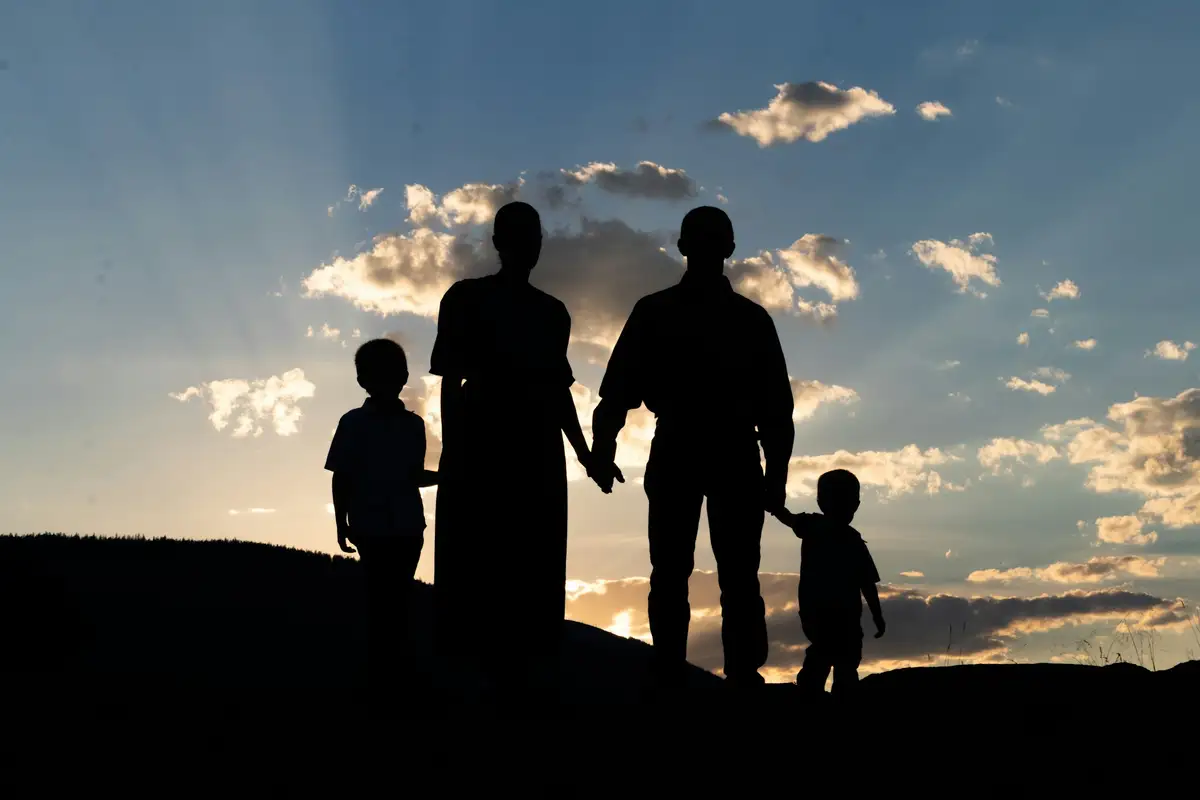
And when he came to himself, he said, How many hired servants of my father’s have bread enough and to spare, and I perish with hunger! I will arise and go to my father, and will say unto him, Father, I have sinned against heaven, and before thee, And am no more worthy to be called thy son: make me as one of thy hired servants. And he arose, and came to his father. But when he was yet a great way off, his father saw him, and had compassion, and ran, and fell on his neck, and kissed him.
Luke 15:17-20 (KJV)
The prodigal son comes to himself and heads home, while his father sees him far off and runs to meet him.
But the father said to his servants, Bring forth the best robe, and put it on him; and put a ring on his hand, and shoes on his feet: And bring hither the fatted calf, and kill it; and let us eat, and be merry: For this my son was dead, and is alive again; he was lost, and is found. And they began to be merry.
Luke 15:22-24 (KJV)
The father celebrates because his son was lost and is found, showing how gladly God welcomes the returning.
Let the wicked forsake his way, and the unrighteous man his thoughts: and let him return unto the Lord, and he will have mercy upon him; and to our God, for he will abundantly pardon.
Isaiah 55:7 (KJV)
God calls the wicked to forsake their ways and return, promising abundant pardon to all who come back.
Therefore also now, saith the Lord, turn ye even to me with all your heart, and with fasting, and with weeping, and with mourning: And rend your heart, and not your garments, and turn unto the Lord your God: for he is gracious and merciful, slow to anger, and of great kindness, and repenteth him of the evil.
Joel 2:12-13 (KJV)
The Lord invites his people to turn to him with all their heart, describing him as gracious and merciful.
O Israel, return unto the Lord thy God; for thou hast fallen by thine iniquity.
Hosea 14:1 (KJV)
Hosea calls Israel to return to the Lord, framing homecoming as a turning back to God.
And I will be found of you, saith the Lord: and I will turn away your captivity, and I will gather you from all the nations, and from all the places whither I have driven you, saith the Lord; and I will bring you again into the place whence I caused you to be carried away captive.
Jeremiah 29:14 (KJV)
God promises to gather his scattered people and bring them again to the place they were taken from.
But if ye turn unto me, and keep my commandments, and do them; though there were of you cast out unto the uttermost part of the heaven, yet will I gather them from thence, and will bring them unto the place that I have chosen to set my name there.
Nehemiah 1:9 (KJV)
Nehemiah recalls God’s promise to gather those who return to him, even from the uttermost part of heaven.
When the Lord turned again the captivity of Zion, we were like them that dream. Then was our mouth filled with laughter, and our tongue with singing: then said they among the heathen, The Lord hath done great things for them. The Lord hath done great things for us; whereof we are glad.
Psalms 126:1-3 (KJV)
When the captives returned to Zion, their mouths were filled with laughter, describing the joy of homecoming.
And the ransomed of the Lord shall return, and come to Zion with songs and everlasting joy upon their heads: they shall obtain joy and gladness, and sorrow and sighing shall flee away.
Isaiah 35:10 (KJV)
The ransomed of the Lord return to Zion with songs, and sorrow and sighing flee away.
And, behold, I am with thee, and will keep thee in all places whither thou goest, and will bring thee again into this land; for I will not leave thee, until I have done that which I have spoken to thee of.
Genesis 28:15 (KJV)
God promises Jacob to keep him wherever he goes and bring him again into the land.
Then she arose with her daughters in law, that she might return from the country of Moab: for she had heard in the country of Moab how that the Lord had visited his people in giving them bread.
Ruth 1:6 (KJV)
Naomi sets out for home after hearing that the Lord had visited his people with bread.
Howbeit Jesus suffered him not, but saith unto him, Go home to thy friends, and tell them how great things the Lord hath done for thee, and hath had compassion on thee.
Mark 5:19 (KJV)
Jesus sends a healed man home to tell his friends what the Lord has done for him.
Lord, thou hast been our dwelling place in all generations.
Psalms 90:1 (KJV)
Moses calls the Lord his people’s dwelling place in all generations, the truest meaning of home.
In my Father’s house are many mansions: if it were not so, I would have told you. I go to prepare a place for you. And if I go and prepare a place for you, I will come again, and receive you unto myself; that where I am, there ye may be also.
John 14:2-3 (KJV)
Jesus promises to prepare a place in his Father’s house and to receive his followers to himself.
These all died in faith, not having received the promises, but having seen them afar off, and were persuaded of them, and embraced them, and confessed that they were strangers and pilgrims on the earth. For they that say such things declare plainly that they seek a country. And truly, if they had been mindful of that country from whence they came out, they might have had opportunity to have returned. But now they desire a better country, that is, an heavenly: wherefore God is not ashamed to be called their God: for he hath prepared for them a city.
Hebrews 11:13-16 (KJV)
The faithful are called strangers and pilgrims who desire a better, heavenly country that God has prepared.
For our conversation is in heaven; from whence also we look for the Saviour, the Lord Jesus Christ:
Philippians 3:20 (KJV)
Paul says the believer’s citizenship is in heaven, the home from which the Saviour will come.
For we know that if our earthly house of this tabernacle were dissolved, we have a building of God, an house not made with hands, eternal in the heavens.
2 Corinthians 5:1 (KJV)
Paul contrasts our earthly tent with a house not made with hands, eternal in the heavens.
The best-known homecoming in the Bible is the parable of the prodigal son in Luke 15. A young man wastes his inheritance, comes to himself and returns hoping only to be a servant. Instead his father sees him a great way off, runs to him and holds a feast, saying that his son was lost and is found. Jesus told this story to show how gladly God receives anyone who turns back to him.
The prophets use the same language for Israel. After exile, God promised to gather his people and bring them again to their land (Jeremiah 29:14; Nehemiah 1:9), and Psalms 126 remembers the laughter and singing when that return came. The calls to return in Isaiah 55:7 and Joel 2:12-13 show that coming home to God begins with repentance and ends in mercy.
The New Testament then points to a final home. Hebrews 11:13-16 describes believers as strangers and pilgrims seeking a better country, and Jesus promises in John 14:2-3 to prepare a place and receive his followers to himself. Every earthly homecoming is a small picture of that greater welcome.
Several psalms describe joy at restoration and return without qualification, straightforward gladness that fits a homecoming.
Jacob left home as a fugitive after deceiving his brother Esau, and he stayed away for about twenty years. Then the Lord spoke: “Return unto the land of thy fathers, and to thy kindred; and I will be with thee” (Genesis 31:3). Of all the Bible verses about coming home, this one shows that God sometimes calls a person back to the very place where old wounds were made.
The journey was not easy. Jacob heard that Esau was coming with four hundred men, and he was “greatly afraid and distressed” (Genesis 32:7). He prayed honestly, admitting, “I am not worthy of the least of all the mercies” (Genesis 32:10). That humble prayer is a fitting model for anyone nervous about returning to family after a broken relationship.
Jacob expected anger, but “Esau ran to meet him, and embraced him, and fell on his neck, and kissed him: and they wept” (Genesis 33:4). The scene closely echoes the father’s welcome in Luke 15. Later God told Jacob to go up to Bethel, where he had first met the Lord, and Jacob built an altar there (Genesis 35:1-3).
Bethel was where God had first promised to bring Jacob back to the land. Two decades later that promise was kept. Among the Bible verses about coming home, this long arc is a quiet encouragement for anyone who has waited years for a door to reopen.
Jacob’s story adds something important: returning often means facing people as well as places, and God can prepare hearts on both sides before the reunion happens.
Ezra and Nehemiah tell what happened after the exiles actually arrived. The books show that coming home is a beginning, not only an ending. When King Cyrus allowed the Jews to return, a remnant made the long journey back and began rebuilding the temple and the walls of Jerusalem. Few Bible verses about coming home are as realistic as these chapters.
When the foundation of the new temple was laid, the younger people shouted for joy. Yet many older priests and Levites “that had seen the first house” wept with a loud voice (Ezra 3:12). The people “could not discern the noise of the shout of joy from the noise of the weeping” (Ezra 3:13). These Bible verses about coming home capture something honest: returning can stir gladness and grief together, as we see both what is restored and what was lost.
Nehemiah led the people in rebuilding the walls despite opposition. Afterward, Ezra read the law aloud, and many wept. Nehemiah told them, “neither be ye sorry; for the joy of the LORD is your strength” (Nehemiah 8:10). These chapters remind returning believers that rebuilding takes time and that God’s word gives strength for the work.
People coming home today often feel what the crowd in Ezra felt. A soldier back from deployment, a young adult returning after college, or someone released from a long hospital stay may find that home has changed, and so have they. The Bible verses about coming home in these books give permission to celebrate and to mourn in the same season, trusting God with both.
Many readers stop the prodigal son parable at the feast, but Jesus kept going. The older son heard the music and “was angry, and would not go in” (Luke 15:28). He had stayed home, worked hard and felt overlooked. The father went out to him too, saying, “Son, thou art ever with me, and all that I have is thine” (Luke 15:31). It is one of the few Bible verses about coming home spoken to the one who never left.
This part of the story is easy to miss, yet it matters for churches and families. When someone returns after years away, those who stayed may feel resentment instead of joy. Jesus shows that the father loves both sons and invites both into the celebration. The parable never tells us whether the older son went in. Readers of these Bible verses about coming home are left to ask which side of the door they are standing on.
If you are preparing to welcome a family member or friend back, these Bible verses about welcoming someone home can guide your words.
Some people reading Bible verses about coming home are thinking less about a house and more about a faith they drifted from. Perhaps church has been empty for years, or prayer feels rusty. Scripture gives words for that first step back.
Lamentations 5:21 is a simple starting prayer: “Turn thou us unto thee, O LORD, and we shall be turned; renew our days as of old.” David’s plea, “Restore unto me the joy of thy salvation” (Psalm 51:12), fits when faith feels dry. And 1 John 1:9 promises that if we confess our sins, God “is faithful and just to forgive us our sins.” These Bible verses about coming home put the weight on God’s faithfulness rather than on getting everything right first.
Father, I have been away longer than I meant to be. Thank you that you see me while I am still a great way off. I confess where I have wandered, and I receive your forgiveness. Turn my heart back to you, restore the joy I once knew, and lead me to a church family where I can grow again. In Jesus’ name, amen.
If coming back also means repairing a relationship, consider praying this with a trusted friend or pastor who can walk with you through the first awkward steps. Keep one or two Bible verses about coming home close for the days when doubt returns.
For verses to carry with you on the way back, explore these Bible verses for coming home to God and family. Many who return find the Bible verses about coming home become a steady reminder that the door was never closed.
In Mark 5 a man comes down to the lake shore from a graveyard. He has been chained and has snapped the chains, shouting and cutting himself among the rocks, and nobody in the district will go near him. After Jesus frees him, people find him sitting there, clothed and in his right mind. The townspeople are frightened and ask Jesus to leave. The man begs to go along in the boat. That is the natural wish of someone just rescued: stay close to the one who did it.
Jesus says no, and the reason surprises us. Mark 5:19 records it this way: “Go home to thy friends, and tell them how great things the Lord hath done for thee, and hath had compassion on thee.” A man the village had written off was sent straight back to the village. His first assignment was not a pulpit or a trip abroad. It was his own street, where everyone knew exactly what he had been.
That detail matters for anyone returning to a place where they have a reputation. Home can be the hardest audience, because people remember. Jesus gives this man a plain job: say what happened and say that mercy was behind it. Mark adds that he went off and told it all through the ten cities of the Decapolis, and people marveled. Coming back changed does not erase the old stories, but it hands the neighbors something new to talk about.
Hosea spoke to a northern kingdom that had drifted from God for generations, and his own painful marriage was meant to act out that heartbreak. Yet the last chapter of his book is one long invitation. Hosea 14:1 says, “O Israel, return unto the LORD thy God; for thou hast fallen by thine iniquity.” The verse does not pretend nothing went wrong. It names the fall and its cause, then says return in the very same breath.
The next verse is the part many readers skip, and it is worth slowing down for. The prophet tells the people to take words with them when they come back. Not gifts, not a long list of promises, just words. Anyone who has rehearsed a sentence in the car before walking into a difficult family dinner will recognize the instinct. Hosea gives the returning people permission to speak plainly, and he suggests that honest speech is enough to carry.
There is a quiet kindness in how the invitation is built. God does not wait for Israel to repair the damage first. The call comes while the damage is still visible. For a person who feels they must clean up their whole life before they can show their face at church or at their parents’ door, this chapter turns the order around. You come, you speak honestly, and the repair work happens with help afterward. Real change still takes time, but the door is not locked until it is finished.
Psalm 126 is one of the songs pilgrims sang while climbing toward Jerusalem, and it looks back on the day the exiles first heard they could leave Babylon. Verse 1 puts it in a line that has always seemed honest to me: “When the LORD turned again the captivity of Zion, we were like them that dream.” People who had lived seventy years in a foreign city could hardly believe the news was real. They half expected to wake up on their old mats.
That reaction is common after a long absence. A soldier home from a posting, a patient finally discharged, a father coming back after months of work in another state: many of them say the first week feels like a film they are watching rather than a life they are living. The psalm gives them company. It treats that dazed feeling as ordinary, not as a lack of gratitude. Joy and disbelief can sit in the same chest.
The psalm does not end in the daydream, though. Verse 5 turns to the work ahead: “They that sow in tears shall reap in joy.” The returning people still had walls to rebuild and fields to plant, and some of that sowing would be done in tears. A homecoming can be glad and still cost something. It helps to read the two halves together and let both be true on the same day, the astonished laughter and the tired hands.
The title of Psalm 90 calls it a prayer of Moses, the man who spent forty years as a shepherd in Midian and another forty leading a restless crowd through the wilderness. Few people had less claim to a settled address. So it carries weight when he writes in verse 1, “Lord, thou hast been our dwelling place in all generations.” The people he led had slept in tents for decades, and he still called God their home.
The word translated dwelling place can describe a refuge or a lair, the spot where a creature goes to be safe. Moses is saying that when walls, towns and even homelands fail, there is still a place to run to. This does not make real houses unimportant. Scripture cares a great deal about roofs, fields and family tables. But it explains why a person can feel homesick even while standing in the living room they grew up in, and why a refugee can still pray with peace in a borrowed apartment.
If you are reading these verses because you are far from where you belong, this psalm might be a gentle starting point. It makes no demand that you travel anywhere first. It simply says that the one who set the mountains in place was already your shelter before the question of where to live came up. Then, and only then, it asks the Lord in verse 17 to establish the work of our hands, which is a prayer for a settled life that begins from the right foundation.
Hebrews 11 lists people who lived by trusting God, and in the middle of the chapter the writer pauses to describe how they treated their addresses. Verse 13 says they “confessed that they were strangers and pilgrims on the earth.” Abraham lived in tents in the very land God had promised him. Sarah, Isaac and Jacob did the same. They knew where they were headed, and the place they currently lived was not it.
The writer then draws a quiet conclusion in verse 16: “But now they desire a better country, that is, an heavenly: wherefore God is not ashamed to be called their God: for he hath prepared for them a city.” That last phrase is tender. God is not embarrassed by people who are still on the road. Paul uses a similar picture in Philippians 3:20, saying our citizenship is in heaven, and in 2 Corinthians 5:1 he speaks of a building from God that no hands made.
Reading these passages beside the stories of return can keep us honest. A reunion at the airport gate is a good thing and worth celebrating. Yet every earthly homecoming, even the happiest, has an edge of incompleteness, because people age, rooms change and some chairs stay empty. Jesus gave a different kind of promise in John 14:2-3, speaking of rooms in his Father’s house and of coming back to take his followers there. Christians hold both: real gratitude for the house they have, and a steady hope for the one still ahead.
Most of the verses above are about direction, but people also need a plan for Monday morning. If you are coming back to a family, a church or a hometown, start small. Pick one person to talk to honestly before you try to speak to everyone. Choose one place, a Sunday service or a midweek meal, and attend it faithfully for a month. Shallow steps repeated tend to rebuild trust better than one dramatic gesture, and they leave room for others to adjust too.
Read a short passage each day, and let it be the same few Bible verses about coming home until they feel familiar. Luke 15 in the morning and Psalm 126 in the evening is plenty. If shame rises up, write down exactly what it says, and then check each sentence against what the passages say about the father running down the road. Some accusations are simply untrue, and some are true but already forgiven. Telling the two apart is slow work, and a trusted pastor or counselor can help you sort them.
Finally, be patient with the people waiting for you. They may be angry, relieved, or both at once. Apologize specifically when you owe an apology, and then give them time instead of demanding instant warmth. Where harm was serious, coming home may mean accepting limits for a season, such as supervised visits or slower conversations. That is not rejection. It is how trust gets rebuilt in real families, and the same Bible verses about coming home that promise welcome also assume the patient work of reconciliation afterward.
Nearby topics worth a look: Bible Verses About Joy, Bible Verses About Career, Bible Verses About Love, Bible Verses About Provision, Bible Verses About Faith Over Fear, Bible Verses For Success, Bible Verses About Prayer in Difficult Times, Bible Verses About Wisdom and Knowledge, Bible Verses For Worry, Bible Verses For Courage and Strength and Bible Verses About Faith in God.
For deeper study, Blue Letter Bible, Bible Gateway and Bible Hub are all free to use.
The best-known homecoming in the Bible is the parable of the prodigal son in Luke 15. A young man wastes his inheritance, comes to himself and returns hoping only to be a servant.
This page brings together 20 King James Version references about coming Home, drawn from 12 different books of the Bible.
These coming Home verses are drawn from books including Jeremiah, Nehemiah, Isaiah, Joel, Hebrews, among others.
Yes. The verses about coming Home gathered here include passages from both the Old Testament and the New Testament, such as Jeremiah 29:14 and Hebrews 11:13.
Jeremiah 29:14 is one of the verses about coming Home referenced in this collection, alongside Nehemiah 1:9.