
These Bible verses for hearing God are for anyone longing to sense the Lord’s guidance in prayer, Bible reading or a difficult decision. They encourage stillness, patient waiting and honest asking, and they carry God’s promises to answer, instruct and lead. Use them to slow down and listen with an open heart.
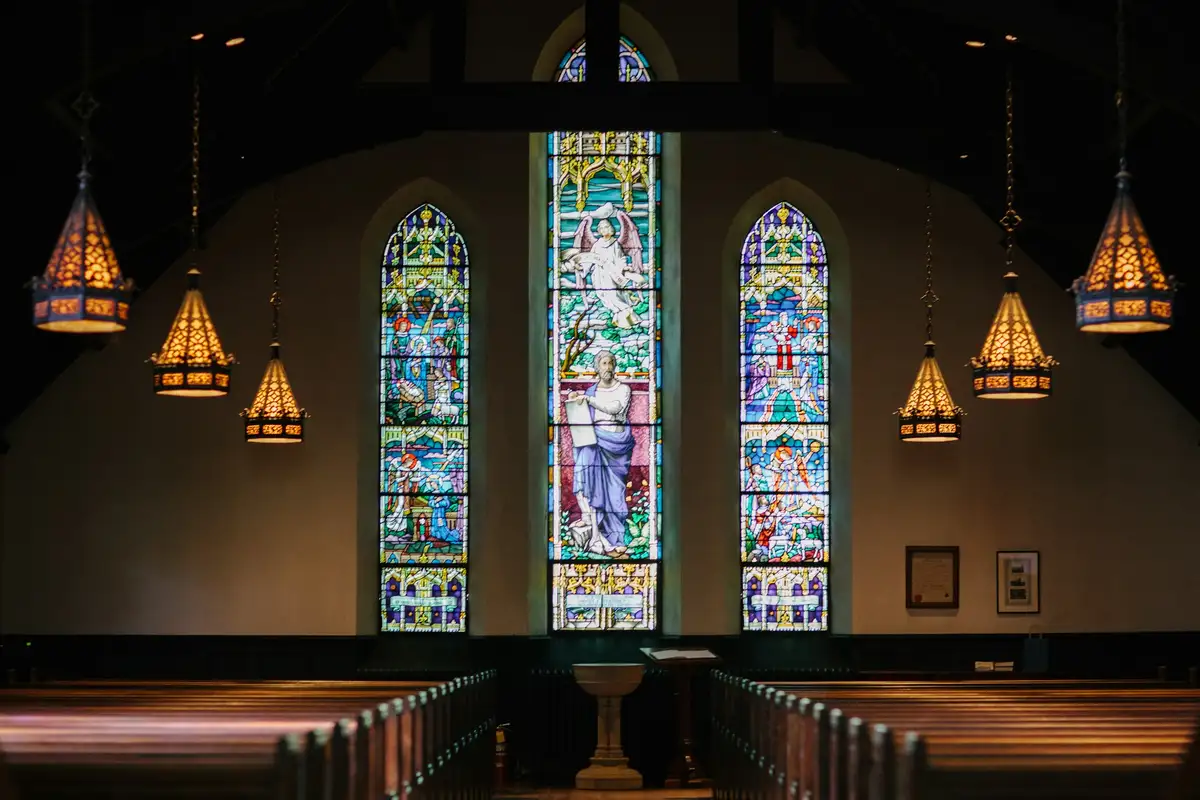
Be still, and know that I am God: I will be exalted among the heathen, I will be exalted in the earth.
Psalms 46:10 (KJV)
Be still, and know that I am God is an invitation to quiet ourselves before the Lord and listen.
Call unto me, and I will answer thee, and shew thee great and mighty things, which thou knowest not.
Jeremiah 33:3 (KJV)
God promises that when we call to Him, He will answer and show us great and mighty things.
And the Lord came, and stood, and called as at other times, Samuel, Samuel. Then Samuel answered, Speak; for thy servant heareth.
1 Samuel 3:10 (KJV)
Samuel’s reply, Speak; for thy servant heareth, makes a simple prayer to begin time with God.
I will hear what God the Lord will speak: for he will speak peace unto his people, and to his saints: but let them not turn again to folly.
Psalms 85:8 (KJV)
The psalmist resolves to hear what the Lord will speak, trusting He speaks peace to His people.
And thine ears shall hear a word behind thee, saying, This is the way, walk ye in it, when ye turn to the right hand, and when ye turn to the left.
Isaiah 30:21 (KJV)
God assures His people they will hear a guiding word saying, This is the way, walk ye in it.
My voice shalt thou hear in the morning, O Lord; in the morning will I direct my prayer unto thee, and will look up.
Psalms 5:3 (KJV)
David brought his prayers to God in the morning and then looked up, expecting God to respond.
I will stand upon my watch, and set me upon the tower, and will watch to see what he will say unto me, and what I shall answer when I am reproved.
Habakkuk 2:1 (KJV)
The prophet stood on his watch to see what God would say, a picture of patient, attentive waiting.
Open thou mine eyes, that I may behold wondrous things out of thy law.
Psalms 119:18 (KJV)
A short prayer asking God to open our eyes to see wonderful things in His word.
If any of you lack wisdom, let him ask of God, that giveth to all men liberally, and upbraideth not; and it shall be given him.
James 1:5 (KJV)
Anyone lacking wisdom can ask God, who gives generously and without reproach.
Blessed is the man that heareth me, watching daily at my gates, waiting at the posts of my doors.
Proverbs 8:34 (KJV)
Wisdom blesses the one who listens daily, watching at her gates and waiting at her doors.
The Lord God hath given me the tongue of the learned, that I should know how to speak a word in season to him that is weary: he wakeneth morning by morning, he wakeneth mine ear to hear as the learned. The Lord God hath opened mine ear, and I was not rebellious, neither turned away back.
Isaiah 50:4-5 (KJV)
The servant describes God wakening his ear morning by morning to hear as one who is taught.
Shew me thy ways, O Lord; teach me thy paths. Lead me in thy truth, and teach me: for thou art the God of my salvation; on thee do I wait all the day.
Psalms 25:4-5 (KJV)
David asks God to show him His ways and lead him in truth while he waits on Him all day.
I will instruct thee and teach thee in the way which thou shalt go: I will guide thee with mine eye.
Psalms 32:8 (KJV)
God promises to instruct us and teach us the way we should go, guiding us with His eye.
Ask, and it shall be given you; seek, and ye shall find; knock, and it shall be opened unto you: For every one that asketh receiveth; and he that seeketh findeth; and to him that knocketh it shall be opened.
Matthew 7:7-8 (KJV)
Jesus encourages us to ask, seek and knock, promising that those who seek will find.
Cause me to hear thy lovingkindness in the morning; for in thee do I trust: cause me to know the way wherein I should walk; for I lift up my soul unto thee.
Psalms 143:8 (KJV)
David asks God to let him hear His lovingkindness in the morning and show him the way to walk.
And in the morning, rising up a great while before day, he went out, and departed into a solitary place, and there prayed.
Mark 1:35 (KJV)
Jesus rose early and went to a solitary place to pray, modelling time set apart with the Father.
My soul, wait thou only upon God; for my expectation is from him.
Psalms 62:5 (KJV)
Quiet waiting on God alone is where the psalmist places his hope and expectation.
And she had a sister called Mary, which also sat at Jesus’ feet, and heard his word.
Luke 10:39 (KJV)
Mary sat at Jesus’ feet and heard His word, choosing listening over busyness.
Hearing God often begins with making space to listen. Try setting aside a quiet time each morning, as David did in Psalms 5:3, and start by praying Samuel’s words from 1 Samuel 3:10. Read a short passage slowly, perhaps praying Psalms 119:18 first, and write down any phrase that stands out and what it might mean for your day.
Stillness is a skill that grows with practice. Psalms 46:10 and Psalms 62:5 can be repeated slowly to quiet a busy mind. Some people find it helpful to put the phone away, sit in silence for a few minutes, and then pray honestly about what is on their heart before listening again.
When you face a decision, bring it to God with James 1:5 and Jeremiah 33:3, then test what you sense against Scripture and seek counsel from wise believers. God’s guidance will never contradict His word. Be patient, like Habakkuk on his watch; often clarity comes over time as you keep praying, reading and taking faithful next steps.
These Bible Verses For Hearing God begin where, gathered together in one place, the disciples suddenly heard a sound like a rushing wind filling the whole house, and what looked like tongues of fire rested on each of them as they began speaking in other languages (Acts 2:2-4).
A crowd of pilgrims from many nations gathered, each amazed to hear their own language being spoken. Hearing God here arrived not as a quiet private impression but as a dramatic, communal, almost overwhelming event that launched the entire early church.
Among these Bible Verses For Hearing God, a man who was deaf and could hardly speak, Jesus took him aside privately, touched his ears and tongue, looked up, and said simply, be opened (Mark 7:33-34). Immediately the man could hear and speak plainly.
The man’s first experience of sound came directly from the one who made hearing possible in the first place. For him, hearing anything at all, let alone hearing God, began the moment Jesus chose to open what had been closed his whole life.
Left behind in Jerusalem after Passover, the twelve-year-old Jesus was found three days later sitting among the temple teachers, listening and asking questions, astonishing everyone with His understanding (Luke 2:46-47).
When His parents found Him, He asked simply whether they knew He had to be in His Father’s house (Luke 2:49). Even as a child, hearing God for Jesus looked like deliberately placing Himself where God’s word was being taught and discussed.
Another of these Bible Verses For Hearing God shows Jeremiah told simply to go down to the potter’s house, Jeremiah watched an ordinary craftsman working clay on a wheel. When a vessel was marred, the potter reworked the same clay into another shape entirely (Jeremiah 18:2-4).
Then the word of the Lord came explaining what the scene meant: Israel was clay in God’s hands, capable of being reshaped (Jeremiah 18:5-6). Hearing God sometimes requires watching an ordinary task closely enough to notice what it is quietly teaching.
Reading through these Bible Verses For Hearing God, Jesus described seed falling on a path, rocky ground, among thorns, and on good soil, explaining afterward that the seed was God’s word and the different soils represented different ways people actually hear it (Matthew 13:3-8, 18-23).
Some hear and never let it take root; others hear with joy but fall away under pressure; others let worry choke it out; only the good soil produces a lasting harvest. The parable suggests that hearing God is not binary, but a matter of degree and depth.
The last of these Bible Verses For Hearing God tells how a prophet named Agabus visited Paul in Caesarea, took Paul’s own belt, bound his own hands and feet with it, and said the Holy Spirit indicated that the man who owned that belt would be bound the same way in Jerusalem (Acts 21:10-11).
Everyone present begged Paul not to go, but Paul insisted on continuing anyway, ready even to die for the name of the Lord (Acts 21:12-13). Hearing God accurately, in this case, did not settle the question of what to do next; Agabus and Paul heard the same message and responded completely differently.
Pentecost’s rushing wind, a deaf man’s first sound, a boy listening among scholars, a potter’s ordinary wheel, four kinds of soil, and a prophet’s dramatic object lesson all show hearing God taking different shapes for different people, sometimes dramatic, sometimes quiet, and never guaranteeing the same response from everyone who hears.
Lord, open my ears the way You opened the deaf man’s, and give me the boy Jesus’s habit of placing myself where Your word is taught. Help me notice what ordinary tasks are quietly teaching, the way Jeremiah noticed the potter’s wheel. Make my heart good soil rather than a hardened path, and give me courage to act on what I hear, even when it costs something, as it did Paul. Amen.
Which of the four soils in Jesus’s parable best describes how you have been receiving God’s word lately? What ordinary task in your life might be quietly teaching you something, the way the potter’s wheel taught Jeremiah? Is there a costly response, like Paul’s, that you are resisting even though you have heard clearly what is being asked?
Most of us sit down to listen and last about ninety seconds. Then the phone buzzes, or we remember the dentist appointment, or we start composing a reply to an argument from last Tuesday. That is normal, and it is not a sign that God has gone quiet. It is a sign that our minds have been running at full speed for years and do not stop on command. The writer of Psalms 46:10 says, “Be still, and know that I am God,” and the verb there carries the sense of letting your hands drop, of ceasing to struggle.
A helpful habit is to start small and be honest about it. Five minutes with one short passage, read aloud, is better than a grand plan you abandon by Thursday. Many believers keep a scrap of paper beside their Bible and jot down the stray worries as they surface, so those worries stop circling. Once they are on paper, the mind relaxes a little.
The Bible Verses For Hearing God gathered on this page assume exactly this slow beginning. Samuel, Habakkuk and the psalmists did not hear clearly on their first attempt either. They showed up, kept showing up, and slowly learned to tell the difference between their own noise and the Lord’s voice.
The boy Samuel was sleeping near the ark of God when he heard his name called (1 Samuel 3:1-10). He ran to Eli, the old priest, and said, “Here am I; for thou calledst me.” Eli sent him back to bed. It happened twice more before Eli finally understood who was speaking. Notice how ordinary the whole scene is. Samuel did not recognise the voice because nobody had taught him what it sounded like. Scripture says plainly that the word of the Lord was rare in those days, and that there was no frequent vision.
What stands out to me is Eli. He was tired, his own sons had disgraced the priesthood, and his eyesight was failing, yet he still knew how to coach a child toward listening. He did not tell Samuel what to expect. He gave him one sentence to say: Speak, Lord; for thy servant heareth. Sometimes the most useful thing an older believer can do for a younger one is hand over a simple posture and then step out of the way.
There is a lesson for those of us who feel spiritually dull. God spoke in a season when almost nobody was listening, and He spoke to a child sleeping on a mat. Your quiet kitchen at six in the morning is not a lesser setting than a temple.
Elijah had just won the contest on Mount Carmel, and then he ran for his life because Jezebel threatened him. By the time he reached Horeb he was exhausted and wanted to die (1 Kings 19). God told him to stand on the mountain. A great wind split rocks, then an earthquake came, then fire, and the text says the Lord was not in any of them. After the fire came what the King James renders as a still small voice (1 Kings 19:12).
Think about what that does to our expectations. Elijah had seen fire fall from heaven that same week, so he might have assumed the next word would arrive with fireworks. Instead it came as something so quiet that he pulled his cloak over his face before he answered. The Hebrew phrase is hard to translate exactly, and scholars have rendered it as a gentle whisper or a sound of thin silence. Either way, the point is the contrast with the noise before it.
Many of us wait for a dramatic sign and miss a plain nudge, a verse that will not leave us alone, or a friend’s sentence that lands differently than it should. When your own life is loud, whether with grief, work or family conflict, it may help to lower the volume before asking God to raise His.
Jesus said in John 10:27, “My sheep hear my voice, and I know them, and they follow me.” Anyone who has spent time around actual sheep will tell you that a flock sorts out its shepherd by sound, not by sight. Shepherds in the Near East sometimes shared a night pen, and in the morning each one called and his own animals separated from the mixed flock. The sheep were not cleverer than other sheep. They had simply heard that one voice day after day.
That tells us something practical. Recognising God’s voice is mostly a matter of familiarity, and familiarity grows through time spent in the Gospels, the Psalms and the letters. Someone who reads the Sermon on the Mount again and again will start to notice when a suggested course of action sounds nothing like Jesus. The reverse is also true. A person who has not opened the Bible in months may struggle to tell a true prompting from a passing mood, and that is no reason for shame, only a reason to begin again.
Notice also the order in the verse. They hear, He knows them, they follow. The relationship comes first. We are not asked to decode a message from a stranger. We are invited to listen to someone who already knows our name, our mistakes and our actual street address.
Not every inner impression comes from God, and the Bible says so without embarrassment. John wrote, “Beloved, believe not every spirit, but try the spirits whether they are of God” (1 John 4:1). In Berea, the believers heard Paul preach and then went home and searched the scriptures daily to see whether his claims matched what was written (Acts 17:11). Luke calls them more noble than the Thessalonians for doing exactly that.
So a sensible habit is to hold every sense of direction up against three things. Does it agree with what Scripture plainly teaches? Does it fit the character of Christ, who is humble, truthful and patient? And do wise, mature people who know you see nothing alarming in it? If someone feels led to leave a marriage, abandon a debt they owe, or cut off all fellowship with the church, the first question is not how strong the feeling is. It is whether the Bible supports it.
None of this makes listening cold or suspicious. It simply keeps us honest. The person who hears well is usually the one who is also willing to be corrected, and who treats a strong feeling as a prompt to pray and check, not as a verdict. If a decision is large, bring a pastor or a seasoned friend into it before you act.
There are seasons when you pray and nothing seems to come back. David knew it: “How long wilt thou forget me, O Lord? for ever? how long wilt thou hide thy face from me?” (Psalms 13:1). That is in the Bible, which means God does not mind the question. Habakkuk stood on his watch tower and said he would wait to see what the Lord would say to him (Habakkuk 2:1), and the answer, when it came, told him to write the vision down and wait for it because it would surely come.
Silence can have more than one cause, and it helps to be gentle with ourselves while we look. Sometimes unconfessed sin has dulled our ears, as Isaiah 59:2 describes. Sometimes we are asking about a matter God has already answered in Scripture. Sometimes we are exhausted, ill or grieving, and the problem is as much physical as spiritual. If low mood or anxiety has lasted weeks, a doctor or a counselor is a wise partner alongside prayer, not a replacement for it.
And sometimes the quiet is simply a season of trust. A friend of mine once said that the Lord taught her more during two years of no obvious guidance than in ten years of clear direction, because she had to hold on to what He had already spoken. Keep reading, keep praying, keep showing up at church. Often the next word arrives through a very ordinary door.
Jesus made a surprising statement in John 7:17: “If any man will do his will, he shall know of the doctrine.” Understanding follows willingness, not the other way around. Many of us want the full map before we take a single step, and God tends to give light for the next stretch of road. James puts the same truth bluntly in James 1:22, telling us to be doers of the word and not hearers only, deceiving our own selves.
Picture someone who feels a recurring nudge to apologise to a coworker, and keeps praying for clarity about a bigger career question. It is quite possible that the career question will stay foggy until the apology is made. Obedience in small, known matters tends to clear the air for larger ones. That is not a formula, and God is not holding back as a punishment, but it matches how the Bible describes growth again and again.
Here is a simple practice. At the end of your quiet time, write down one thing you believe the passage asked of you, however small, and do it before the day is over. Return the borrowed tool, send the message, forgive the debt. Over a few months you will notice that your ear gets sharper, because you have been treating what you heard as worth acting on.
Nearby topics worth a look: Bible Verses For Relationship Problems, Bible Verses For God's Faithfulness, Bible Verses About Peace and Fear, Bible Verses For Safety, Bible Verses About Hope and Healing, Bible Verses For Mercy, Bible Verses For Friendship, Bible Verses About Hard Times, Bible Verses For Finding Strength in God, Bible Verses For Purpose and Bible Verses For Humility.
Helpful free resources for further study include Bible Gateway, Bible Hub and Bible Study Tools.
Hearing God often begins with making space to listen. Try setting aside a quiet time each morning, as David did in Psalms 5:3, and start by praying Samuel's words from 1 Samuel 3:10.
This page brings together 7 King James Version references about hearing God, drawn from 4 different books of the Bible.
Yes. The verses about hearing God gathered here include passages from both the Old Testament and the New Testament, such as Psalms 5:3 and James 1:5.
Psalms 5:3 is one of the verses about hearing God referenced in this collection, alongside 1 Samuel 3:10.
Yes, the verses referenced on this page, including Psalms 5:3, are quoted according to the King James Version (KJV), and are suitable for daily reading, memorization, or devotional use.