
Bible verses for serving the church can refresh volunteers, leaders and anyone who gives time to their local congregation. Serving in the nursery, on a welcome team or behind the scenes can be joyful one week and draining the next. These verses offer encouragement to keep serving with love, generosity and a cheerful spirit, remembering that the work is done for the Lord.
None of this requires waiting until you feel fully equipped or completely confident. Most people who now serve faithfully in a church community began by simply showing up and offering whatever small help was needed at the time, then growing into greater responsibility gradually as trust and experience accumulated over months and years of consistent involvement. Reach out to a leader in your church this week and ask where an extra hand is currently needed. Say yes to something small, and let that small yes become the beginning of a deeper, more rooted involvement in the life of your community than you may have expected when you first walked through the door. Serving faithfully, even in small unnoticed ways, is exactly what the church was always meant to be built on, and your particular contribution, however modest it feels right now, is genuinely needed by the people around you. Do not underestimate what a single willing volunteer can add to a community that is genuinely counting on people to show up and do their part, however ordinary that part might seem from the outside looking in. Step forward and offer what you have, and trust that God will use it in ways you cannot yet fully see. Your church needs you, and this is a good time to begin. Take the next step, however small, and trust the rest to unfold in its own time. A community built on faithful, ordinary service is a community worth being part of, and you have something real to add to it. Say yes to it. Serve with joy. Not out of pressure or guilt, but out of a genuine desire to see your community flourish and to play whatever part in that flourishing God has uniquely equipped you to play, starting exactly where you are. Begin today. Right where you are. With what you already have. That is enough. Go serve.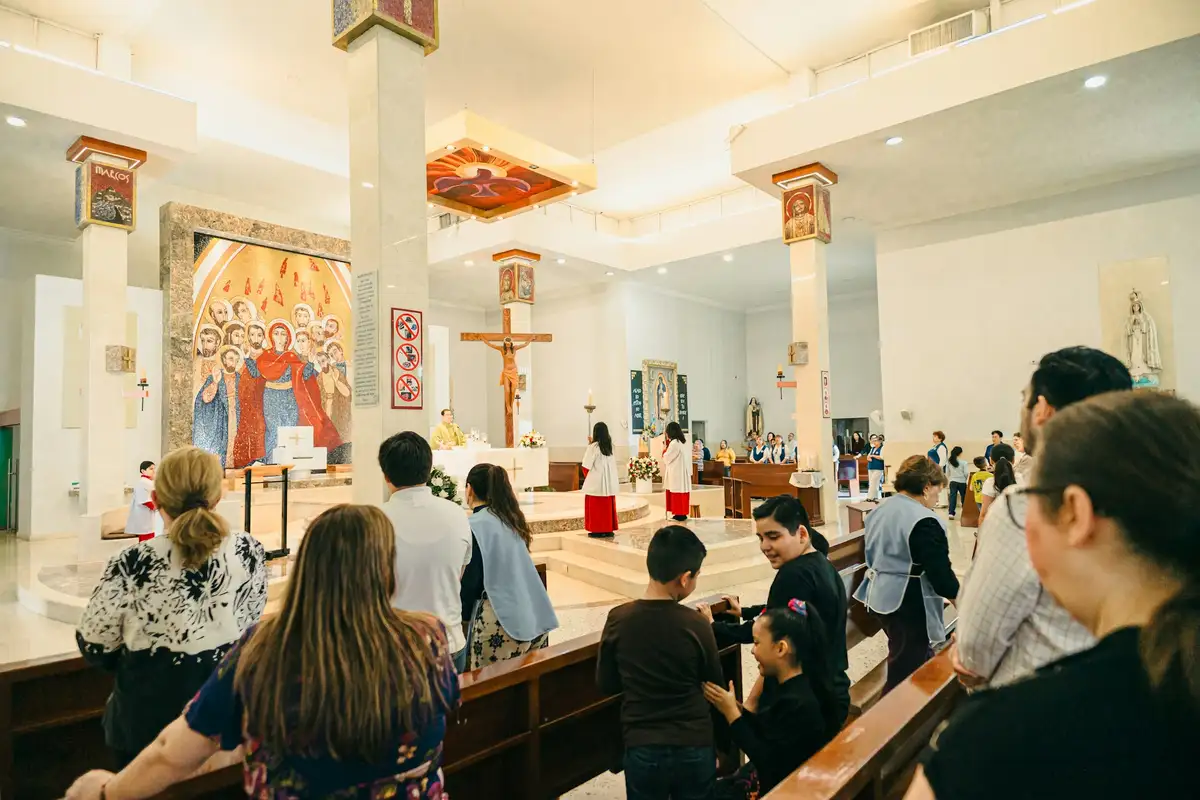
As every man hath received the gift, even so minister the same one to another, as good stewards of the manifold grace of God. If any man speak, let him speak as the oracles of God; if any man minister, let him do it as of the ability which God giveth: that God in all things may be glorified through Jesus Christ, to whom be praise and dominion for ever and ever. Amen.
1 Peter 4:10-11 (KJV)
Whatever your gift, Peter encourages using it to serve others with the strength God supplies.
As we have therefore opportunity, let us do good unto all men, especially unto them who are of the household of faith.
Galatians 6:10 (KJV)
A good reminder for volunteers to look for chances to do good, especially within the church family.
And let us consider one another to provoke unto love and to good works: Not forsaking the assembling of ourselves together, as the manner of some is; but exhorting one another: and so much the more, as ye see the day approaching.
Hebrews 10:24-25 (KJV)
Simply showing up and encouraging one another is itself a meaningful way to serve.
Be kindly affectioned one to another with brotherly love; in honour preferring one another; Not slothful in business; fervent in spirit; serving the Lord; Rejoicing in hope; patient in tribulation; continuing instant in prayer; Distributing to the necessity of saints; given to hospitality.
Romans 12:10-13 (KJV)
Warm affection, diligence, a fervent spirit and hospitality describe the heart behind church service.
But to do good and to communicate forget not: for with such sacrifices God is well pleased.
Hebrews 13:16 (KJV)
Doing good and sharing with others are sacrifices that please God, so small acts count.
But so shall it not be among you: but whosoever will be great among you, shall be your minister: And whosoever of you will be the chiefest, shall be servant of all. For even the Son of man came not to be ministered unto, but to minister, and to give his life a ransom for many.
Mark 10:43-45 (KJV)
In Jesus’ kingdom, greatness is measured by serving others, following his own example.
For, brethren, ye have been called unto liberty; only use not liberty for an occasion to the flesh, but by love serve one another.
Galatians 5:13 (KJV)
Freedom in Christ is meant to be spent serving one another in love.
Every man according as he purposeth in his heart, so let him give; not grudgingly, or of necessity: for God loveth a cheerful giver.
2 Corinthians 9:7 (KJV)
God loves a cheerful giver, whether the gift is money, time or effort.
I thank my God upon every remembrance of you, Always in every prayer of mine for you all making request with joy, For your fellowship in the gospel from the first day until now;
Philippians 1:3-5 (KJV)
Paul thanks God for partners in the gospel, a verse to share with fellow volunteers.
Wherefore comfort yourselves together, and edify one another, even as also ye do.
1 Thessalonians 5:11 (KJV)
Serving teams can build each other up with words of comfort and encouragement.
I have shewed you all things, how that so labouring ye ought to support the weak, and to remember the words of the Lord Jesus, how he said, It is more blessed to give than to receive.
Acts 20:35 (KJV)
Paul recalls Jesus’ words that it is more blessed to give than to receive.
With good will doing service, as to the Lord, and not to men:
Ephesians 6:7 (KJV)
Doing service with good will, as to the Lord and not merely to people, lifts ordinary tasks.
And whatsoever ye do in word or deed, do all in the name of the Lord Jesus, giving thanks to God and the Father by him.
Colossians 3:17 (KJV)
Everything we do, in word or deed, can be done in Jesus’ name with thanksgiving.
I beseech you, brethren, (ye know the house of Stephanas, that it is the firstfruits of Achaia, and that they have addicted themselves to the ministry of the saints,)
1 Corinthians 16:15 (KJV)
The household of Stephanas devoted themselves to serving the saints, an example worth copying.
But watch thou in all things, endure afflictions, do the work of an evangelist, make full proof of thy ministry.
2 Timothy 4:5 (KJV)
Paul urges Timothy to endure hardship and fully carry out his ministry.
So built we the wall; and all the wall was joined together unto the half thereof: for the people had a mind to work.
Nehemiah 4:6 (KJV)
The wall was rebuilt because the people had a mind to work together.
For a day in thy courts is better than a thousand. I had rather be a doorkeeper in the house of my God, than to dwell in the tents of wickedness.
Psalms 84:10 (KJV)
Being a doorkeeper in God’s house is better than any place among the wicked, so no role is too small.
A good place to begin is with the gift you already have. 1 Peter 4:10 calls each believer to use their gift as a steward of God’s grace, so ask where your abilities and your church’s needs meet. Romans 12:10-13 describes the spirit in which to serve: warm affection, diligence, hospitality and a fervent heart.
These verses can also help a team. Read one together before a service or meeting, and let 1 Thessalonians 5:11 prompt you to encourage one another. Hebrews 10:24-25 reminds us that simply gathering and spurring one another on is itself a form of service. When a task feels small, Psalm 84:10 shows that even keeping a door in God’s house is a privilege.
Serving well also means serving sustainably. Mark 10:43-45 teaches that greatness in God’s kingdom looks like being a servant, not doing everything alone. Share the load, rest when you need to, and bring your weariness to God in prayer. Colossians 3:17 invites us to do everything in the name of the Lord Jesus, giving thanks as we go.
Scripture describes the church as a body made up of many parts, each contributing something the others cannot provide on their own. No believer is meant to sit entirely on the sidelines, since every part of the body has a function that matters to the health of the whole.
This means serving the church is not reserved for pastors, staff, or a small group of especially gifted volunteers. It is an expectation for every believer, expressed differently depending on individual gifting, but universal in its call to active participation rather than passive attendance.
Scripture lists a variety of spiritual gifts, teaching, encouragement, administration, mercy, hospitality, among others, given specifically to build up the church community. Discovering which of these gifts you carry usually happens through trying, not through waiting for certainty beforehand.
Volunteering in different areas, paying attention to where you feel both capable and energized rather than merely obligated, and asking trusted people what they observe in you are all practical ways to identify where your particular contribution to the church might best be applied.
It is possible to serve the church faithfully while quietly seeking recognition, control, or a sense of personal importance. This subtly corrupts the motive behind otherwise good acts of service, turning something meant to build community into a vehicle for self-promotion.
Healthy service flows from genuine love for the people being served and for God Himself, willing to work without applause and to step back gracefully when someone else is better suited for a particular role. This posture protects both the server’s heart and the health of the community.
Much of what keeps a church community functioning well happens in unremarkable, often unnoticed ways: setting up chairs, cleaning up after events, quietly checking in on someone who missed a gathering, managing behind-the-scenes logistics that no one thinks to thank anyone for.
These unglamorous tasks matter as much as more visible roles like teaching or leading worship. A community that only values highly visible service misses the reality that faithful, hidden work is often what makes the visible parts of church life possible in the first place.
Enthusiastic new believers sometimes take on too much too quickly, leading to exhaustion and eventual withdrawal from serving altogether. Sustainable service requires honest limits, seasons of rest, and willingness to say no to additional responsibilities when current capacity is already full.
A healthy church culture supports this by not overloading eager volunteers and by regularly checking in on those serving in demanding roles. Long-term faithfulness matters more than short bursts of intense involvement that quickly lead to burnout and eventual disengagement from community life.
Serving within a church community often does as much for the person serving as for those being served. Active involvement builds relationships, deepens understanding of Scripture through teaching or preparation, and creates accountability that passive attendance rarely provides.
Believers who serve consistently often report a stronger sense of belonging and purpose within their community than those who attend without ever getting involved. Serving turns a church from a place merely visited into a community genuinely invested in, with real stakes and real relationships.
Not every act of service requires a rare or impressive talent. Showing up reliably, being kind to newcomers, helping wherever an extra set of hands is needed, all count as genuine service even without a specific spiritual gift attached to them.
Waiting to serve only once a clear, impressive gift is identified can delay involvement indefinitely. Faithfulness in small, ordinary tasks often becomes the very context in which a person eventually discovers gifts they did not previously know they had.
A healthy church includes service that spans generations: older members mentoring younger ones, younger members bringing fresh energy and perspective to established ministries, and shared projects that bring different age groups into genuine working relationship with one another.
This cross-generational service prevents a church from becoming siloed by age group and strengthens the whole community’s resilience, since wisdom, energy, and different life experiences all contribute something valuable that a single generation working alone could not provide on its own.
If you have never served regularly within a church community, the hardest part is usually the first step. Rather than waiting for a perfect opportunity to appear, ask a leader directly where help is currently needed and offer to try it for a short season.
A short trial commitment lowers the pressure of a permanent decision while still getting you involved enough to discover whether a particular area fits well. Many long-term volunteers started this way, stumbling into a role that later became a genuine calling they had not initially expected.
Long before anyone sat on a church welcome team, God picked out a man named Bezalel to build the tabernacle furnishings. Exodus 31:3 says, ‘And I have filled him with the spirit of God, in wisdom, and in understanding, and in knowledge, and in all manner of workmanship.’ Read that slowly. The Spirit of God is credited with carpentry, metalwork and stone-setting. Nobody tried to separate the holy jobs from the practical ones.
That matters if your assignment is stacking chairs or fixing the sound board. A good many people quietly assume that only teaching and praying count as real service, and that the rest is just chores. Scripture does not draw that line. The gold-covered ark and the hand-stitched curtains were made by people God equipped on purpose, and He said so in writing.
Notice also that Bezalel did not work alone. Exodus 31:6 names Aholiab beside him, and the verse says God put wisdom in the heart of all who were wise-hearted. When you read through the Bible verses for serving the church gathered on this page, picture the unglamorous skill behind each Sunday: the person who tests the heater in October, the one who repaints the nursery, the one who knows which key opens which door. Their hands are doing what Bezalel’s did, in a smaller room.
Nehemiah 3 is the chapter most readers skip, because it is a list. Sure, it reads like a phone directory. But look at what the list records: families repairing the section of wall right in front of their own houses. One man fixed the stretch beside his house, another worked opposite his own chamber, and some priests took the gate nearest where they lived. Nobody was assigned the whole thing.
That detail changes how I read Nehemiah 4:6, ‘So built we the wall; and all the wall was joined together unto the half thereof: for the people had a mind to work.’ A wall that size only closes when hundreds of ordinary people finish their own small piece and stop worrying about the piece next to it. Some of those sections were probably crooked. The wall stood anyway.
Among the Bible verses for serving the church, this wall story is the one I return to when a congregation feels stretched. A congregation works the same way. The person who counts the offering, the one who mails the birthday cards and the one who unlocks the building at six on Wednesday morning each hold a stretch of wall. If you serve the church from a modest corner, you are not a spectator of the real work. You are standing on a section of it. Pick the part nearest your own door, as those families did, and build it well. The people on either side are doing the same.
Exodus 18 gives a picture that many church leaders recognize with a wince. Moses sat from morning until evening settling disputes, and a line of people stood waiting. His father-in-law Jethro watched this for one day and said, ‘Thou wilt surely wear away, both thou, and this people that is with thee: for this thing is too heavy for thee; thou art not able to perform it thyself alone.’ (Exodus 18:18).
Jethro was not criticizing Moses’ devotion. He was pointing out that one overworked servant makes everyone wait. His fix was to find capable people, give them smaller groups, and let only the hardest cases come up to Moses. In other words, the leader had to let others serve.
If you have carried a ministry for years, this passage can feel like permission, and it is. Handing a task to someone newer is not laziness. It lets a second person discover a gift, and it keeps you from wearing away. If you are the newer one, the same passage tells you something. When a seasoned volunteer finally hands you a clipboard, they are doing what Jethro urged, so take it seriously and ask good questions. Few Bible verses for serving the church speak as bluntly about limits. Healthy service in a church usually looks less like one hero and more like a rope of many strands, each one carrying a little of the weight.
Paul closes his letter to the Romans with a long set of greetings, and near the front he writes, ‘Greet Priscilla and Aquila my helpers in Christ Jesus: Who have for my life laid down their own necks’ (Romans 16:3-4). They were tentmakers, the same trade as Paul, and they seem to have moved from Rome to Corinth to Ephesus and back again. Wherever they landed, a church ended up meeting in their house.
Think about what that actually involved. It meant extra bread on the table, borrowed stools, neighbors tramping through the front room and noise at odd hours. There was no building fund and no committee. There was just a couple who opened a door and kept it open. Acts 18:26 adds that they quietly took Apollos aside and explained the way of God more carefully to him, which is a lesson in gentle correction too.
Many of the Bible verses for serving the church talk about hospitality and generosity, and this couple shows what those words cost. You may not have a house that fits forty people. Maybe you have a kettle, two folding chairs and a Thursday evening. Serving the church does not require a large space. It requires the kind of readiness that says yes when somebody needs a place to land, and then does the washing up afterward.
Not every story of service in the New Testament is a smooth one. John Mark left Paul and Barnabas partway through their first missionary trip (Acts 13:13), and when Barnabas wanted to take him again, Paul refused. Acts 15:39 says the disagreement was sharp enough that the two men separated. Mark had failed, and everybody knew it.
Years later, in a letter written near the end of his life, Paul wrote, ‘Take Mark, and bring him with thee: for he is profitable to me for the ministry’ (2 Timothy 4:11). Same man, same Paul. The difference is that someone, Barnabas first, kept believing Mark could be useful, and Mark kept showing up. The Gospel that carries his name probably grew out of that long road back, and of all the Bible verses for serving the church, this story may be the most forgiving.
If you walked away from a ministry after a bad season, or if you were hurt and quietly stopped volunteering, this account is for you. A failure at the church door is not the final word on your usefulness. And if you lead a team, ask who among your people is waiting for a Barnabas. Often the volunteer who drifted off does not need a lecture. They need an invitation, an easy first task, and the plain sign that you still want them there.
Matthew 19:13-14 describes a scene that the disciples botched. Parents were bringing little children to Jesus, and the disciples rebuked them, probably thinking the Teacher had weightier matters. Jesus said, ‘Suffer little children, and forbid them not, to come unto me: for of such is the kingdom of heaven.’ He was not annoyed at the parents. He was annoyed at the gatekeeping.
Every church has people who stand at that doorway today. They sit on small chairs, mop up spilled juice, learn forty names, and tell a story about a boy and a boat to a room of restless five-year-olds. It rarely feels significant in the moment. Nobody applauds the nursery worker. Yet in Jesus’ own words, the children are not an interruption to the real ministry. They are right at its center.
The same goes for teenagers and for the shy newcomers who hover near the coffee table. Serving the church includes noticing the people who are easiest to overlook. If you are drawn to those who are smaller, younger or newer, take that pull seriously. A background check, a few hours of training and a regular slot on the schedule are the practical side of what Jesus was asking His disciples to stop blocking. The rest is patience and a sense of humor.
Lord, You know what I am carrying this week, and You know how many things have already been put on my plate. Before I volunteer for anything else, I want to ask You what You have given me to do. Help me tell the difference between a real calling and a guilty reflex. Where there is a place I can serve with gladness, open the door. Where I am only trying to prove myself, loosen my grip.
Give me ears for the person who is struggling to find the room, and patience for the one who does the job differently than I would. When the work is noticed, keep me from preening. When it goes unnoticed, remind me that You saw the kettle filled and the lights turned off. Galatians 6:9 says, ‘And let us not be weary in well doing: for in due season we shall reap, if we faint not.’ Hold me to that, and when I am tired, send me rest before You send me more.
Bless the people I will work beside. Let our small, ordinary acts add up to something that helps someone find You. Among all the Bible verses for serving the church, let me live out even one of them honestly this month. I ask it in the name of Jesus. Amen.
More verse collections related to serving the church: Bible Verses About Sin and Forgiveness, Bible Verses About Prayer and Healing, Bible Verses For Worship, Bible Verses About Protection from Evil, Bible Verses For Finances, Bible Verses About Prayer and Peace, Bible Verses About Peace and Anxiety, Bible Verses About Encouragement, Bible Verses About Faith in God, Bible Verses For God's Timing and Bible Verses For Loving Others.
Free tools for studying these passages further: Blue Letter Bible, Bible Gateway, Bible Hub and Bible Study Tools.
A good place to begin is with the gift you already have. 1 Peter 4:10 calls each believer to use their gift as a steward of God's grace, so ask where your abilities and your church's needs meet.
This page brings together 7 King James Version references about serving The Church, drawn from 7 different books of the Bible.
Yes, the verses referenced on this page, including 1 Peter 4:10, are quoted according to the King James Version (KJV), and are suitable for daily reading, memorization, or devotional use.
Beyond the references highlighted on this page, serving The Church appears throughout Scripture in books such as 1 Peter, Romans, 1 Thessalonians, Hebrews, Psalm; this collection focuses on some of the clearest examples.
These serving The Church verses are drawn from books including 1 Peter, Romans, 1 Thessalonians, Hebrews, Psalm, among others.